Picture this. You have just moved into a new place. Boxes everywhere. Curtains still not hung. You are sleeping on the mattress you hauled over from the last apartment, because it technically still works. It is fine. Technically. But then you wake up stiff every morning, and after eight months of saying you will “sort it out soon,” that promise starts to feel a little thin.
Sound familiar?
That is how mattress shopping goes for a lot of people. They put it off for months, then rush into a showroom at the last minute, lie on three models for thirty seconds each, and choose the one that feels least offensive under fluorescent lighting. That is not really a buying strategy. It is a guess. And it is a guess you will be living with for the next eight to ten years.
The mattress market in 2026 is more crowded than ever. There are dozens of mattress types, hundreds of brands, and enough marketing jargon to fill a warehouse. But when you strip away the noise, the decision comes down to a handful of real factors: sleep position, body type, climate, and how the mattress is built at its core. Get those right, and the rest becomes much easier.
Why Mattress Type Matters More Than Brand Or Budget
Most shoppers start with brand or budget. Understandable. Still not the best place to begin.
Among all mattress types, the construction itself matters more than almost anything else. It determines how the surface responds to pressure, how well it moves heat away from your body through the night, how long the materials hold their shape before they start sagging, and how much movement one sleeper sends to the other side of the bed. That last one sounds minor until you have spent a few months getting nudged awake every time your partner rolls over.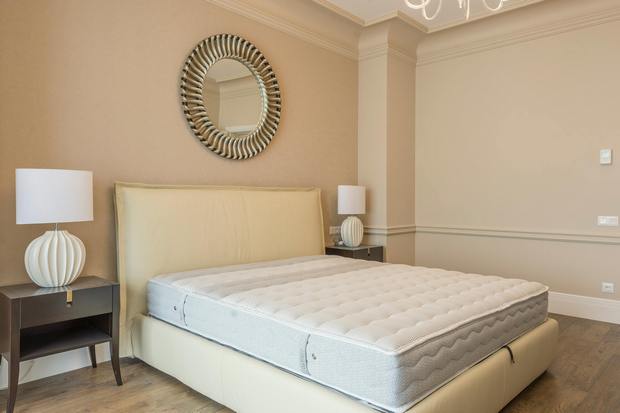
A mattress that works brilliantly for a petite side sleeper in a cool bedroom may feel completely wrong for a heavier back sleeper in a warm climate. Type first. Always.
In my view, this is the most useful way to shop. Brand matters. Budget matters too. But mattress types are the foundation.
The Main Mattress Types, And What They Are Actually Good For
Innerspring: The Classic That Still Earns Its Keep
Innerspring mattresses, built around a core of steel coils, remain the most widely sold type across North America and Australia. There is a reason they have lasted this long. The coil structure allows natural airflow through the mattress, which keeps the sleep surface cooler than most foam alternatives. They also have that familiar bounce and responsiveness that plenty of sleepers still prefer. Not because of nostalgia. Because they like the feel.
The detail many buyers miss is that not all coil systems are the same.
Budget innerspring models often use Bonnell coils, an older interconnected design where movement on one side ripples across the entire surface. Better models use individually wrapped pocket coils, where each spring responds independently. For couples, that difference is enormous. Motion isolation improves dramatically, and the mattress contours more accurately to different body shapes.
In the UK and much of Western Europe, traditional innerspring has largely given way to hybrid designs in the mid to premium tier. But in Australia and across North America, a quality pocket coil innerspring still offers solid value, particularly for people who sleep hot.
Memory Foam: Comfort, With Caveats
Memory foam divides opinion like almost nothing else in the bedding world.
Fans love the cradling, pressure relieving feel. The way the foam slowly responds to body heat and wraps around shoulders, hips, and lower back. For side sleepers dealing with joint pressure, a good memory foam mattress can feel like a genuine revelation.
The criticism is equally fair. Traditional memory foam traps heat badly. It has almost no bounce, which some sleepers find comforting and others find suffocating. And for anyone sharing a bed with a restless sleeper, the sluggish response can feel a bit like sleeping in wet cement.
The industry has largely tackled the heat issue through gel infused foam layers and open cell structures that improve airflow. Those help, up to a point. If you live in a warm climate or naturally sleep hot, memory foam still needs careful vetting. Ask specifically about the foam’s ILD rating, or Indentation Load Deflection, which measures firmness. Also check whether the cooling layer is actually gel infused or just marketed as “cool.” Those are two very different things.
Among memory foam options, a medium firm ILD of around 4 to 6 tends to perform best across the widest range of sleepers.
Latex: The Long Term Investment
Latex mattresses are underappreciated. Full stop.
Natural latex, derived from rubber tree sap, offers a combination of responsiveness, durability, and breathability that synthetic materials rarely match. It pushes back against the body rather than swallowing it, which feels more supportive and far less “stuck” than memory foam. That is a meaningful distinction once you have slept on both.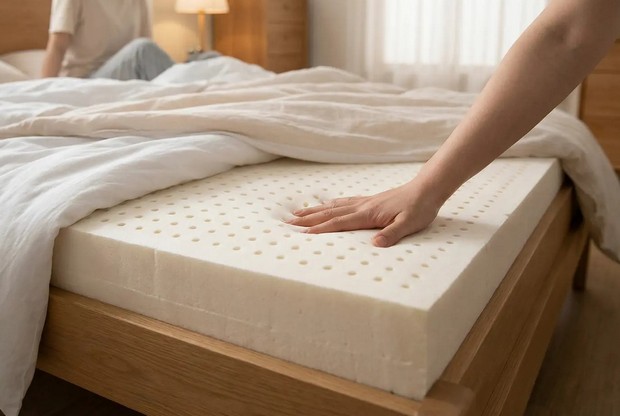
Two types dominate: Dunlop latex, which is denser and firmer, and Talalay latex, which is lighter and more consistent throughout the layer. Heavier sleepers often prefer Dunlop. Talalay costs more to produce, and that shows up in the price.
In Europe, particularly Scandinavia and the Netherlands, natural latex has a strong following driven partly by sustainability concerns. Consumers there are paying close attention to certifications like GOLS, the Global Organic Latex Standard, which verifies that the latex is genuinely organic and responsibly sourced. That trend is now moving into US and Canadian markets too, especially among buyers who are also investing in organic bedding and sustainable home textiles alongside non toxic home materials.
The honest downside? Latex mattresses are heavy and expensive. A quality natural latex mattress costs significantly more upfront. But they routinely last 15 to 20 years with minimal degradation. Run the cost per year numbers and the conversation changes quickly.
Frankly, this is one of the strongest long term buys among the major mattress types if the upfront cost does not make you hesitate.
Hybrid: The Best Choice For Most People
A hybrid mattress pairs a coil support core, usually pocket springs, with comfort layers of foam, latex, or both on top. The goal is simple: combine the breathability and support of innerspring with the pressure relief of foam or latex.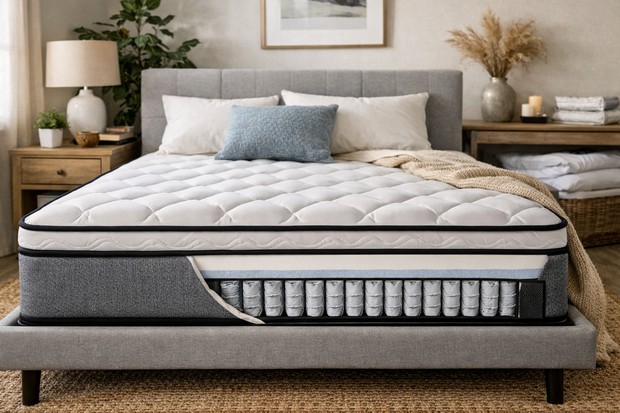
Done well, a hybrid is genuinely excellent. Done cheaply, it delivers the weaknesses of both materials without the strengths of either. This is one of those mattress types where cutting corners is easy, and the results usually show up within three months.
The key is coil count and comfort layer thickness. A hybrid with fewer than 800 coils in a queen size and a comfort layer under 2 inches is already making compromises. The premium hybrid segment, brands offering 1,000 or more individually wrapped coils paired with 3 to 4 inches of quality foam or latex, has seen the strongest growth in the US, UK, and Australian markets over the past three years. It is not hard to see why.
For most adult sleepers who want versatility without sacrificing either support or comfort, a well built hybrid is probably the safest bet.
Adjustable Airbed: Who Actually Needs One?
Adjustable air mattresses, where internal air chambers control firmness via a remote or app, serve a real purpose. They are especially useful for couples with very different sleep preferences, or for people whose physical needs change because of health conditions.
They are not for everyone. The mechanisms add complexity and the possibility of maintenance headaches over time. But for the right buyer, someone managing chronic back pain or recovering from an injury, the ability to dial in precise firmness is genuinely useful. Not a novelty. Not a gimmick.
Mattress Comparison: Types and Benefits
Here is a quick side by side view of the main mattress types:
- Innerspring: Best for hot sleepers and people who like bounce. Heat retention: low. Durability: 7 to 10 years.
- Memory foam: Best for side sleepers and pressure relief. Heat retention: medium to high. Durability: 8 to 10 years.
- Natural latex: Best for eco conscious buyers and people who want durability. Heat retention: low to medium. Durability: 15 to 20 years.
- Hybrid: Best for most sleepers and couples. Heat retention: low to medium. Durability: 10 to 12 years.
- Adjustable airbed: Best for couples and health conditions. Heat retention: low. Durability: 8 to 15 years.
How Climate And Room Temperature Actually Affect Your Mattress
This is the part most buying guides skip entirely, which is a shame, because it matters more than people expect.
Memory foam in a humid, warm climate softens considerably more than the same mattress in a cool, dry bedroom. If you are furnishing a home in Queensland, Florida, or Singapore, your material choice should account for heat and humidity directly. Innerspring and latex genuinely outperform foam in those conditions, not marginally, but noticeably.
In colder climates, think Canadian winters or Scandinavian homes, a slightly firmer foam or latex mattress may actually feel ideal because ambient cold keeps the material from over softening.
If you have ever bought a mattress that felt perfect in the showroom and then felt strangely different a few weeks later at home, climate is probably why.
How To Choose Based On Sleep Position
Back sleepers need even spinal support. Medium firm hybrids or latex tend to work well here.
Side sleepers need pressure relief at the shoulder and hip, so memory foam or a soft to medium hybrid is worth serious consideration.
Stomach sleepers are genuinely hard on mattresses. They need firmer support to keep the hips from sinking and tugging the lower back out of alignment. A firmer innerspring or Dunlop latex is often the right call.
Combination sleepers, people who shift positions through the night, usually do best on a responsive surface. Memory foam’s slower recovery can frustrate frequent movers. Latex or a quality hybrid responds faster and handles position changes more naturally.
If you are comparing mattress types, this section should probably carry the most weight after climate. Sleep position is one of the most reliable ways to narrow your mattress choice, and the evidence consistently backs that up.
What Is Coming, And What Still Matters Most
Two shifts are coming over the next few years.
First, sustainability pressure is building quickly. Younger homeowners are asking harder questions about materials, certifications, and what happens to a mattress when it reaches the end of its life. The industry still generates an enormous amount of landfill waste, and brands that respond to that credibly will have a real competitive edge, not just a marketing one. The broader shift toward sustainable fibers and responsible home textile production is already reshaping buyer expectations well beyond the mattress category.
Second, sleep technology is accelerating. Mattresses with embedded sensors that track sleep quality, heart rate, and movement are already available at the premium end. Whether that becomes mainstream or remains niche will depend on whether brands can make the data genuinely useful, not just impressive on a spec sheet.
For now, the fundamentals still matter most.
Know your sleep position. Factor in your climate. Choose the right core material. And give yourself more than thirty seconds in a showroom to make a decision you will be sleeping on for the next decade.
Conclusion
The right mattress type depends on how you sleep, where you live, and what kind of support you need night after night. Innerspring, memory foam, latex, hybrid, and adjustable airbeds each come with clear strengths and trade offs. If you match the mattress to your body, climate, and comfort preferences, you are far more likely to sleep better and avoid buyer’s regret for years to come.
![Comforter Buying Guide: Fill Power, Types & Sizes [2026]](https://hometextilejournal.com/wp-content/uploads/2026/08/comforter-buying-guide.jpg)