Flammability Testing of Home Textiles
Flammability testing is arguably one of the most important testing procedures in the textile industry because it has crucial safety implications in the event of a fire. Its importance varies according to the end use of different home textile applications. There is no single flammability standard that is applicable to all varieties of home textiles or adopted as a universal norm throughout the world. Instead, the flammability standards in force internationally reflect different regulatory approaches to the broader issue of fire safety. This article discusses the importance of flammability testing for home textiles and the application of various flammability test methods to different home textile products.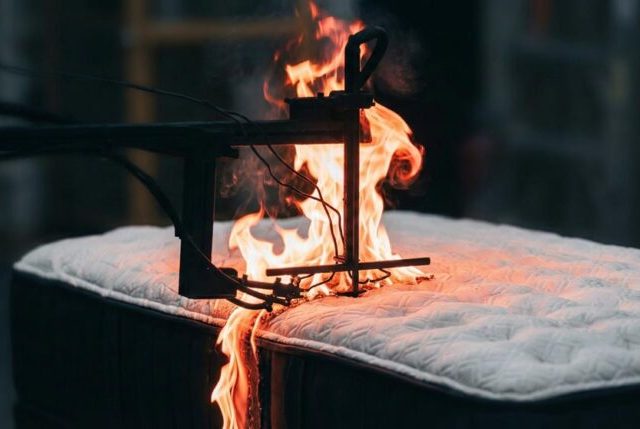
Why Flammability Testing Matters
The home is where the majority of personal accidents take place. Although the look and feel of textiles used in home decoration are important, safety should remain the primary consideration, especially where the danger of fire is concerned. Fire in the home is a common cause of injury and death, and the flammability of home textiles, furniture, and upholstery is therefore evaluated for resistance to ignition and their potential role in fire spread.
In general, flammability arises from a build-up of heat and the transfer of this heat from one material to adjacent materials. When textile products burn, the fumes and smoke they emit are not only irritating to breathe but are also often highly toxic. In many fires, smoke inhalation is a major cause of fatalities, sometimes more so than the flames themselves.
Flammability testing is one of the most critical testing procedures in the textile industry because of its direct relevance to fire safety. Residential fire fatalities are often associated with the accidental ignition of upholstery and household textiles, so proper flammability standards are essential. In this context, flammability testing for home textiles helps manufacturers assess ignition resistance and improve fire safety at the design stage, thereby supporting safer interior environments.
Factors Affecting the Flammability of Textiles
The flammability of home textiles depends upon a range of different parameters including fibre content, product construction, fabric mass, size and intensity of the ignition source, and so on. Heavier fabrics and tighter constructions generally burn more slowly than loose weaves and lightweight fabrics made from the same material.
The surface texture of the fabric also affects flammability. Fabrics with a long, loose, fluffy pile or brushed nap ignite more readily than fabrics with a hard, tight surface. In some cases, a high, loose pile can cause flames to flash rapidly across the fabric surface. Different materials also react differently under the same conditions.
However, when flame-retardant chemicals are applied to textile substrates, the combustion process can be inhibited or suppressed. These treatments interfere with combustion at various stages of the process, such as heating, thermal decomposition, ignition, and flame spread. For this reason, flammability testing for home textiles cannot rely on a single approach and must reflect the characteristics of each product and material system.
Home Textile Products and Flammability Requirements
In many jurisdictions, products such as mattresses, futons, mattress pads, bed pillows, comforters, quilts, bumper pads, carpets and rugs, upholstered furniture, bean bag chairs, and cushion seats are required to comply with specific flammability regulations. Other products, such as blankets, draperies, and table linens, may be tested on a voluntary basis or according to applicable national requirements to ensure fire safety.
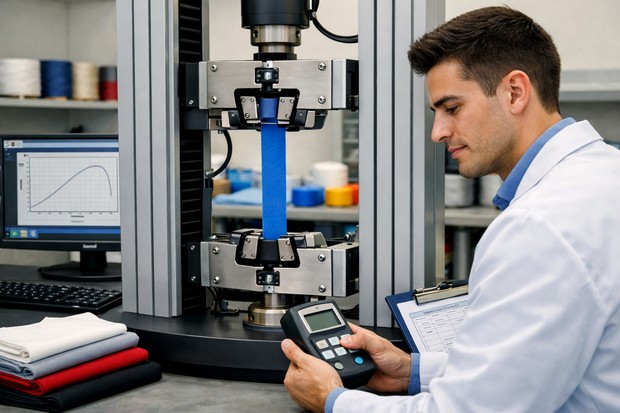
Regulations in various countries also require home textile products to be labelled correctly so that consumers are warned about potential hazards arising from normal use or reasonably foreseeable misuse of the product. Because product categories differ significantly in structure, filling materials, and end-use conditions, flammability testing for home textiles requires appropriate instrumentation, controlled test conditions, and technical expertise. Flammability testing therefore requires appropriate instrumentation, controlled test conditions, and technical expertise.
Flammability Regulations for Different Home Textiles
Different home textile products present different levels of fire risk. As a result, testing requirements are not uniform across all categories. Unfortunately, there is no single flammability standard for upholstery or vertical surface fabrics, which have been adopted as the norm throughout the world, and the plethora of different standards in force internationally reflects the different ways of approaching the whole flammability issue. From a regulatory perspective, flammability testing for home textiles must therefore be understood within the context of specific product categories and regional compliance requirements.
Important flammability test standards and related regulations include California Technical Bulletin 117, including its historical sections covering resilient cellular materials, shredded resilient cellular materials, bean bags, non-man-made filling materials, shredded and loose-fill materials such as feathers and down, man-made filling materials, cigarette resistance, smouldering screening, and upholstery fabrics, as well as the updated TB 117-2013 used for upholstered furniture. Other important regulations include 16 CFR 1631 for small rugs, 16 CFR 1630 for carpets and large rugs, ASTM methods for blankets, CAN/CGSB methods for towels, 16 CFR 1632 for mattresses and mattress pads, 16 CFR 1633 for mattress sets, CA TB 604 for bed clothing, EN 1021-1 and EN 1021-2, and BS 5852 for the ignitability of upholstered seating.
For curtains and similar hanging textiles, relevant flammability standards include BS 5438, ISO 6940 and ISO 6941, applicable CAN/CGSB methods, and AS 2755.
Conclusion
Flammability testing for home textiles is a complex subject, shaped by material science, product design, and regulatory frameworks. With continuing innovations in existing fibres, the development of new fibres and fibre blends, and rapidly changing lifestyles and consumer expectations, manufacturers need to remain fully aware of current fire-safety regulations, along with the products and processes that help them meet these requirements. The adoption of advanced technology offers a clear advantage in delivering superior home textiles and furnishing products for niche markets. However, compliance with acceptable fire-safety performance standards cannot be ignored while offering high aesthetic value and competitive prices.
References
[1] Das, S. (2010). Performance of Home Textiles. Woodhead Publishing India.
[2] Kadolph, S. J. (2010). Textiles (11th ed.). Pearson Education, Upper Saddle River, NJ.
[3] Pizzuto, J. J. (2012). Fabric Science (10th ed.). Fairchild Books, New York.
[4] Heywood, D. (2003). Textile Finishing. Society of Dyers and Colourists (SDC), Bradford, UK.
[5] Horrocks, A. R., & Anand, S. C. (Eds.). (2000). Handbook of Technical Textiles. Woodhead Publishing, Cambridge, UK.
[6] Horrocks, A. R., & Price, D. (Eds.). (2001). Fire Retardant Materials. Woodhead Publishing, Cambridge, UK.
[7] Asayesh, H. (2012). Introduction to Textile Testing. Woodhead Publishing India Pvt. Ltd., New Delhi.