Introduction
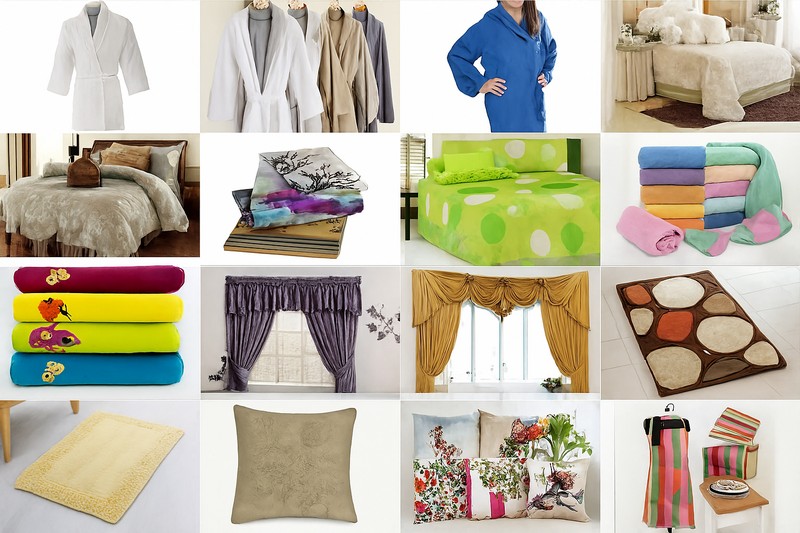
Home textiles shape the way interior spaces look and function, though they are often overlooked in everyday design discussions. Fabrics appear everywhere in a home. On beds, across windows, beneath our feet, even along the walls. Each category serves a practical role while also influencing comfort and visual style. Bedding, curtains, upholstery, and bathroom textiles all rely on different fibres and constructions. This article below outline major home textile applications and briefly explain how materials, structure, and design choices affect their use.
Home Textile Applications
Home textile includes the following applications: seating textiles, window textiles, bed textiles, wall coverings, bathroom textiles, accessories, kitchen furnishings, and table textiles. These home textile applications cover most textile products used in household interiors for comfort, protection, decoration, and daily use.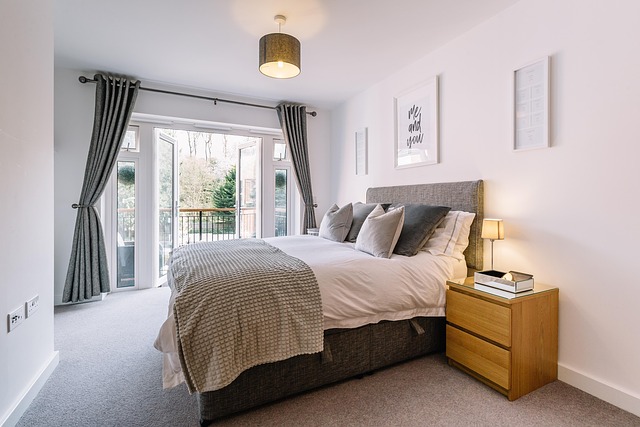
a) Upholstery and Seating Textiles for Modern Interiors
In upholstery fabrics for home use, there is a clear division between fixed upholstery and loose covers.
The term fixed upholstery refers to upholstery fabric that is stapled, tacked, glued, or otherwise fixed to the frame and covers a soft or hard base. Acrylic fibre velvets are often used because of their brightness and attractive appearance.
A key fashion trend in fixed home upholstery fabrics is heavily textured fabrics. Texture is usually achieved by using fancy bouclé-type yarn as the weft across a non-textured warp.
A bouclé yarn is a special yarn with a looped texture. It is usually made of three plies, where one thread is looser than the others. This loose thread gives the yarn a rough feel and bulky appearance. Because of this loose thread, it may unravel more easily than some other yarns. Therefore, care must be taken when working with bouclé yarn to maintain the proper look and quality of the final product.
Since it is made from several plies, bouclé yarn is generally colourful, often combining two or more colours in a distinctive pattern. Initially, bouclé yarn was made of rayon and nylon, but recently polypropylene has become popular.
Loose covers are used to protect costly upholstery from wear and tear. Old furniture can often be refreshed with quality fabrics, either by re-upholstering or by using loose covers. Fabric choice is essential for achieving a quality and stylish appearance. Whether in modern or traditional interiors, the right linen fabric can add a sense of elegance. Plain or striped linen and cotton, linen–cotton union, and cotton–hemp union are commonly used in loose covers.
b) Window Covering Textiles for Style and Privacy
- Sun Filters: These are woven voiles made from polyester and flax. They include curtains, nets, and pelmets, which are boards used to hide curtain rods. Popular sheer curtain types include voiles, woven nets (air-textured continuous filament PET), warp-knitted nets, burn-out and broché fabrics made with core-spun PET fibre and cotton yarn, raschel nets, and monarch safety nets made from terylene yarns.
- Semi-Sheers: These are made from coarser yarns, often textured or fancy yarns, in woven construction. A combination of leno and plain weave is used with weft-wise or warp bands forming solid areas or checks.
- Reflective Textiles: To reduce solar heat, prevent glare, and maintain indoor temperature, Verosol window treatments can be used. These consist of PET fibre fabric coated with an aluminium film on one side.
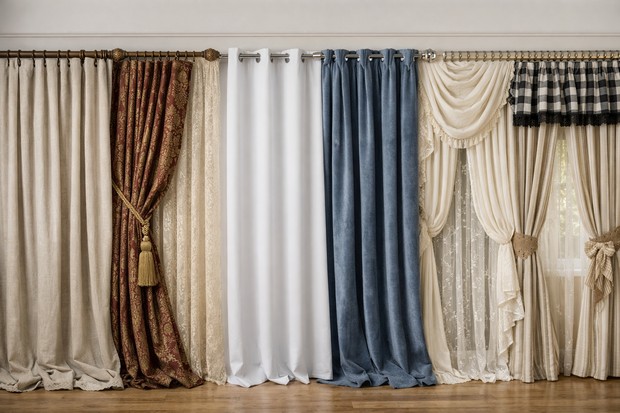
- Curtains and Drapes: This is one of the largest areas of fabric development in home textiles. It includes plain-weave fabrics in cotton, flax, wool, silk, acrylic, viscose, and PET; textured synthetic yarn fabrics; and jacquard or dobby weaves such as damask and check designs.
Blackout materials are usually cotton fabrics that provide 100% opacity. Various styles include venetian blinds, vertical blinds, and roller blinds. Roller blinds are often made from glass fibre fabric, while vertical blinds act as efficient light filters.
c) Bed Textiles for Comfort and Style
- Sheets and Pillowcases: This is a major soft goods category. Sheet print designs include small and large floral patterns, coordinated themes linking sheet, pillowcase, and duvet cover with bordered designs, patchwork-inspired prints, strong diagonals, geometrics, and candy stripes. Special children’s sheets include modern easy-care sets such as Peanuts and Disney cartoon themes.
Materials normally used are 100% carded cotton, ring-spun yarn, or open-end yarn. Polyester/cotton is used much less than cotton, though it offers shrink resistance and durability. Other fabrics, such as silk, represent a small part of the market. Yarn specifications are usually part of the contract. Cloth construction criteria include weight, yarn count, and weave type. Sheet specifications cover dimensions, selvedges (self-finished edges of fabric), and weight. - Quilted Textiles: PET fibre is mainly used, though several alternative fillings are now available.
- Blankets: Blankets are normally made from raised wool, acrylic fibre, and acrylic–polyester blends in solid colours. Cotton terry blankets also exist. Thermal blankets are produced from wool, acrylic, polyester, and polyester–acrylic blends. Point designs with large single motifs and borders are common. Raschel knit blankets, needle-punched nonwovens (finished by napping), and flocked blankets are also available.
Small blankets, called throws, typically measure 50 × 60 in. (130 × 160 cm) and are used for decoration and comfort. Popular fleece throws are available in non-printed, printed, and embroidered forms. - Bedspreads: A bedspread is an important interior furnishing item. Styles include plain, embroidered, lace, Chadwick, velour printed and jacquard, chenille, terry types, and jacquard or dobby types. Common fibres used are wool, cotton, acrylic, viscose, and blends.
- Mattress Covers: Traditional jacquard patterns with viscose filament warp and spun weft of viscose or cotton are commonly used. A notable development is the introduction of colourful, modern broad stripes.
- Bed Skirts: Bed skirts hide the box spring (bed base). They are also called petticoats, dust ruffles, or dusters. Tailored and bordered styles are used in pile, woven, and knitted fabrics. Gathered or ruffled bed skirts are also available. They can be made by the panelled or platform method. Linen bed skirts are popular because of their natural flow.
d) Comforter Sets and Quilted Bedding
A comforter is a type of blanket used mainly for warmth during sleep, though it can also function as a mattress pad. Comforters are large rectangular coverings filled with natural or synthetic insulating material and enclosed in a fabric shell. Like quilts, they are generally used with a set of sheets.
Comforter sizes correspond to bed sizes: twin, full, queen, king, and cal-king. They are slightly larger than the bed to allow draping.
Typical U.S. comforter sizes include:
- Twin = 64 × 87 in.
- Queen / Full = 87 × 87 in.
- King = 101 × 87 in.
Comforters are sometimes protected with a duvet cover. The word duvet is French for “down.” Comforter covers are similar to pillowcases and usually close with zippers or buttons. In the United Kingdom, comforters are often referred to as duvets. Comforter sets are typically packaged with a bed skirt, pillow shams, and sometimes pillows.
- Filling: Comforters may be filled with polyester batting, down feathers, wool, or silk. Some may also use fur with satin or silk backing. The loft (thickness) of the filling determines the weight and insulation level. The comforter is stitched or quilted to secure the filling evenly.
- Shell / Covering: The outer shell is typically made from cotton, silk, polyester, or blends with varying thread counts. Designs and colours often match other bedding items. High-thread-count comforters are softer and more luxurious. Washing comforters usually requires a machine with at least 3.7 m³ capacity. Polyester and wool fillings are commonly used to provide warmth.
e) Duvets and Duvet Covers: Modern Bedding Essentials
A duvet is a fluffy comforter inserted into a duvet cover. The cover usually has an opening with button closures and protects the comforter. It functions like a large pillowcase, preventing the duvet from slipping during sleep.
Duvet covers can match bedroom decoration and may act as a bedspread, blanket, or top sheet. Buyers can choose from many designs and fabrics according to fashion trends. Cotton, satin, linen, jacquard, and silk duvet covers are common. Design and colour selection are important for coordinating with home furnishings.
f) Decorative Bed Throws and Accent Blankets
Bed throws are used for short rest periods, travel, or decorative purposes. They serve as a decorative accent and a comfortable wrap for the bed. Soft and luxurious, they provide warmth and comfort while enhancing bedroom appearance.
Bed throws are available in many colours, fabrics, and designs, allowing quick changes in bedroom style. Besides indoor use, they are also used for outdoor picnics, sporting events, or travel.
Common materials include cotton, silk, and other rich fabrics with decorative patterns. Techniques such as embroidery, patchwork, and other embellishments are used to enhance their appearance. Bed throws are produced in different shapes, sizes, and fabrics, and can also be custom-made.
g) Wall Textiles and Fabric Wall Décor Ideas
Wall fabrics are increasingly replacing paints. Wallpaper also remains important. Wall fabrics are available in convenient widths so they can cover room height without seams.
Jute was originally the main material for wall fabrics. Although its use has declined, flax is still widely used. Nonwoven warp systems in various fibres and textures are also common. These fabrics can be easily removed for cleaning or replacement using Velcro-type bands with self-adhesive backing.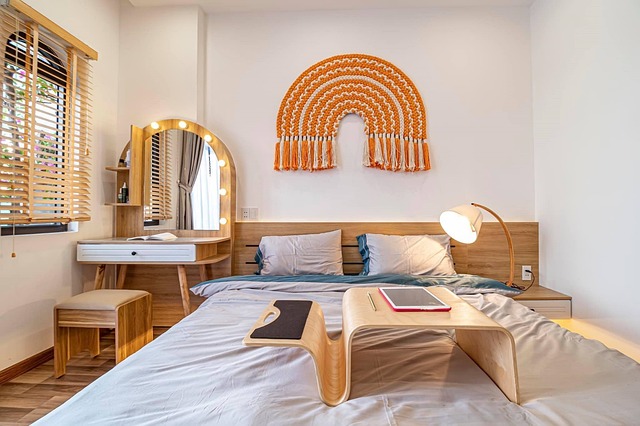
Hanging wall fabrics also help absorb sound, often supported by materials such as mineral wool and glass wool.
- Tapestries: Tapestry fabrics generally use repp weave, where the warp is completely hidden by the weft. The weft is firmly beaten with a heavy comb. Cotton is used as warp and worsted yarn as weft. Yarns are usually dyed with metal complex dyes using hank dyeing machines, and mothproofed yarns are often used.
- Wall Decorators: Decorative wall throws or throw rugs can change the look of a living area. Their colour combinations and patterns suit many interior styles. Materials commonly used include wool, cotton, polyester, and chenille. Wool wall decoration throws are popular because of wool’s natural properties. Some sheep breeds, such as Merino, produce fleece known for its shine and fibre length.
- Wall Hangings (Embroidery): Embroidery is sometimes used to highlight borders between patterned areas of the base cloth. Various stitches create decorative effects using carded, dyed, non-spun fibres. A web placed on backing material can form a tapestry or wall hanging.
- Wall Hangings (Hand Tufted): These are produced using hand-operated tufting needles or mechanical tufting guns. Batik wall hangings and woven or knotted varieties are also common.
h) Bathroom Textiles: Towels, Mats and Shower Curtains
Shower Curtains: Shower curtains must be made from waterproof materials. Plastic-coated textiles, including woven and nonwoven fabrics, are widely used. Plastic sheets are less popular because they tend to split and tear. Printed shower curtains are sometimes designed to match bathroom vinyl wall coverings, towel designs, or tufted bathroom textiles.
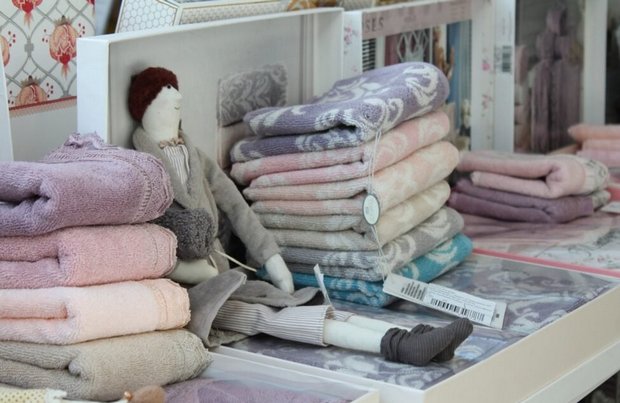
Terry Toweling: Terry fabrics are an important part of household textiles. Terry towels come in many designs, including piece-dyed fabrics, jacquard floral designs, printed styles, sculpted designs, and velvet or shorn types.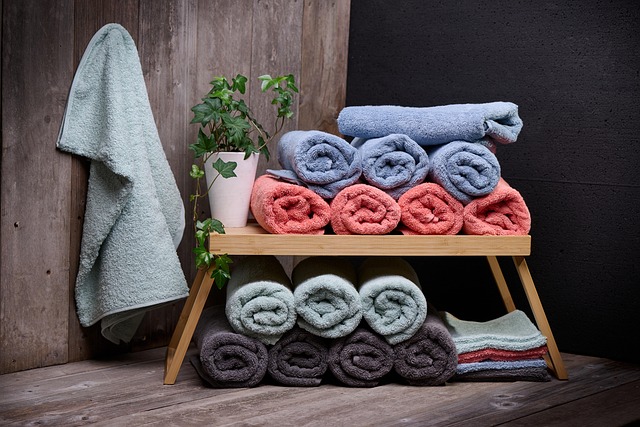
Cotton is traditionally used for terry towels. However, to meet changing demands, manufacturers now use fibres such as modal, bamboo, seaweed, lyocell, soybean, corn fibre, tri-blends of bamboo–silk–cotton, and microfibre. Towels made from bamboo–cotton blends are often softer after washing than pure cotton towels.
Welspun USA introduced Soycot® towels, combining soy fibres with cotton to improve softness and absorbency. Another blend uses porcelain fibre, bamboo, and low-twist cotton for a soft, cashmere-like feel.
One of the most significant developments in towel yarns is low-twist yarn, spun from long-staple cotton fibres with very low twist. MicroCotton® is a well-known branded low-twist yarn. Another innovation is HygroCotton®, a spinning technology from Welspun USA that creates a hollow core in each cotton strand, improving absorbency and softness.
Bath Mats: Bathroom floors can be slippery after bathing, so bath mats are placed near tubs, sinks, or doors to reduce slipping. They also enhance bathroom appearance. Mats are usually selected to match other bathroom textiles such as shower curtains, bathrobes, bath towels, bath rugs, face towels, and hand towels.
Embroidered, printed, and plain mats are available. Cotton mats are highly absorbent and attractive, while jute mats provide anti-slip properties. Handmade bath mats are also common. Key features include durability, washability, and anti-slip performance. Bamboo bath mats and mats with rubber backing are widely used anti-slip options.
i) Bathrobes: Materials, Weaves and Comfort Features
A bathrobe is worn after bathing to keep warm and maintain modesty. It is usually a loose, open-front garment tied with a fabric belt. It may be worn over nightwear after getting out of bed or when partially dressed.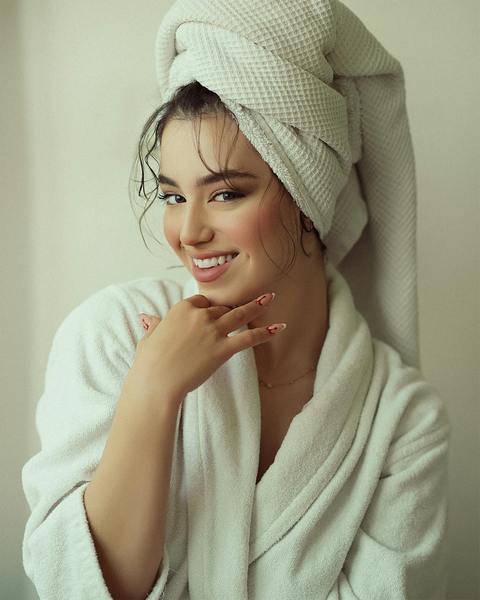
Bathrobes are generally made from several fabrics:
- Cotton: Highly absorbent due to cellulose structure. Often used at the beach, pool, or after a shower. Suitable for hot climates because it absorbs sweat.
- Silk: Lightweight and luxurious but expensive. It absorbs water poorly, so it is not ideal for wet conditions.
- Microfibre: Extremely fine synthetic fibres, usually polyester. These fabrics are lightweight, soft, breathable, and absorbent.
- Wool: Common in colder climates because of its warmth.
Bathrobes can also be classified by weave structure:
- Flannel: Soft woven fabric made from loosely spun cotton or wool yarns.
- Terry: A pile fabric with uncut loops on both sides. Longer and denser loops increase absorbency.
- Velour: Fabric with cut loops. Often made with terry inside for better water absorption while the outer velour surface provides a luxurious feel.
- Waffle: A lightweight fabric with a grid-like texture. Pique is a type of waffle weave used with cotton, velour, silk, and other fabrics.
j) Bathroom Rugs and Floor Mats for Safety and Style
A bath rug is both decorative and functional when stepping out of the shower or tub. Wet feet increase slipping risk, and water can damage flooring. Bath rugs provide a stable, comfortable surface for drying feet.
These rugs are especially useful in busy homes where showers are used frequently. Bath rugs are usually tufted or pile-knit floor coverings. Tufted pile yarns are less dense than carpet piles but are longer, typically 1–3 inches.
Bathroom rugs add softness underfoot and introduce colour and texture. They are commonly made from cotton or chenille, as these fibres handle moisture better than wool. Cotton rugs are durable but may wear over time if not dried properly. More durable options are made from rayon, acrylic, or polypropylene.
k) Home Textile Accessories: Carpets, Rugs and Floor Mats
1. Carpets:
Carpet quality is judged by the number of knots per unit area, along with design, colour, and yarn quality. Firmness, thickness, and the appearance of the carpet back are also important. The type of fibre determines the appearance, durability, feel, stain resistance, and cost. Synthetic fibres dominate modern carpets and account for about 97% of all fibres used.
Common fibres used in carpets include:
- Nylon – Suitable for all traffic levels. It is highly durable, stain and mildew resistant, does not generate static, and retains fibre height under heavy furniture and foot traffic. Nylon accounts for about 90% of home carpeting.
- Polypropylene – A strong fibre resistant to moisture and mildew. It is easy to clean and widely used in commercial carpets, both indoors and outdoors, including artificial turf.
- Polyester – Produces attractive carpets and is cheaper than nylon or wool. Often used in soft loop or berber loop carpets. It offers crush resistance, colour variety, fade resistance, easy cleaning, and resistance to water-based stains.
- Acrylic – Provides the look and feel of wool at a lower cost and has better moisture and mildew resistance than wool. Used in velvet and plush level-loop carpets. Although it resists crushing and fading, it is not suitable for high-traffic areas such as hallways or stairs. It is often used in bedrooms.
- Wool – Wool carpets are soft and maintain pile height well. They are used in cut pile and textured carpets and offer luxury and durability. They are easy to clean and long-lasting but are expensive and less moisture resistant than synthetic fibres.
- Blends – Fibre blends combine advantages of different fibres. For example, wool/nylon blends provide wool’s comfort with nylon’s durability. Other blends include acrylic/polypropylene and nylon/polypropylene. These are usually less expensive but may stain more easily.
- PET (Polyethylene Terephthalate) – Often made from recycled plastic bottles. PET fibres are durable, resistant to water and static, and environmentally friendly, though less plush than some other synthetic fibres.
2. Rugs
The face fibre of rugs can be natural or synthetic. Synthetic fibres are most common, especially nylon, followed by olefin (polypropylene), propylene, and acrylic, because of their durability, availability, and lower cost.
Among natural fibres, wool is most preferred, followed by sisal, jute, hemp, seagrass, and bamboo. Wool is used less frequently mainly because of its higher price.
Rug backing does not require the same quality level as face fibre, but its structure and materials, including the latex layer, affect durability and shape retention.
A suitable rug pad is required to protect rugs and improve stability. Padding materials include felt, rubberised felt, foam rubber, sponge rubber, and urethane (prime or bonded).
Felt pads made from 100% hair have good resilience and wear resistance but may shed, absorb moisture, and cause allergies. Felt mixed with jute loses strength. Felt pads coated with latex or rubber provide better stability, reduced moisture absorption, and lower allergy risk.
3. Mats
Floor mats are made from materials such as wheat straw, rice straw, weeds, and sliced bamboo. They usually have a fine upper layer and a coarse bottom layer, with stitched edges for strength.
l) Kitchen Textiles for Safety and Function
The kitchen is an important part of the home but also one of the most risky areas because of knives, scissors, gas stoves, and electrical appliances. Despite these risks, textiles are widely used in the kitchen in products such as aprons, napkins, mittens, and dish cloths.
For safety and practicality, kitchen textiles are commonly made from cotton or linen because these fabrics are washable, durable, and less flammable.
Cotton remains the most widely used material because of its availability and useful properties. Recently, linen has gained popularity in high-quality kitchen products. Linen production is considered environmentally friendly, requiring 5–20 times less energy and water than many other fibres.
Silk is rarely used because it burns easily and is expensive. Although cotton remains dominant, some consumers prefer polyester fabrics or blends such as cotton–linen, organza, and poly-tissue.
Kitchen textile colours often change with seasonal or festive trends. Bright colours such as red, blue, orange, and pastels are popular in summer, while darker shades like black, brown, and grey are preferred in winter. White is rarely used alone because it stains easily, though it is often used as a base colour in designs.
- Mittens: Kitchen mittens provide lightweight heat protection and breathability. They are usually made from cotton or flax fabrics for daily use. Decorative mittens may also use fur, leather, wool, alpaca, or mohair blends. They can be hand-woven, hand-painted, embroidered, or machine-printed.
- Coasters: Coasters protect table surfaces from heat or cold damage caused by cups and glasses. They are produced in many designs such as hand-woven, embroidered, hand-painted, or machine-printed. Coasters are available in various shapes including square, triangular, rectangular, circular, and oblong.
- Kitchen Aprons: A kitchen apron is a garment fastened at the back and worn over the front of the body to protect clothing. Aprons are made from linen, cotton, denim, polyester, and other fabrics. They often have large decorative pockets and a waistband. Many kitchen aprons are flame-retardant. Printed, dotted, and lace-decorated aprons with ribbons are widely available.
- Kitchen Towels: Kitchen towels are available in different sizes for drying dishes and hands. They should be washable, quick-drying, absorbent, and durable. Common materials include cotton, linen, terrycloth, and microfibre.
- Placemats / Tablemats: Linen and cotton mats with decorative weaves, embroidery, appliqué, or lace are popular. Variations occur in weave, texture, material, and shape. Many exporters use jute, straw, flax, and plastic mats. Jute tablemats have strong demand because they are user-friendly and naturally attractive. Mats highlighted with coloured threads are common. Straw mats use different straw thicknesses to create textures. Coloured threads and straws are used for decoration. Common patterns include paisley, floral, geometric, and abstract designs. Solid colours, patchwork, and light embroidery are also widely used.
- Napkins: Linen and cotton are preferred because they are durable, absorbent, and hygienic. They can be boiled for cleaning and tolerate ironing and sunlight drying. Napkins are often embroidered, printed, or painted to give a tailored appearance. Common motifs include floral, animal, and geometric designs. Printing or painting is sometimes placed strategically to suit different napkin-folding styles.
- Napkin Rings: Napkin rings improve the presentation of napkins on the table. Traditional designs in pleasing colours are common, though designers experiment with new styles to attract buyers. Many customers prefer clean lines with subtle traditional elements. Materials used include glass, ceramic, stone, wood, poly-resin, brass, bone, and aluminium.
m) Table Textiles for Elegant Table Settings
1. Table Cloths / Covers
Many types of tablecloths are available. Linen tablecloths are more expensive than cotton or synthetic fabrics. Europe is well known for high-quality linen products. Linen’s smooth appearance and natural shine make it popular for luxury tablecloths.
Common types include woven printed linen–cotton, crocheted linen, jacquard fabrics (including damask), and embroidered styles. Nonwoven tablecloths such as spun-bonded nylon and spun-laced polyester are also widely used.
Disposable tablecloths made from dense paper material are available for one-time use and are sometimes called paper linen tablecloths. Irish linen tablecloths from Ireland are also well known. Table covers are often decorated with beadwork, embroidery, and appliqué. Linen is suitable for embroidery, dyes easily, and maintains colour after washing. Both modern and traditional designs are common, and handmade tablecloths remain popular.
2. Table Runners
Table runners are decorative fabrics placed across the table to enhance appearance. In some regions, table covers are more common, while runners are mainly decorative. Runners are made in rectangular, round, square, or oblong shapes, and there is no strict rule that the runner shape must match the table shape.
Common styles include patchwork, crochet, embroidered, jacquard, printed, and knitted runners.
- Patchwork runners combine base fabric with patches of different prints or colours.
- Crochet runners are made using thread and a crochet hook, often with decorative edges.
- Embroidered runners can be hand-made or machine-made; handmade versions are usually more expensive.
- Knitted runners are typically made from wool, while printed runners feature surface prints.
Decorations such as lace, ribbons, and trims are often added. Table runners are produced from cotton, polyester, silk, bamboo, and linen. Materials like vinyl, plastic, and satin are also used. Paper table runners are becoming popular for single-use occasions. Quilted runners can significantly change room décor, making them an important element in dining and living spaces.
3. Table Mats
Common styles include woven printed mats, jacquard mats, and embroidered mats.
4. Table Skirting
Table skirting fabrics should be soft and flowing, not stiff. The fabric should also be opaque for better appearance. Polyester is commonly used because it drapes well, looks attractive, and requires little maintenance.
For a richer look, linen and silk table skirting are used. Satin or poly-satin is a cheaper alternative to rayon. In some events, cotton table skirting is also used, though it has less visual impact than shiny fabrics.
Materials used for table skirts include linen, satin, cotton, polyester poplin, poly-silk, and poly-linen. Plastic table skirting is also available; it is easy to maintain but has shorter durability and lower visual appeal than fabric skirting.
Conclusion
Looking across these categories of home textile applications, one pattern becomes clear. Home textiles are not just decorative pieces placed around a house. They respond to daily needs such as warmth, privacy, hygiene, and durability. Fabric choice, yarn structure, and finishing methods all shape how these products perform over time. Some materials suit heavy use, while others appear mainly in decorative roles. Understanding these home textile applications may help designers, manufacturers, and consumers make better decisions when selecting textiles for different parts of the home.
References
[1] Das, S. (2010). Performance of home textiles. In Woodhead Publishing Limited eBooks. https://doi.org/10.1533/9780857094032
[2] Sinclair, R. (2014). Textiles and Fashion: Materials, Design and Technology. Woodhead Publishing.
[3] Tortora, P. G., & Collier, B. J. (2014). Understanding Textiles (7th ed.). Pearson Education.
[4] Kadolph, S. J. (2016). Textiles (12th ed.). Pearson Education.
[5] Yates, M., & Concra, A. (2023). Textiles for Residential and Commercial Interiors. Bloomsbury Publishing.
[6] Gopalakrishnan, D. (2017). Home Textiles. Woodhead Publishing India.
[7] Diamond, J., & Diamond, E. (2008). Fashion Apparel, Accessories and Home Furnishings. Dorling Kindersley.