Introduction
Buying carpet sounds simple. Walk into a showroom, touch a few samples, pick a color, done.
Except it rarely works that way. A carpet is not just a decorative layer. It changes how a room feels underfoot, how sound moves, how heat is retained, and even how often you find yourself cleaning.
Carpet remains one of the most widely specified floor finishes in residential, commercial, and institutional buildings. Within the broader category of home textiles, it occupies a distinctive position because it functions not merely as décor but as an integrated building component. Its appeal extends beyond appearance. Performance characteristics such as thermal resistance, acoustic absorption, safety, indoor air quality, and environmental impact all influence selection. For informed buyers and specifiers, understanding these properties is essential rather than optional.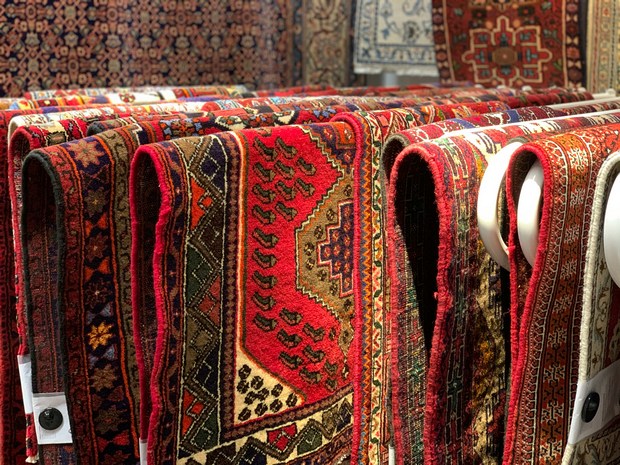
This guide examines the technical, regulatory, and environmental aspects of carpet performance using current standards and recent industry developments (2024–2026). The aim is not promotional. Instead, it is to provide a balanced and evidence-based overview that supports sound decision-making.
Here are seven properties of carpet that genuinely deserve your attention before you make the purchase.
Carpet Properties: The Essential Guide for Smart Buyers
1. Fiber Type
The fiber is the carpet’s DNA. Nylon, polyester, wool—each carries distinct strengths and weaknesses. Nylon tends to resist wear, though it can be prone to staining unless treated. Polyester often offers richer color retention but may crush under heavy traffic. Wool, admired for its natural warmth, can be costly and less forgiving with spills. No single fiber is perfect; the choice depends on how the space will be used. A family room with children and pets may demand resilience, while a guest bedroom could accommodate something softer and more delicate. No fiber is universally superior. The right choice depends on where the carpet will live and how hard it will be used.
2. Aesthetics
Carpets are available in a wide variety of styles, textures, designs and colours, allowing considerable flexibility in both residential and commercial schemes, which the skilled interior designer can use to create a stylish interior suited to the activity conducted in the carpeted area. In the home, carpet helps to provide a warm and comfortable environment that feels visually and physically insulated away from the harsh realities of the everyday world. In commercial buildings, carpet helps to make a statement about the enterprise and creates an environment conducive to efficiency, often reinforcing brand identity through colour, pattern scale, and spatial zoning. In recent years, aesthetic choice has also been shaped by environmental considerations as clients increasingly request material transparency and lifecycle data. Many manufacturers now incorporate recycled fibres, lower impact dye processes, and documented carbon reduction strategies, reflecting the stronger sustainability expectations embedded in current design practice (2024–2026).
3. Thermal Insulation
Carpets are excellent thermal insulators, a property that is enhanced further by a good underlay selected to suit the specific floor construction. With conventional heating systems, the insulation properties of carpet and underlay can significantly reduce heat loss through the floor, particularly in suspended timber or poorly insulated slab constructions. Depending upon construction and specification, carpet may have a thermal insulation varying between about 0.1 m²K/W and 0.3 m²K/W, with denser pile structures generally offering higher resistance values.
In the case of under-floor heating, however, the apparently excellent thermal insulation properties of the carpet do not excessively impair the efficiency of the heating system when correctly specified. It is believed that this is a function of the fact that in an under-floor heating situation the carpet becomes the heat transmitter to the airspace above, moderating rather than blocking heat flow. However, excessively thick and luxurious carpets, particularly when installed on a thick felt underlay, can be expected to slow the rate of transfer of heat from floor surface to airspace to an unacceptable level, resulting in slower system response times and reduced controllability. Current industry guidance generally recommends that the combined thermal resistance of carpet and underlay should not exceed approximately 2.5 tog (around 0.25 m²K/W) if underfloor heating performance is to remain within acceptable response times (2026 guidance from flooring and heating trade bodies).
Within the EU, the thermal insulation properties of carpet are determined according to ISO 8302 Thermal insulation – determination of the steady-state thermal resistance and related properties – Guarded hot plate apparatus, which measures heat flow under controlled laboratory conditions. For thicker constructions and higher resistance materials, EN 12667 is also referenced in contemporary practice, ensuring consistency with broader European thermal testing frameworks.
In the UK, the thermal insulation value of carpets has been measured according to BS 4745 (Togmeter) test, but this is no longer considered to provide a reliable guide since it has been determined that compared with actual usage this ‘overstates’ the thermal resistance by a considerable margin in practical building scenarios. BS 4745 has now been formally withdrawn, and specification increasingly relies on harmonised ISO and EN standards rather than legacy national test methods (BSI updates 2023–2025).
4. Acoustic Insulation
Changes in lifestyle in recent years, in which smooth floors, particularly wood and laminate floor coverings, have gained in popularity, have demonstrated to the public just how noisy an uncarpeted room can be in everyday occupation. Carpeting is one of the most effective ways of reducing noise, and the best carpets can provide acoustic insulation to the same level as dedicated acoustic insulation materials when installed as part of a suitable floor build-up.
There are three ways in which carpet can provide acoustic insulation. Possibly the most important of these is impact sound absorption. This is concerned with the way in which sound of, say, a footfall or a dropped object is transmitted into the room below. The pile of a carpet significantly reduces the energy of the impact and has the effect of converting a sharp high frequency sound into a low frequency thud which has significantly less impact on the ear and is generally perceived as less intrusive.
Impact sound absorption is measured according to ISO 717-2 using a tapping box device to generate the noise which drops small hammers onto a floor surface at different frequencies and measures the sound generated in a room below, all under controlled standard conditions to allow meaningful comparison between floor systems. Comparison of the generated sound through the bare floor with that through the carpeted floor, as a decibel ratio, can be used to evaluate the impact sound absorption properties of floor coverings. In addition, the ISO 10140 series is now widely applied for laboratory measurement of impact sound insulation of floor constructions, reflecting more recent revisions in acoustic testing procedures (2021–2024 updates).
Airborne sound reduction is also measured according to standard method. The test method is described in BS EN 20354 and the Sound Absorption Class may be derived from this according to BS EN ISO 11654. BS EN 20354 has been superseded by EN ISO 354 (Acoustics — Measurement of sound absorption in a reverberation room), which is the current reference standard in 2026. The test method involves a purpose-built reverberation chamber which has three loudspeakers which generate sound at different frequencies in the range 250–4000 Hz and five microphones per loudspeaker to capture spatial variation within the chamber. The test is conducted with the floor carpeted and the result compared with the figures taken with the floor bare.
The sound reduction coefficient is calculated taking into account area of carpet, dimensions of the test chamber, etc., and is the average of the reduction in reverberation times at each frequency band across the defined octave ranges. A sound reduction coefficient of 1 would be a perfect insulator and 0 would represent a perfect reflector. The more luxurious carpets will have a sound reduction coefficient as high as 0.5–0.7, equivalent to acoustic ceiling tiles and sufficient to comply with the UK Building Regulations for circulation areas in public buildings under specified construction conditions. Compliance continues to be assessed against Approved Document E of the UK Building Regulations, most recently amended in 2024, although overall floor build up remains critical to achieving required performance levels.
5. Safety
The textile surface of a carpet and its three-dimensional structure make carpet a particularly safe surface on which to walk in normal dry conditions. The carpet surface will have excellent slip resistance and will offer a soft, forgiving surface should falls occur, potentially reducing minor injury severity compared with hard floor finishes.
From 1 January 2007, carpets sold throughout the EU are required to comply with the health, safety and energy saving requirements of the Construction Products Directive. These are described in detail in EN 14041 which also describes the necessary labelling, required in most EU countries, of the associated CE mark. The Construction Products Directive (CPD) has since been replaced by the Construction Products Regulation (CPR) (EU) No 305/2011, with revised provisions adopted in 2024 and phased implementation continuing through 2026. EN 14041 remains the harmonised standard for textile floor coverings within this regulatory framework, covering essential characteristics such as reaction to fire, slip resistance, and emission performance.
6. Impact Upon Human Health
Until fairly recently, many articles appeared in the popular media which asserted that carpet presented a health hazard, particularly in respect of asthma and other allergic diseases, often without reference to controlled studies. However, a review of scientific literature, particularly of those papers written in the last few years, suggests that the opposite is, in fact, the case. Recent indoor air quality research (2018–2025) tends to indicate that, when properly maintained, carpets may reduce the circulation of airborne particulates compared with hard floor finishes, although outcomes appear closely linked to cleaning regimes and occupancy patterns.
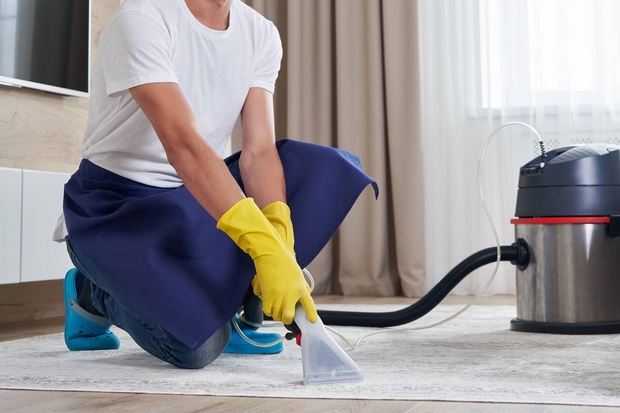
No scientific evidence has been found that proves that the removal of carpet alone has a clinical benefit since carpet removal has only been exercised together with a number of other potentially beneficial actions which might alleviate symptoms, making isolated causation difficult to establish. The three-dimensional construction of a carpet with pile is such that it can entrap the fine allergen particles that give rise to health problems when inhaled until they are removed from the carpet by periodic vacuum cleaning. A carpet has, therefore, an important role to play in significantly reducing the allergen content of indoor air when combined with regular and effective maintenance practices. Current health guidance increasingly recommends the use of high efficiency particulate air (HEPA) filtration vacuum systems to maximise removal of fine particles during routine maintenance (WHO and EU IAQ updates 2023–2025).
Wool, in particular, is known to absorb gaseous toxic pollutants from the atmosphere such as formaldehyde, sulphur dioxide and oxides of nitrogen under controlled indoor conditions. The large fibre surface presented by the pile of a carpet allows significant amounts of such pollutants to be absorbed, thereby contributing to improved indoor air quality over time, although saturation levels may vary depending on exposure. Low VOC certified carpets, assessed under ISO 16000 indoor air testing protocols and schemes such as the EU Ecolabel (2024 revision), are increasingly specified in projects pursuing WELL v2 (2024), LEED v5 (2025), and BREEAM 2024 certification.
7. Sustainability and Environmental Performance
Carpet sustainability is now frequently documented through Environmental Product Declarations (EPDs) prepared in accordance with EN 15804 +A2, which provide quantified data on global warming potential, embodied carbon, resource use and end of life scenarios across defined lifecycle stages (A1–C4). These declarations are increasingly required in public procurement and ESG driven commercial developments where transparent material data supports compliance reporting.
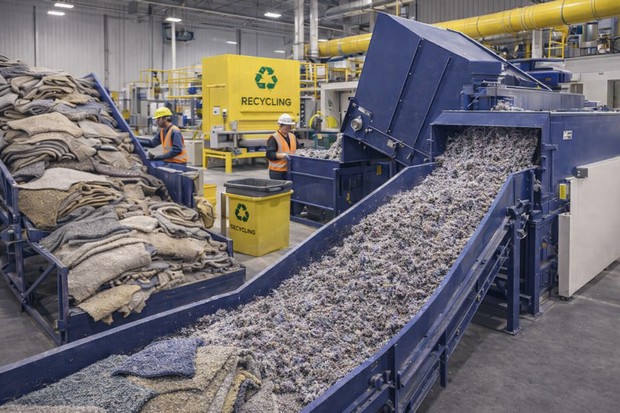
Closed loop recycling initiatives, particularly for polyamide carpet tiles, are expanding under the objectives of the EU Circular Economy Action Plan (2025 progress review). Many manufacturers now operate take back schemes, although actual recovery rates may vary depending on installation type and regional infrastructure and the degree of material contamination at end of use.
Environmental performance is also being influenced by corporate reporting requirements under the Corporate Sustainability Reporting Directive (CSRD), phased between 2024 and 2026, which places greater emphasis on transparent disclosure of material impacts within the built environment supply chain and requires verifiable environmental data from product manufacturers.
Conclusion
Carpet is often selected for its appearance, yet its performance characteristics extend far beyond aesthetics. Thermal behaviour, acoustic absorption, safety, indoor air quality, and environmental accountability all shape its suitability for a given space. Contemporary specification increasingly requires reference to harmonised international standards and transparent lifecycle data.
For smart buyers, the decision is not simply about colour or texture. It involves understanding how carpet interacts with heating systems, building acoustics, regulatory requirements, and sustainability frameworks. When properly specified and maintained, carpet can contribute meaningfully to comfort, performance, and responsible construction practice.
References
[1] Goswami, K. K. (2017). Advances in Carpet Manufacture Ed. 2. In Elsevier eBooks. https://univ.scholarvox.com/book/88849530
[2] Smith, J. L. (2003). Carpet and Rug Manufacturing. Manchester: The Textile Institute.
[3] Cook, J. G. (1984). Handbook of Textile Fibres: Man-Made Fibres. Cambridge: Woodhead Publishing.
[4] Kadolph, S. J. (2010). Textiles (11th ed.). Upper Saddle River, NJ: Pearson Education.
[5] European Committee for Standardization (CEN). (2007). EN 14041: Resilient, textile and laminate floor coverings — Essential characteristics. Brussels: CEN.
[6] International Organization for Standardization (ISO). (2017). ISO 10361: Textile floor coverings — Production of changes in appearance using a Vettermann drum and hexapod tumbler tester. Geneva: ISO.
[7] American Society for Testing and Materials (ASTM). (2016). ASTM D5252: Standard test method for the operation of the hexapod tumble drum tester. West Conshohocken, PA: ASTM International.
[8] European Committee for Standardization. (2008). EN 14041:2004/AC:2006 Resilient, textile and laminate floor coverings – Essential characteristics. CEN.