Introduction
In carpet-weaving mills with many machines, it can be difficult to schedule and monitor all the weaving machines. Carpet weaving automation addresses this challenge directly. To deal with this, Van de Wiele developed a software system called We@velink, which makes it possible to prepare, plan, and control all weaving machines, in one or more locations, from a central planning office. The software was developed specifically for the carpet industry. That industry-specific focus matters, because general production software does not always reflect the patterning, colour, and creel constraints of carpet weaving.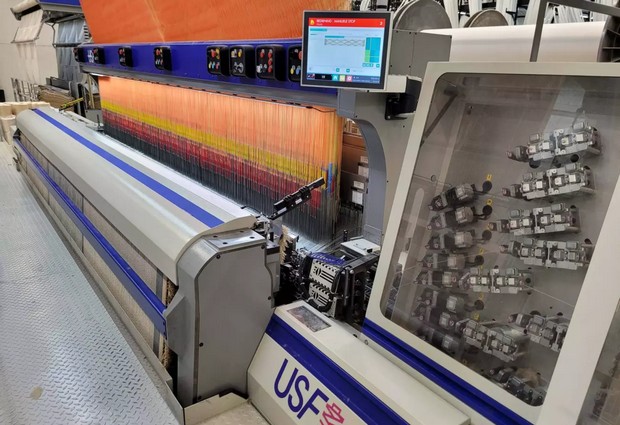
In this article, I will explain the main systems used in carpet weaving automation, including We@velink, CAD/CAM tools, process control, and automated creel technology.
CAD/CAM for Carpet Design and Weaving Files
The first step is creating the design. This is called the CAD (computer-aided design) part of the preparation process. Today, carpet weavers create their designs with special design software. This software includes tools and automatic creation wizards for designing carpets. At this stage, the work is not only visual. It also begins to define what can realistically be woven later. Besides basic tools such as copy, paste, cut, and drawing lines and circles, carpet CAD software can automatically create borders, circular and polygonal designs, repeat designs and motifs, and reduce the colours of a scanned image. To obtain a clear design in the carpet without mix-contours and double points, some design rules must be followed. In practical terms, these rules help prevent faults that can blur outlines or disturb the surface pattern. The Design Master of the We@velink software can detect whether these rules are followed.
The next step, after creating the design, is processing the design, or the CAM (computer-aided manufacturing) part of the preparation process. This means translating the design into a weavable file in the language of the electronic Jacquard machine, taking the creel set-up and weave structure into account. On paper, this translation step sounds routine. It is not always so simple. The design has to be converted into machine instructions without losing structure, colour order, or pile effect. The We@velink system has a wide range of weave structures available, such as cut pile in single, double, and three shot, loop, cut-loop, flat weave, sisal, long pile, and Axminster. The software can make automatic corrections to avoid mix-contours, double points, and similar faults. That may reduce trial-and-error on the loom, which can otherwise consume time and material. At this stage, it is also possible to add names automatically on the back of the carpet or on the jute between two carpets. The cross-section module allows checking the path of the yarns at each point of the carpet. For the technician, this offers a more exact check of yarn movement before production starts.
The We@velink intranet design library helps designers store designs with automatic name generation based on parameters and retrieve them from a library. As a carpet-weaving mill has many designs, this tool is essential to avoid mistakes. In a mill with a large archive, that is more than a convenience. A poorly named or wrongly retrieved file could lead to avoidable production errors.
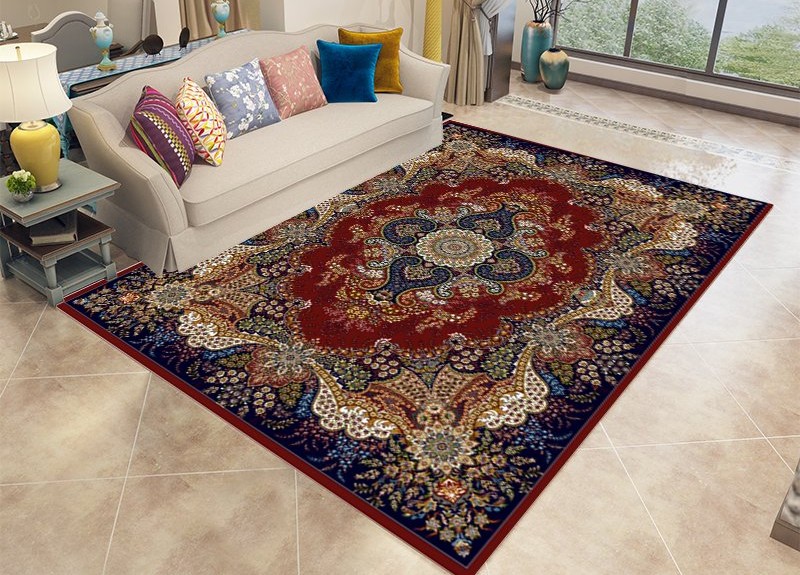
Another useful tool provides the visualisation and simulation of carpets. With this tool, the designer can show, both in the factory and to key customers, how the carpet will look once woven, taking the colours into account. This is useful not only for presentation. It may also help limit sample weaving when the expected colour effect or texture is uncertain. It is possible to visualise effects such as cut pile, loop pile, and flat weave very accurately. It is also possible to simulate how a carpet will look in a specific interior, taking light and shadows into account. Carpet weaving automation clearly benefits from these simulation features.
Machine Networking and Process Control
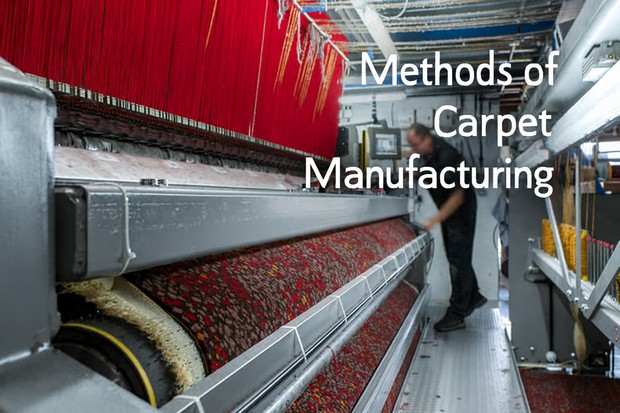
An essential tool for controlling a modern carpet-weaving factory is a network in which the carpet-weaving machines are connected to a central computer, allowing tracking of the full process and production. In effect, the network becomes both a control system and a live source of production data.
The We@velink network software is built in a modular way. This modular structure may suit mills with different sizes, product ranges, and degrees of automation. Depending on the needs of the company, it is possible to:
- Prepare optimal planning and corresponding weave schedules in order to use the full width of the machine by weaving different designs side by side
- Send the weave schedules over the network to the most suitable carpet-weaving machines, with visualisation of the carpets before sending if required
- Monitor production by recording the woven schedules and the corresponding efficiency
- Print out the data of the rugs actually woven
- Visualise the weave schedules according to the creel set-up before weaving
- Queue many weave schedules for long runs, for example during night shifts or weekends
- Calculate yarn consumption
- Get a complete report of all machine stops, including the reason, duration, real-time information, and different efficiencies
- Control and adapt automatically the content of the hard disk of each connected controller
- Communicate with CAD/CAM systems and the administrative environment
- Weave with incorporated pile names and logos in the back of the carpet or in the leno between the carpets
- Make data available on other computers through an intranet system
Taken together, these functions suggest a shift from machine-by-machine supervision to coordinated factory-wide control.
The production engineer can use the software either in an interactive way or as a black box linking the carpet-weaving machines and an administrative or planning system. Even in the interactive way, many processes can be automated and run in the background. That flexibility is useful, since not every mill wants the same level of operator intervention.
At a higher level, the We@velink planning software prepares an optimal plan of the carpets for the machines on an electronic planning board, starting from the commercial order book and taking several parameters into account, such as delivery time, creel set-up, and width. This software, however, is mainly custom-made. Even so, planning quality will still depend on the quality of the order data and machine information entered into the system.
The We@velink software for networking and planning saves a lot of time and money: no more running to the weaving machines with disks or USB sticks, more accurate production information, easier planning, and other benefits. The gain is practical, even mundane, but significant. Less manual transfer of files usually means fewer chances for delay or operator error. As the planning is done on a central computer, the full flexibility of the machines can be used in the best way. Carpet weaving automation makes networking an essential tool for every carpet-weaving company in a growing competitive market. Still, software alone does not guarantee smooth production. Operators, planners, and maintenance staff must work with the same data and follow consistent routines.
Automated Creel Systems
One of the most time- and labour-consuming tasks in a weaving plant is changing the creel. That is especially true in mills where colour variety is high and style changes are frequent. Therefore, manufacturers are trying to reduce the number of creel changes while the market demands a large variety of colours. To deal with these conflicting demands, Griffith, a member of the Van de Wiele group, developed a new type of automated pile creel called the Smart Creel. The idea appears to be straightforward: reduce stoppages without reducing colour choice.
The Smart Creel consists of a matrix of cells with pile yarn. A robot fills the cells with pile yarn supplied from large bobbins, removing the time-consuming creel changes. These cells replace the traditional pile bobbins. In principle, this changes the creel from a mainly manual station into a controlled feeding system. The robot is programmed to fill the matrix of cells with a quantity of yarn suited to the design, which means minimum yarn loss. That point deserves attention, because yarn waste during changeovers can quietly add to production cost.
The main advantages of the Smart Creel are saving raw material, reducing machine downtime, and lowering labour needs. Actual savings, however, may depend on investment cost, maintenance demands, and how well the system is integrated into everyday mill practice.
Conclusion
Automation in carpet-weaving mills increasingly links design, planning, and production control into one workflow. CAD/CAM reduces avoidable design faults and speeds conversion into Jacquard-ready files, while networking supports scheduling, monitoring, and reporting across many machines. Automated creels such as Smart Creel aim to cut downtime and yarn waste during colour changes, although results may depend on data quality, staff routines, and maintenance capacity. Overall, the technology seems well suited to competitive Western markets seeking consistent quality and faster order turnaround. Carpet weaving automation continues to evolve, balancing colour variety with operational efficiency.
References
[1] Goswami, K. K. (Ed.). (2017). Advances in Carpet Manufacture (2nd ed.). Woodhead Publishing.
[2] Kumar, L. Ashok & Senthil Kumar, M. (2018). Automation in Textile Machinery: Instrumentation and Control System Design. CRC Press.
[3] Van de Wiele Group. (2025). We@velink CAD/CAM Software Overview. [4] DirectIndustry Technical Documentation.
[4] Van de Wiele Group. (2025). Smart Creel System Overview. DirectIndustry Technical Documentation.
[5] Indrie, L. et al. (2025). The Use of CAD/CAM for Textile Designs and Fabrics. ResearchGate.
[6] Fredriksson, L.-B. (2025). Real-Time CAN Control Systems in Weaving Machines. Springer.
[7] Castelli, G. (2024). Weaving: Reference Books of Textile Technologies. TextileTech Press.