Introduction
A living room is often the most used space in a home. It hosts conversations, movie nights, quiet reading, and sometimes even work. Because of this range of functions, its design cannot rely on appearance alone. Layout decisions influence how people move, where they sit, and what becomes the visual focus of the room.
Effective living room design begins with scale and placement. The size of the sofa, the orientation of seating, and the location of lighting fixtures shape both comfort and interaction. Thoughtful coordination of color, materials, and accessories can unify the space without overwhelming it, forming the foundation of good interior design practice. This article outlines living room design ideas and furniture layout strategies that aim to balance usability with visual coherence.
Modern Living Room Design Ideas
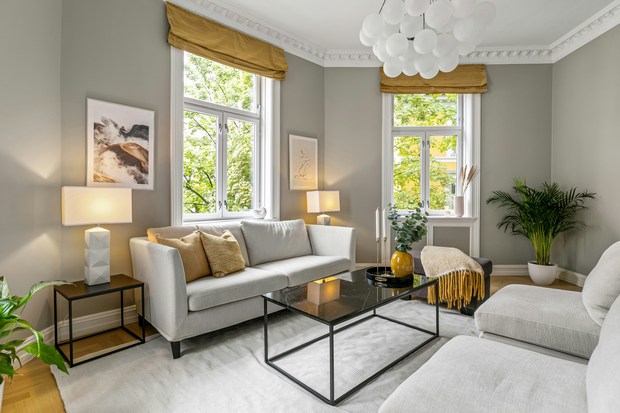
In the past, the living room was the place with formal settings to welcome the honored guests and reflect social status. With times, it has evolved into a multi-functional room to welcome guests, sit and relax comfortably to read a book or watch TV, spend time with the family, chat with friends and for entertainment purposes. The most common furniture pieces found in the living room are sofas, sofa with chairs in different combinations, coffee table, end tables, ottomans, benches, shelves and perhaps a desk and bookshelves to support work or study needs. Some living room will have TV and entertainment center in the room along with accessories, lighting, art and crafts on display and may be carpets or area rugs for comfort and visual unity, which are essential elements of home textiles.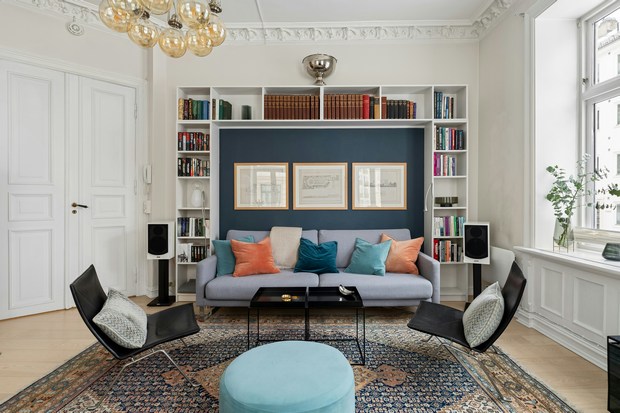
An extra-large living room may accommodate a piano, eating area complete with dining table, tennis or billiard table or even a number of plants to enhance spatial character. Living room can use maximum number of furnishings and it is a challenge to fit in all the desirable furnishings and accessories and coordinate them with carpeting, wall color, crown moldings, lighting style and window treatments into a cohesive design scheme among many other things. Usually, sofa or the entertainment center is the largest piece of furniture in a living room and since placement of sofa will decide the view and focal point for the people seated in the living room, its position should be carefully planned, and can be used as the starting point for living room décor.
Focus points
The following are the list of focus points:
- Natural focal point of the room such as a fireplace or large window.
- Lifestyle of the family members and their daily activities.
- Functional placement of furniture with ergonomic consideration.
- Creating well-defined traffic patterns for unobstructed movement.
- Creating close grouping and intimate conversational areas to encourage interaction.
- Visual balance in scale, proportion and symmetry.
- Ambient lighting for mood and comfort.
- Color scheme of the room for harmony and continuity.
- Fabric patterns of the curtains and window treatments for coordinated aesthetics.
- Display of accessories without visual clutter.
- Camouflaging architectural elements that are ugly, hanging art and wall groupings, proportion and scale of decoration to maintain visual coherence.
Living room furniture
Living room furniture represents personality of the owner of the house and reflects lifestyle preferences. Living room furniture set normally consists of sofas, coffee table, futon chairs, home theater system and perhaps display cabinets and dressers for storage and presentation. Other living room furniture pieces include side tables, futon beds, bean bags and bean chairs among many other things to increase flexibility and comfort. Based on the exact measurement of the living room, decide on the size of sofa and other pieces of living room furniture to ensure proper scale and proportion.
While large living rooms may be able to accommodate a corner sofa too, smaller living rooms do well with one sofa with tall plants, floor lamps and decorative stands on either side to create balance without overcrowding. The color of the furniture can be matched with floor, wall and curtains to create a uniform harmonious look through coordinated material and finish selection. Infuse new life to a corner of living room by placing decorative plants in beautiful stands to introduce natural texture and freshness.
Leather living room furniture set is quite popular for greater comfort, elegance and classic style. It suits well to contemporary and minimalist living room décor themes and is preferred for its durability and easy maintenance over long-term use. Leather living room furniture can include leather sofa, leather loveseat, leather chairs and even leather coffee table and leather side tables for stylistic consistency. Besides the usual living room furniture, the other furniture pieces would include ottomans, entertainment units, armoires, recliners, sectional sofas, sleepers, rockers and glider to address varied functional requirements.
Living room accessories and designs
Accessorizing and designing a living room sets up the mood of home and may range from a casual friendly place to a formal and elegant setting. Here are some living room design and modern décor ideas that enhance both function and aesthetics.
Throw pillows are important accents for living room décor and can add splashes of bold colors to an otherwise muted color scheme while introducing texture and layering. It also adds warmth and comfort to the living room through soft furnishing elements.
Area rugs can be used to cover up unattractive areas of carpet and floors and define seating areas of the room with spatial clarity. For a large living room, they are a great asset for defining more than one seating areas of the room and improving acoustic comfort.
Painting the living room walls with a neutral color such as white or beige leaves us more choices for creating the character of the room while buying furniture and furnishings for the room and allows long-term adaptability in design updates.
Layered lighting plan is best for living rooms so that we can spotlight the reading area or the entertainment area, uniform lighting for a casual family gathering and smart color-changing or accent lighting for party time using dimmers and programmable systems.
Media space is fast gaining attention in the modern living room décor and design ideas due to digital entertainment needs. Specialty rooms or areas can be created using painted decorative screens in a large room without permanent structural alteration.
Media spaces are generally painted in deeper shades for intimacy while versatile and multi-purpose areas are generally painted in pale and muted colors to enhance openness and light reflection.
Modern living room décor incorporated features such as bookcases with wide shelves for streaming devices, gaming consoles and collectibles to support contemporary media storage requirements.
Furnishings, curtains, valances, blinds, cushions and padded seating can add color, style and pattern to the décor of the room while reinforcing thematic unity.
Living room lighting
Living room lighting aims to eliminate dark rooms and enhance visibility, comfort and add to the aesthetic sense of the room through layered illumination strategies. Living room light plays an important role in decorating living rooms and influencing spatial perception. Changing the wall color may also warrant the change in living room lighting to maintain brightness balance.
Living room lighting ideas generally include layers of lighting such as general lighting, ambient lighting and task lighting with energy-efficient fixtures. In a living room with deep colored walls, brightness is an essential point to be kept in mind to prevent visual dullness.
- General lighting such as ceiling lighting generally diffuses modest amount of light over a large area, which may be insufficient to brighten up a dark living room or living room walls in deep colors without supplementary sources.
- Ambient lighting helps to create a particular mood or ambience in the room and can be achieved by indirect lights such as down lights and up lights that seem to throw a glow of light in a flushing pattern up or down the wall and give a dim glow throughout the room to enhance depth and warmth.
- Task lighting helps to do specific tasks efficiently. In a dark romantic living room with dim lights, we will need to use task lights that will brighten up certain work areas such as reading area and home office area with focused illumination.
- Decorative lighting is usually of fashionable type to give the unique and rich feel to the room while acting as a visual focal feature.
Permanent lighting fixtures such as chandeliers and sconces along with portable lighting systems such as table lamps are usually a part of decorative lighting in the living rooms for functional and ornamental purposes. Chandeliers add sparkle to the entire living room as a central statement piece. Table lamps are decorative just because of the sheer variety in which they are available but they are quite functional too for localized lighting control. Living room light can be used on side walls and use several down lights creating a valance projecting light along the wall to highlight architectural features. Dim lights can be fixed to enhance the viewing experience while watching shows and improve visual comfort.
Arranging living room furniture
Arranging living room furniture in a right way decides whether living room looks cluttered and overstuffed or an organized comfortable and functionally efficient space. Layout planning includes the following steps:
- Measure up the room and draw a sketch of the room on a graph paper using a scale for accurate spatial planning.
- Note down where and how many windows and doors are situated in the living room, their size, the height of the windowsills and the space between the windows and the doors to guide furniture placement.
- Mark the location of the electrical points and outlets, data ports, internet connection point and light switches to support media and lighting layout.
- Choose a focal point of the living room and arrange the furniture and lighting around it to establish visual hierarchy.
Some of the popular focal point ideas in a living room are a fireplace, a view from the window, window opening out in a garden, a large bookcase, sofa with a special painting hung above it, a home theater system or big size flat-screen smart television as the primary visual anchor.
Turn one of the corners of the living room in a focal point using an interesting lamp, tabletop waterfall or other unique decorative pieces on it along with the lighting to highlight it as a secondary accent area.
- Legroom between the sofa, loveseat or chairs and the coffee table should be at least 14–18″ for seating comfort.
- Try to make pathway to walk freely in the living room without stumbling on the furniture that is at least 2–3 ft wide to ensure safe circulation.
- Maintain visual harmony and thematic balance in your living room decor through proportionate arrangement. Keep the number of the pieces of furniture down to avoid cramped look in a small living room and preserve openness.
- Use two love seats facing each other instead of four chairs or one sofa and two chairs instead of one loveseat and three or more chairs to promote conversational grouping.
- Tall living rooms can be subtly divided into separate conversation and work areas by using a sofa or other big piece of furniture that does not need support of a wall to divide up the room without permanent partitions.
Antique living room furniture
Besides the functional use of furniture, it also has an ornamental use in the living room as a reflection of historical style. We want to recreate a period lifestyle or adapt the living room to the popular fad of a time period through authentic detailing. Arts and crafts chairs and tables are generally made-up of wooden slats with straight legs that have stretchers in between emphasizing structural simplicity. The dark leather upholstery was most popular then and quality craftsmanship; good proportions, highlighted wood grains and rich colors mark them as unique design characteristics.
High quality handmade arts and craft furniture for living room can be quite expensive due to superior materials and craftsmanship. Cheaper quality furniture made by machines could also last very long if properly constructed. Rich deep hue of dark oak was preferred and the size of the furniture was often gigantic reflecting the design preferences of the era. The relief work in the furniture included skillful and ornamental carvings of flowers, fruit, animals and human figures demonstrating artisan skill. The Victorian furniture used to be quite expensive because of elaborate ornamentation and luxurious materials.
Conclusion
Successful living room design depends less on decoration and more on deliberate planning. When furniture is proportionate to the room and arranged around a clear focal point, the space tends to feel organized rather than crowded. Adequate circulation paths, layered lighting, and restrained accessorizing further strengthen functionality.
No single layout suits every household. Lifestyle, room dimensions, and personal preferences all influence the final arrangement. Still, careful attention to scale, balance, and purpose can transform an ordinary living room into a space that supports daily life while maintaining aesthetic clarity.
References
[1] Ching, F. D. K., & Binggeli, C. (2018). Interior Design Illustrated (4th ed.). John Wiley & Sons.
[2] Babu, V. R., & Sundaresan, S. (2018). Home Furnishing. CRC Press.
[3] Panero, J., & Zelnik, M. (1979). Human Dimension and Interior Space: A Source Book of Design Reference Standards. Whitney Library of Design.
[4] Ballast, D. K. (2013). Interior Design Reference Manual (6th ed.). Professional Publications, Inc.
[5] Pile, J. F., & Gura, J. (2014). A History of Interior Design (4th ed.). John Wiley & Sons.
[6] Massey, A. (2013). Interior Design Since 1900 (4th ed.). Thames & Hudson.
[7] Karlen, M., & Benya, J. (2017). Lighting Design Basics (3rd ed.). John Wiley & Sons.
[8] Begemann, S. H. A., van den Beld, G. J., & Tenner, A. D. (1997). Daylighting in Architecture: A European Reference Book. James & James.
[9] Nielson, K. J., & Taylor, D. A. (2011). Interiors: An Introduction. McGraw-Hill Education.