Introduction
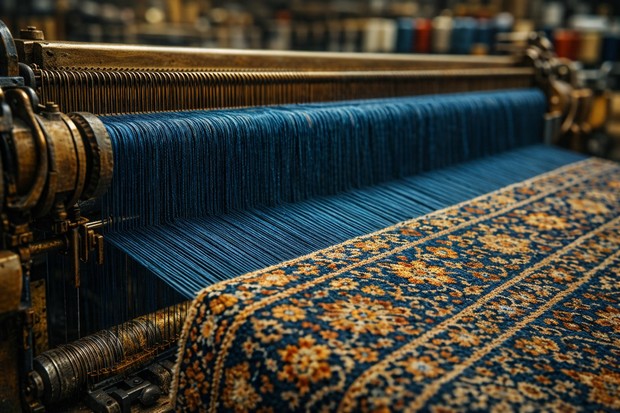
Carpet is not a single material. It is a constructed textile system, and its performance depends largely on fibre selection. Wool, nylon, polyester, polypropylene, and plant fibres each behave differently under traffic, moisture, heat, and cleaning. The visible pile determines comfort and appearance, but the backing structure beneath it governs dimensional stability and long-term service life.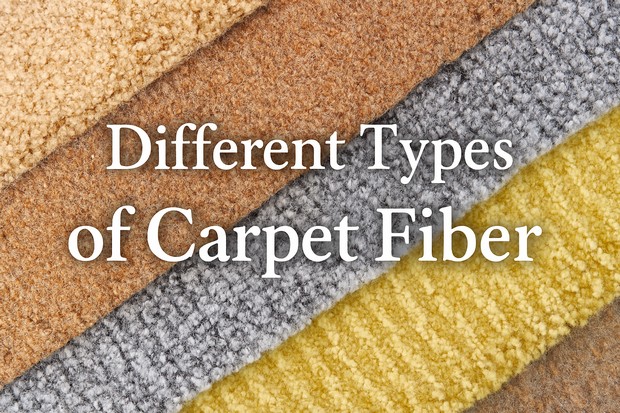
Material choice therefore affects more than texture or colour. It influences abrasion resistance, soil visibility, fire behaviour, static build-up, and environmental positioning. Recent regulatory shifts and growing interest in recycled or renewable inputs have added further complexity to specification decisions.
This article examines the principal fibres used in carpet pile and backing, outlining how each performs in practice and where its limitations lie. In doing so, it provides a technical overview of modern carpet fiber types used in residential and contract applications.
Different Types of Carpet Fiber
Carpet fibres are used in two primary parts of the carpet construction: the visible surface (pile) and the structural backing beneath it. Each serves a distinct function and influences overall performance.
A. Fibres Used in the Use Surface (Pile)
These fibres form the exposed, walkable layer of the carpet. They determine comfort, appearance, durability, stain behaviour, and wear resistance. The following carpet fiber types are commonly specified for pile construction.
Wool
Wool remains the most popular pile fibre for carpets made in the UK. Carpet wools are coarse, typically above 33 μm, strongly crimped, and often medulated. These characteristics contribute directly to bulk, resilience, and visual depth in pile structures.
British mountain and moorland breeds are frequently selected for carpet manufacture. Their fibres are serviceable and readily available. They also contain kemp and dark-coloured hairs, which complicate the production of pale shades. For plain, light-coloured carpets, near-white wool free from dark fibres is preferred. New Zealand sheep breeds have therefore gained sustained popularity. Their fibres are generally cleaner in colour and more uniform in appearance. Lustre is often described as softer, which has commercial value.
Much carpet wool is produced by sheep bred primarily for meat. Fibre often functions economically as a secondary output. Some New Zealand flocks operate on a dual-purpose basis, balancing meat and fibre returns. This can affect long-term supply stability.
Ignition resistance remains one of wool’s technical advantages among natural carpet fiber types. The fibre’s relatively high nitrogen content and moisture regain contribute to its behaviour in fire. Historically, resistance to cigarette burns was highlighted, as minor charring could sometimes be brushed away without severe marking. With indoor smoking bans across the UK, Europe and North America, this is less commercially decisive, although wool’s inherent flame-retardant properties remain relevant for compliance with building fire safety regulations in public and contract environments.
Soiling behaviour is different from repellence. Wool tends to disguise dirt rather than repel it. Its irregular surface structure and natural pigmentation diffuse light and can obscure embedded particles. Cleaning responses are often favourable, especially with warm water extraction. Heat and moisture may assist partial fibre recovery after compression.
Abrasion resistance is comparatively modest. In low pile weight constructions, wear may be a concern under sustained traffic. Blending wool with synthetic fibres—often around 20% nylon—has therefore become common practice. Earlier laboratory findings suggested blends approaching 30% nylon achieved measurable durability gains, though commercial balance often settled slightly lower. Too much nylon alters handle. Too little compromises longevity.
Wool also conveys tradition and permanence, and in some markets implies status.
Environmental positioning increasingly influences specification. Certifications such as the Responsible Wool Standard (RWS) are referenced in premium ranges. Wool is promoted for its renewable origin and potential biodegradability under suitable end-of-life conditions. Unlike synthetic fibres, it does not contribute to persistent microplastic fragmentation during wear. Biodegradation depends on disposal context and backing composition, so claims should be framed cautiously. Compliance with updated UK and EU REACH chemical regulations is addressed more explicitly in current product documentation.
Polyamide
Polyamide entered the UK carpet sector in the mid-1950s, most notably as Nylon 66 staple fibre. Research by British Nylon Spinners Ltd demonstrated that incorporating nylon into wool pile yarn could significantly increase abrasion resistance. The laboratory optimum was identified as 70% wool and 30% nylon. Beyond that proportion, additional gains diminished. Market formulations eventually stabilised closer to 80% wool and 20% nylon.
At that time, woven carpet production dominated the UK industry. The blending nylon fibre was a premium product, typically around 13 d’tex, slightly delustered through titanium dioxide incorporation, and circular in cross-section. Supply was initially limited. Over time, broader sourcing emerged, including material derived from waste streams with somewhat looser specification tolerances.
In the United States, tufting technology advanced rapidly. DuPont and Monsanto introduced bulked continuous filament (BCF) nylon yarns under strong brand identities. These yarns reached the UK tufting industry in the early 1960s. Tri-lobal filament cross-sections and low twist levels provided cohesion during processing. Loop pile carpets with sculptured high and low designs became characteristic. Piece dyeing followed manufacture.
Dye-variant yarn systems expanded design capability. Standard, deep, extra-deep and basic dyeable variants enabled cross-dyeing within a single bath using combinations of disperse, acid and basic dyestuffs. The chemistry allowed tonal and high-contrast effects. Styling shifts have reduced reliance on such systems.
Structural developments in nylon usage include:
- Removal of manufacturing licence restrictions in the mid-1960s
- Growth of manufacturers extruding their own nylon yarn
- Advances in BCF technology enabling plain cut-pile constructions
- Expansion of nylon 6 in higher-volume segments
Changes since the early 2000s have been more environmentally oriented. Solution-dyed nylon is now widely adopted in commercial carpet and carpet tile manufacture. Colour incorporation during extrusion reduces reliance on aqueous dye baths and significantly lowers process water consumption.
Regenerated nylon sourced from post-industrial and post-consumer materials, including reclaimed carpet and discarded fishing nets, has entered selected contract-grade product lines. Closed-loop recycling initiatives operate in parts of Europe and North America, although actual recovery rates vary and are not uniformly disclosed. Practical scalability continues to evolve.
Among synthetic carpet fiber types, nylon remains one of the strongest performers in abrasion resistance. Basic nylon fibres resemble smooth glass rods and may display limited soil-hiding capacity. Modifications in cross-section, square, trilobal or voided profiles, have been introduced to increase light scattering and reduce the visual prominence of embedded soil. Increased delustrant loading has also been employed.
Static charge accumulation was historically problematic. Walking across nylon carpet could generate noticeable discharge upon contact with grounded metal. Early mitigation strategies included blending viscose rayon or incorporating conductive fibres, but uniform distribution proved difficult and colour dulling occurred. Contemporary solutions typically use carbon-loaded filaments integrated into BCF yarns or conductive backing systems engineered to dissipate charge without affecting visible appearance.
Finishing chemistry has also shifted. Between 2023 and 2025, many manufacturers in Europe and North America discontinued the intentional use of PFAS-based stain-resistant treatments in response to regulatory developments and environmental concern. Fluorine-free alternatives are now employed, although long-term comparative performance data continues to accumulate.
Polyester
Polyester pile fibres have traditionally been associated with long pile Saxony styles featuring pronounced tuft definition. Their capacity to accept and retain twist set made them suited to that aesthetic, especially in the United States residential market.
Polyester exhibits good abrasion resistance and moderate recovery from flattening. Historically, dyeing required pressure systems and careful process control. In contemporary manufacture, polyester carpet yarns are frequently solution dyed or produced as cationic dyeable PET, reducing water and energy consumption relative to earlier pressure dyeing practices.
Raw material sourcing has evolved. Clear PET beverage containers can be ground, re-polymerised and extruded into fibre suitable for carpet production. By 2025, recycled PET represents a substantial proportion of polyester fibre used in residential carpet manufacture in several markets, though availability and price remain sensitive to competing demand from packaging and textile sectors. Recycled content claims therefore reflect broader polymer supply dynamics.
In the UK, a specialised construction has emerged involving the incorporation of approximately 5% low-melting polyester fibre into pile blends. During heat exposure in dyeing and finishing, these fibres soften and fuse at crossing points, creating an internal scaffold-like network. This may resist tuft untwisting and reduce fibre shedding. Single yarn constructions sometimes replace traditional twofold yarns as a result.
Polytrimethylene terephthalate (PTT), marketed as triexta, has established a presence in residential carpet sectors. Its molecular structure differs from conventional PET and may provide improved resilience and inherent stain resistance. Some commercial variants incorporate partially bio-based feedstocks. Market adoption appears strongest in North America, with more variable uptake elsewhere.
Polypropylene
Polypropylene is a low-cost fibre principally used in lower-specification carpets. Its hydrophobic nature prevents dyeing from aqueous dye baths. Dyeable polypropylene variants have been developed but are not widely adopted due to cost constraints.
Pigments are incorporated into the polymer prior to extrusion. Most polypropylene carpets are therefore solution dyed during manufacture, offering good colourfastness and resistance to water-based staining at relatively low price points.
Staple polypropylene fibres are blended with wool to produce heather effects. BCF yarns may be air-entangled to create Berber-style surfaces. Substitution of polyamide in selected yarn ends allows selective dye uptake and expanded visual contrast.
Compression recovery remains limited. In tight low loop constructions this may be tolerable. In longer cut-pile formats, particularly those exceeding 5 mm, appearance loss under traffic can be rapid. Market acceptance reflects cost positioning rather than equivalence with nylon. Among budget-oriented carpet fiber types, polypropylene remains widely used.
Wood and laminate floors once stimulated demand for rugs. Since the mid-2010s, Luxury Vinyl Tile (LVT) has become a dominant hard-floor competitor in many regions. This has reinforced demand for area rugs and modular carpet systems as complementary soft-surface elements. Advanced tufting and face-to-face Wilton technologies continue to produce cut-pile BCF polypropylene rugs for these applications.
Polyacrylate
Once seen as a wool substitute in woven carpets, the popularity of polyacrylate pile fibres has decreased significantly and is currently of only minor importance. Polyacrylate fibres can exhibit a soft handle and acceptable bulk in certain constructions. The broader market shifted toward polyester, polypropylene and nylon, which offered clearer advantages in cost efficiency, resilience, or processing flexibility.
At present, polyacrylic fibres occupy only a marginal position in residential and contract carpet production. Where related chemistries remain in use, they are more commonly found in modacrylic fibres specified for specialist flame-resistant or technical applications rather than general floor covering manufacture.
The decline reflects changing economic and performance priorities.
Vegetable Fibres
Coir fibre is popularly used in coconut matting. Its coarse structure and rigidity suit entrance mats where scraping action is required.
Cotton and jute have been used as pile fibres in carpets of low importance. Their role in broadloom floor coverings has been limited. Cotton remains popular for bath mats, where softness and absorbency are valued over abrasion resistance.
Of increasing importance are sisal and sea grass. These fibres are used as the face material in flat woven products and are popular for natural textures and understated surfaces. Sisal offers a firm handle and linear appearance. Sea grass presents a smoother, slightly waxy surface.
Sea grass has poor resistance to abrasion. Under sustained traffic, surface breakdown can occur more rapidly than in synthetic alternatives. With both sisal and sea grass, water affects appearance. Even clean water spillages may produce visible staining or tide marks. Wet cleaning is generally unsuitable. Maintenance requires careful specification.
Growing consumer interest in renewable and plant-based interior materials has supported demand for sisal, jute and coir floor coverings. Some manufacturers combine these fibres with natural rubber or bio-based latex backings. Moisture sensitivity, dimensional instability and susceptibility to staining remain inherent characteristics.
B. Fibres Used in the Backing Structure
These fibres are used in the primary and secondary backing. They provide dimensional stability, strength, and structural support, helping the carpet maintain its shape and performance over time. Major fibers are described below.
Jute
Jute is relatively inexpensive and relatively inextensible. Dimensional stability under tension has made it attractive in woven constructions. Limitations include long supply routes (mainly the Indian sub-continent) and uncertainty of consistent supply. Jute is also liable to bacterial attack, particularly if wetted.
Jute yarn has traditionally been the most popular choice for the weft of woven carpets, and many woven carpets continue to use it. Jute is also frequently used as the stuffer warp in Wilton carpets.
Woven jute fabric (hessian) has frequently been the secondary backing fabric of choice due to cost and dimensional stability.
In contemporary tufted carpet manufacture, woven or non-woven polypropylene primary backings now predominate. Consistent global supply, resistance to moisture, and compatibility with synthetic coating systems have driven this transition. Jute remains present in certain woven constructions.
Cotton
Cotton yarns have traditionally been used as warp yarns for woven carpets. Cotton fibre, in blends with synthetics, remains popular for this end use.
Polyester
Spun yarns of high-tenacity polyester have been used as warp yarns in woven carpet. A common use is as a cotton-polyester blend in chain warp yarns, balancing dimensional stability with processing behaviour.
Non-woven polyester backings are increasingly used in some carpet tile constructions, particularly where mono-material design strategies are being explored to facilitate end-of-life recycling.
Polypropylene
Split film polypropylene yarns have been used as both warp and weft yarns in woven carpet production. In nominal 1000 d’tex form, polypropylene has served as a cotton substitute in Axminster weaving, though abrasion from reeds and loom components can cause fibrillation and entanglement.
As a weft yarn, often pigmented to resemble natural jute, polypropylene provides high strength at comparatively low cost. It is less tension stable than jute but unaffected by water and resistant to bacteriological attack.
Today, polypropylene dominates primary backing systems in tufted carpets globally. Woven scrims and non-woven substrates are compatible with latex, polyurethane and thermoplastic coating systems. In carpet tile manufacture, there has been a gradual shift away from bitumen-based backings toward thermoplastic polyolefin (TPO) or polyurethane systems, influenced partly by indoor air quality standards and green building frameworks such as LEED v4.1 and BREEAM.
Others
Because of jute shortages following the Second World War, kraft paper was used as a substitute backing material. This yarn consisted of twisted strips of brown paper. Once jute became available again, its use declined rapidly.
Linen yarn has been used as the weft in some high-density 3-shot Wilton products, where a finer yarn of adequate strength was required. Such applications remain specialised.
Conclusion
No carpet fibre is universally superior. Across the spectrum of modern carpet fiber types, each option presents advantages and trade-offs. Wool offers resilience and inherent flame resistance but may require blending for durability. Nylon delivers strong wear performance and design flexibility, though finishing chemistry and static control remain considerations. Polyester and polypropylene serve cost-sensitive segments, each with distinct recovery and performance limits. Natural fibers provide texture and renewable appeal but demand careful maintenance.
Backing materials are equally significant. Jute, polypropylene, polyester, and blended systems influence stability, moisture response, and lifespan, often more than the surface fibre alone.
Effective carpet selection is therefore a matter of balance: performance requirements, maintenance capacity, regulatory context, cost, and aesthetic intent. Informed specification does not eliminate compromise, but it makes performance outcomes more predictable.
References
[1] Goswami, K. K. (2017). Advances in Carpet Manufacture Ed. 2. In Elsevier eBooks. https://univ.scholarvox.com/book/88849530
[2] Hearle, J. W. S., Morton, W. E., & Cooke, W. D. (2008). Physical Properties of Textile Fibres (4th ed.). Woodhead Publishing.
[3] Cook, J. G. (1984). Handbook of Textile Fibres: Vol. 1 Natural Fibres (5th ed.). Woodhead Publishing.
[4] Cook, J. G. (1984). Handbook of Textile Fibres: Vol. 2 Man‑Made Fibres (5th ed.). Woodhead Publishing.
[5] McIntyre, J. E. (Ed.). (2005). Synthetic Fibres: Nylon, Polyester, Acrylic, Polyolefin. Woodhead Publishing.
[6] Adanur, S. (2001). Handbook of Weaving. CRC Press.
[7] Sinclair, R. (Ed.). (2014). Textiles and Fashion: Materials, Design and Technology. Woodhead Publishing.