Introduction
Turkey’s home textile industry occupies a distinctive position at the intersection of manufacturing depth and geographic advantage. Home Textiles is an important part of the country’s wider textile sector. Each year, home textile exports exceed USD 3 billion, contributing to Turkey’s total textile and raw materials exports of over USD 12 billion. This steady performance reflects not rapid expansion, but consistent demand and strong production capacity.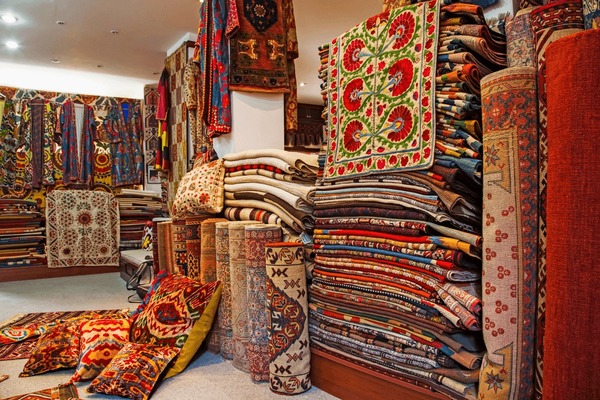
One reason for this stability appears to be Turkey’s integrated manufacturing structure. Many producers control the process from yarn to finished product, which can reduce dependency on outside suppliers. In addition, the EU–Turkey Customs Union allows tariff-free industrial trade with Europe, helping Turkish firms serve EU buyers with relatively short delivery times. Regional clusters such as Denizli for towels and Bursa for curtains and upholstery fabrics further strengthen specialization and export performance. In this article I will discuss about Turkey’s home textile industry and its overall market guide.
Turkey’s Home Textile Industry: Exports, Trends & Growth
Industry Overview and Export Performance
The Turkish home textile industry as a sub-sector of the huge Turkish textile industry, which has a dominant role in the world, has experienced significant progress in the last decade and met the high standards of the EU, particularly under the EU–Turkey Customs Union framework that facilitates tariff-free industrial trade. Recent export data indicate that Turkey’s total textile and raw materials exports have remained above USD 12 billion annually in the early 2020s, with home textiles accounting for roughly USD 3–3.5 billion of this figure, according to TurkStat and industry association data. This suggests not explosive growth, but sustained weight within the broader textile economy.
The power of Turkish home textile industry results from the huge textile industry in Turkey, which benefits from an integrated supply chain spanning spinning, weaving, dyeing, finishing, and ready-made production. In recent years the production of home textiles has shown a steady increase due to rising domestic and external demand, supported by Turkey’s role as a near‑shore supplier to European brands. Even during the disruptions of 2020–2022, exports to the European Union recovered relatively quickly, which may reflect Turkey’s geographic proximity and shorter lead times compared to Asian suppliers, often measured in weeks rather than months. Buyers seeking flexibility appear to have factored this into sourcing decisions.
Product Range and Manufacturing Capacity
Almost all kinds of home textiles are produced in Turkey. These may be listed by export value as follows: carpets, table linens, towels, voiles, curtains, laces, blankets, cushions, pillows, quilts, and eiderdowns, with cotton-based products representing a dominant share of export value. The Turkish home textile industry is well on the way to becoming one of the world leaders by its wide range of products and superior quality in home textile production, especially in net curtains, embroidery, guipure, towels, and quilt covers.
Turkey has the largest machine park for the production of both embroidery and guipure in the world, with significant capacity concentrated in Bursa and Istanbul. While precise global rankings fluctuate, industry reports continue to place Turkey among the leading European producers of curtain fabrics and embroidery, supported by high-capacity jacquard weaving and computerized embroidery systems concentrated in Bursa and surrounding regions.
The Turkish home textile industry has also acquired advanced technology with a high production capacity and a skilled labour pool, whose experience is often rooted in decades of textile specialization. Automation in cutting, digital printing technologies, and integrated ERP-based production planning systems are increasingly visible in medium and large-scale firms, particularly those exporting to the EU market, where compliance, traceability, and speed-to-market are closely monitored. Smaller enterprises, however, appear to be adopting these systems more gradually.
Cost Structure and Global Competitiveness
The industry has managed to reduce the cost of production below the world average while increasing product quality, largely through economies of scale and vertical integration. Rising energy prices and labour costs in the early 2020s have complicated this advantage, especially following domestic currency volatility and global energy shocks. Yet Turkey’s vertically integrated structure, from yarn to finished product, still appears to offset part of these pressures.
With its production capacity and competitiveness, Turkey is among the top suppliers of curtains and embroidery in Europe and among the leading suppliers of towels globally, particularly within the EU market by value. Trade statistics from recent years consistently rank Turkey among the top global exporters of cotton towels and bathrobes, often competing closely with Pakistan and China in volume, while maintaining a stronger position in the European market by value, where quality segmentation influences pricing power.
The Strength of the Turkish Towel Tradition
In Turkey, the towel sector has traditional roots and its products are known as ‘Turkish Towels’ worldwide, a term frequently used in international retail branding. Today, the Turkish towel sector remains competitive in international markets in terms of jacquard and embroidery technologies, as well as in high-grammage premium segments.
Compliance with OEKO‑TEX® Standard 100 and Global Organic Textile Standard (GOTS) certifications has become increasingly common, particularly among exporters supplying European retailers who demand traceability and chemical safety documentation, in line with tightening EU sustainability legislation.
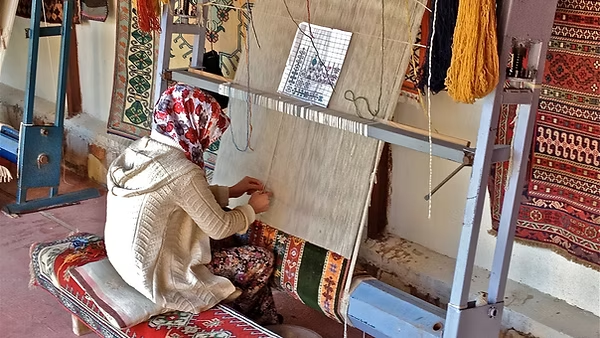
In addition, lace, widely used in textile applications especially in home textiles, is originally a Turkish handicraft. It is an embroidery art reaching back to the mid-1500s and shaped by the labour of Turkish women, now reflected in modern home decoration, where traditional motifs are reinterpreted in contemporary collections.
Sustainability and Regulatory Adaptation
Today, the Turkish home textile industry is aware of the increasing demand for healthier and more environment-friendly products and tries to adapt itself to developments within legal and technical regulations, including eco-design and circular economy discussions within the EU. The European Green Deal and the Carbon Border Adjustment Mechanism have introduced new cost considerations for exporters, even though textiles are not in the first implementation phase of CBAM.
As a result, several large manufacturers have begun calculating product-level carbon footprints and investing in wastewater treatment modernization, although sector-wide transition remains uneven. Many manufacturers operate under environmental and quality management systems such as ISO 9000 series, alongside ISO 14001 environmental certification. The number of certified firms has increased substantially, with ISO 9001 and ISO 14001 certifications widely adopted across export-oriented producers, alongside social compliance audits such as BSCI and SEDEX required by major European buyers, reflecting retailer-driven governance structures. Additionally, some companies in the home textile sector have private eco labels.
Regional Production Clusters: Denizli, Bursa and Beyond
Turkish home textile producers are mainly located in Istanbul, Denizli, Bursa, Izmir, Gaziantep, Kayseri and Uşak, forming regionally specialized production clusters. Denizli is the manufacturing centre of the toweling sector not only in Turkey but also globally, with a strong export-oriented SME base.
In Denizli, towels and bathrobes are manufactured from Aegean cotton, sourced from western Turkey’s cotton-growing regions. Aegean cotton, known for its long staple length, continues to be positioned in premium segments, though global cotton price volatility has affected input costs in recent seasons. These towels and bathrobes are well-known for their softness and absorbency, largely due to pile thickness and density, which influence durability and hotel-grade performance standards.
Denizli has a major share of world cotton towel and bathrobe exports, particularly within Europe. A significant portion of production is exported, primarily to EU countries and the United States, which together account for the majority of sectoral export revenues. ‘Turkish Towels and Bathrobes’, especially those from Denizli, are used not only in homes but also in 4- and 5-star hotels worldwide as a sign of quality service. Towel and bathrobe producers are also located in Uşak, where recycling-based yarn production has gained attention in recent years.
Bursa is one of the most important manufacturing centres in the textile field and is mostly concentrated on the manufacture of curtains, upholstery fabrics, decoration fabrics, bedding products, towels and bathrobes as well as other textiles, with a historical legacy in silk and weaving industries. The city’s strength in jacquard weaving and upholstery textiles has enabled it to serve both residential markets and contract projects, including hospitality and commercial interiors.
Many producers in these cities have integrated their production process from yarn and fabric production to product design, dyeing, finishing and sewing in order to maintain quality at each stage, reducing dependency on external suppliers. Turkish home textile manufacturers are highly attentive to fashion and design, enabling them to maintain a strong position in international markets, especially in private label collections. Regular participation in international fairs such as Heimtextil in Frankfurt and Hometex in Istanbul appears to play a role in maintaining buyer relationships and tracking consumer preferences.
Export Markets and Global Partnerships
Besides meeting domestic demand, the Turkish home textile sector is an important export earner for the country. The sector, with an export value of US$810 million and a 3% share in Turkey’s total exports in 1998, has long been a significant sub-sector for the Turkish economy. By the mid‑2020s, annual home textile exports have surpassed USD 3 billion, according to official trade statistics, indicating structural expansion compared to the late 1990s, even when adjusted for inflation and currency fluctuations.
With its product quality and production technology, Turkey has increased its share in main markets, especially in Europe, which absorbs more than half of total home textile exports. Prominent global suppliers cooperate with Turkish manufacturers in joint production in the home textile field, increasingly in the form of private label manufacturing for European retail chains, reflecting consolidation in global retail structures.
The European countries are the most important markets for Turkey’s home textile exports. A large quantity of home textiles is exported to Germany, which consistently ranks as the top destination by value. Other main markets include the USA, the UK, France and the Netherlands, all characterized by established large-scale retail chains. Germany continues to rank as the leading destination by value, followed by the United States and the United Kingdom, while exports to Spain and Italy have shown gradual increases in recent trade data. Markets such as Poland, Hungary, Romania, the Russian Federation and other Commonwealth of Independent States countries are emerging, though demand levels vary with regional economic conditions.
At the same time, political and logistical uncertainties in certain regional markets have encouraged exporters to diversify toward North Africa and Gulf countries, though volumes remain comparatively modest.
Conclusion
Turkey’s home textile industry maintains its position in global markets through specialization, quality control, and geographic proximity to Europe. It is among the leading suppliers of towels, bathrobes, curtains, and embroidery products, particularly within the EU market. Germany, the United States, and the United Kingdom remain key export destinations.
Although rising energy costs and stricter environmental regulations create pressure, many firms have adopted international quality and sustainability standards to remain competitive. Growth has been gradual rather than dramatic, yet the industry continues to hold a stable and meaningful role in European and transatlantic supply chains.
References
[1] Das, S. (2010). Performance of home textiles. In Woodhead Publishing Limited eBooks. https://doi.org/10.1533/9780857094032
[2] Sinclair, R. (Ed.). (2014). Textiles and Fashion: Materials, Design and Technology. Woodhead Publishing.
[3] Kadolph, S. J. (2018). Textiles (12th ed.). Pearson.
[4] Gong, R. H., & Wright, R. M. (Eds.). (2016). Advanced Textile Materials. Woodhead Publishing.
[5] Dickerson, K. G. (1999). Textiles and Apparel in the Global Economy (3rd ed.). Prentice Hall.
[6] Republic of Türkiye Ministry of Trade. (2023). Textiles and Raw Materials Sector Report. Ankara.
[7] ITKIB – Istanbul Textile and Apparel Exporters’ Associations. (2023). Turkish Textile and Raw Materials Sector Report. Istanbul.
[8] Denizli Exporters Association (DENİB). (2023). Denizli Home Textile Sector Report. Denizli.