Introduction
In residential and commercial interiors, walls are increasingly being treated as design surfaces rather than plain borders. Textile wallcoverings bring color, pattern, texture, and durability into a room, and they can stay in place for years or be changed when the design calls for it. They are used in homes, offices, hotels, and other contract settings where appearance and performance both matter.
Textile wallcoverings are not limited to printed wallpaper. They include fabrics, vinyl-based products, grass cloth, cork, fiberglass, leather, suede, and other materials that can be applied in different ways. In practice, the right choice depends on cost, function, durability, acoustics, and the look the room needs.
What Textile Wallcoverings Are
Wallcoverings enrich interiors through color, pattern, texture, and enhanced durability. Although the dictionary spelling of wall covering may appear as two words, national associations often spell it as one word, so wallcovering is used here as a single term.
Wallcoverings may be adhered and left in place for many years, or they may be installed as a more changeable surface treatment. Manufactured wallcoverings include wallpaper and various textiles, especially vinyl and natural fibers such as grass. Fabrics may be applied as a direct paste-up or in several suitable ways. Wall tapestries are both a historic and a contemporary use of fabric on walls.
Research in textile fiber and construction has also produced lightweight yet very strong structures where walls and ceilings are made solely of fabric. That is one reason textile wallcoverings continue to be used in both contract and residential interiors.
Systems Furniture and Panel Walls
In commercial settings, textile wall applications often appear as part of systems furniture. These contract installations may include movable freestanding walls integrated with other office furniture. Panel systems were originally created for cubicles and are usually about five feet tall, although they can be customized to any size.
Each panel system manufacturer offers standard fabric options. Manufacturers use tested contract fabrics and continue to evaluate new materials, including digital image applications. Lighter weight fabrics work well on panel systems, while more durable fabrics are suitable for seating products.
The systems manufacturer often forms an alliance with a textile manufacturer. For instance, Herman Miller works with Maharam as a supplier of panel wall textiles. A design professional can select from a specific group of Maharam fabrics that have already passed contract testing. If a fabric has not been tested, it may still be selected and then tested, although that process usually takes a few weeks.
Fabric Wallcovering Treatments
Fabric as a wallcovering treatment offers variety, flexibility, visual comfort, and physical softness to an interior. Fabric covered walls also absorb sound better than untreated walls. Fabric installations can be temporary, permanent, or semipermanent.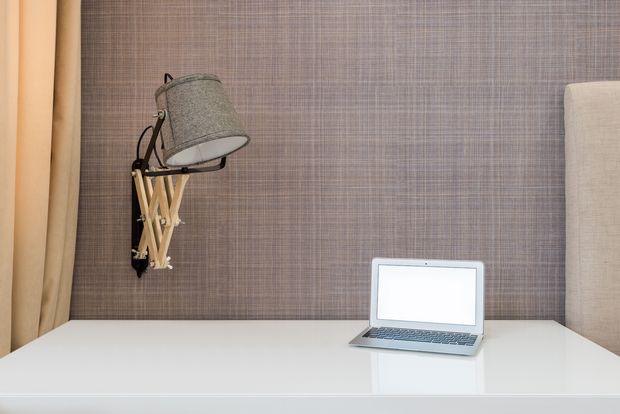
Because flame resistance is mandatory in commercial codes and sometimes preferred in housing interiors, design professionals may specify flame retardant compounds or finishes on cotton, linen, or rayon. They may also choose polyester, wool, or vinyl, which generally meets flammability codes. A sample should always be treated first and checked for changes in color, texture, or fiber strength.
This step is often underestimated in practice. A treatment that looks fine on paper can still change the hand or visual quality of the fabric once applied.
Upholstered Wall Systems
Upholstered wall systems are built on site and can be used for wall or ceiling installations. Framing materials are usually wood or plastic. The fabric is held in place by either an extrusion system or concealed fasteners.
Several infill materials can be used. Polyester or fiberglass may be chosen for a soft appearance or for acoustic insulation. Plywood is also used for acoustic purposes and tackable areas. Mineral fiberboard is another option for acoustic control.
Stable fabrics or upholstery weight fabrics are required for upholstered wall systems. The selected fabric should not absorb moisture, because changes in humidity can cause rippling and sagging. It should also be snag resistant and self healing. For areas where tacks or nails may be used, heavier yarn weaves are best. Sateen and satin should be avoided for these projects. To avoid seams, fabrics up to 120 inches wide can be installed horizontally, or railroaded. For light colored fabrics, a lining may be needed so the construction materials behind the fabric do not show through.
Contract Wallcoverings
Contract or commercial wallcoverings differ from residential installations in several ways. They are more durable, more textured, and less patterned, and they must meet testing criteria for flammability, crocking, colorfastness, physical properties, and abrasion.
Common tests include the ASTM E 84 03 Tunnel Test, which passes as Class A with a flame spread index of 25 or less and smoke developed value of 450 or less. Other tests include AATCC 8 2001 for wet and dry crocking, AATCC 19 Option 1 or 3 2003 Fadometer Test for fading, ASTM D5034 95 2001 Grab Test for breaking strength, and ASTM D3597 02 D434 95 seam slippage. For wrapped panels and upholstered walls, only breaking strength and seam slippage are tested.
Functional Benefits of Textile Wallcoverings
For both contract and residential settings, wallcoverings provide functional benefits such as acoustical control, increased temperature insulation, durability, and longevity.
Acoustic Control
Hard surface walls often echo and amplify sound. Even in theaters, acoustics must be carefully planned. A space that is acoustically lively will intensify noise, which is not desirable for many people, especially those who are hearing impaired. For anyone who struggles to follow conversation, background noise can make speech hard to understand.
Sound intensity is measured in decibels, or dB, named in recognition of Alexander Graham Bell. Loud sounds can result in hearing loss. The louder the noise, the less time it takes for hearing damage to occur. According to the National Institute for Occupational Safety and Health, normal hearing is affected at 85 dB in 8 hours, and at 110 dB, damage can occur in 1 minute and 29 seconds.
At home, a sewing machine may be around 60 dB, a vacuum cleaner 60 to 85 dB, a hair dryer 60 to 95 dB, an alarm clock 65 to 80 dB, television audio around 70 dB, and a blender 80 to 90 dB. Prolonged exposure to noise above 90 dB can cause gradual hearing loss. Examples include a garbage disposal, noisy squeeze toys, a recreational vehicle, a motorcycle, a lawn mower, and a train or garbage truck.
Regular exposure for more than 1 minute at over 100 dB risks permanent hearing loss. Examples include a jet flyover at 100 feet, a jackhammer, a power saw, a boom box, and a loud stereo. Some of these noise levels also appear in contract settings, such as offices, restaurants, school dances, discotheques, symphony concerts, rock concerts, and ambulance sirens.
Textile wallcoverings, when carefully selected, are effective in sound control and direction. Three dimensional wall textiles disrupt horizontal sound wave travel, which helps contain sound and prevents it from reflecting into a room or transmitting into adjacent rooms. Many concert halls and auditoriums use fabric paneled walls for this reason.
The amount of acoustic control depends on the textural relief and porous qualities of the surface. Relief is the difference between the high and low levels of a surface. Textiles absorb sound, while flat surfaces reflect it. The type of installation also affects sound absorption. Heavily draped rooms, for example, can create significant quietude.
Acoustic wallcoverings are engineered specifically to absorb sound energy and are intended for contract applications. They are also finding their way into home theaters, where they help balance and enrich sound systems. Cork wallcovering has natural sound absorbing qualities as well.
Increased Temperature Insulation
Textile structures are also used for managing room temperature. Adhering textiles to walls helps control heat transfer and minimizes air infiltration. Installing padding behind fabric increases insulative value. Leather wallcovering provides particularly effective insulation because it does not allow airflow.
There is also a visual side to insulation. Texture can be read as warm or friendly, while wallcovering color has a strong psychological impact because it occupies such a large surface area. Colors are usually experienced as warm or cool. Warm colors include yellow green, yellow, yellow orange, orange, red orange, red, and red violet. Cool colors include violet or purple, blue violet, blue, blue green, and green. Many colors are mixed, so warm colors may have cool undertones and cool colors may have warm undertones.
Functional Finishes
To increase the serviceability of textile wallcoverings and improve the chance that the product will meet fire codes, finishes may be added to textiles. Some finishing treatments alter colorfastness, strength, dimensional stability, and hand. At the same time, they can also improve durability, flame resistance, soil resistance, and washability.
Indoor Air Quality and Environmental Concerns
Wallcoverings and floor coverings cover the two largest areas in an interior, so they receive close attention when indoor air quality is discussed. Many textile products have finishes that emit fumes suspected of affecting health, and vinyl wallcovering has often been at the center of this debate.
Many manufacturers now offer low emission products, and some are Greenguard Indoor Air Quality Certified or approved through similar programs. Ventilation after installation helps improve indoor air quality by allowing time for off gassing. Fresh outside air is preferred. Airing out through interior HVAC systems tends to keep emissions indoors longer. This is generally true of new textile products.
The new smell of vinyl does not necessarily mean VOCs are present. Vinyl wallcoverings do not negatively affect indoor air quality when installed according to manufacturer recommendations. Mold growth between vinyl and the wall is another concern, since some molds emit dangerous toxins. Research indicates that wallcoverings themselves do not cause mold growth. The best strategies are to remove the moisture source, consider the climate and building design, and use permeable wallcoverings where appropriate.
Other environmental concerns have been raised about vinyl, including chlorine, dioxin, flammability behavior, and combustion toxicity. Vinyl wallcoverings often contain flame retardants and are usually rated Class A with excellent fire ratings, depending on the product specification. Hydrogen chloride gas gives off odor before burning and can act as an early warning of fire.
As health concerns about vinyl wallcoverings have decreased, installation has increased dramatically. Phthalates and other plasticizers have not been found to be a significant health concern. In vinyl, phthalates are tightly bound and have low volatility, so they do not contribute to sick building syndrome.
Despite criticism, vinyl use has grown in both the contract and residential marketplace because of its durability, longevity, and appearance. It is easy to clean. Its surface can be scrubbed with detergent and a sponge to remove allergens such as dust and pet dander, which can improve indoor air quality. In healthcare settings, vinyl wallcoverings are compatible with antimicrobial and disinfectant cleaning agents used to eliminate bacteria and disease causing microorganisms.
Wallcovering Economy
Installed textile wallcoverings can be somewhat costly at the beginning, yet they contribute to energy conservation through temperature control. That translates to financial savings over time. Where a textile wallcovering remains in place for several years, it can potentially pay for itself in lower utility bills.
Durable wallcoverings such as vinyl are often a wise economic choice. Improved and durable vinyl wallcoverings may last up to five times longer than paint under normal conditions. Many maintain aesthetic appeal and functional durability for up to fifteen years, while painted surfaces are often repainted about every three years. Over the life of a high quality vinyl wallcovering, a 30 percent savings over paint is possible in contract design, and the savings in home furnishings may be even greater.
Longevity also depends on aesthetic choices. Pattern and strongly fashionable colors usually lose appeal after two to five years. If wallcoverings are selected and removed within a short time, they become the more expensive treatment. Function can also be preparatory. Wallpaper liner and other special blank wallpaper are used to cover a textured or damaged surface before the final wallcovering is applied.
Aesthetic Value of Textile Wallcoverings
Textile wallcoverings offer almost unlimited aesthetic possibilities. The visual appeal of modern wallcoverings is hard to match with painted surfaces. They are available in solid colors and in textures ranging from subtle to dramatic.
Faux wallcoverings can imitate nearly every surface material, including wood paneling and paint faux finish techniques. Some textures are authentic, such as cork or metallic flecks. Wallcoverings are also available as murals, photography, digitally generated designs, and historic patterns, including anaglypta, a pressed three dimensional paper that can be painted to resemble embossed tin or other metal surfaces, or used to replicate intricate molding at a lower cost.
Textile wallcoverings vary in weight, color, styling, tactile qualities, construction, and textural features. These are useful tools in creating an ambience or a thematically designed interior. Wall textiles may coordinate with or match textiles used elsewhere in the room, such as upholstered furniture, accessory items, or bedspreads.
Because different dyestuffs can behave differently, it may be difficult to obtain exact color matches between paper and fabric. In some cases, fabric is the better choice for a direct paste up wallcovering rather than wallpaper.
Types of Wallcoverings
Wallcoverings are available in several categories.
- Wallpaper is a paper substrate printed with a decorative pattern. True wallpaper is not coated, although some products have a fine coating seal in the dye or pigment. Because wallpaper qualities vary, labels should be checked for specific attributes and placement guidelines.

- Coated fabric is a fabric substrate covered with acrylic or liquid vinyl coating on which the design is printed. It is more breathable than vinyl coated wallcovering and is recommended for low moisture interiors. It is washable.
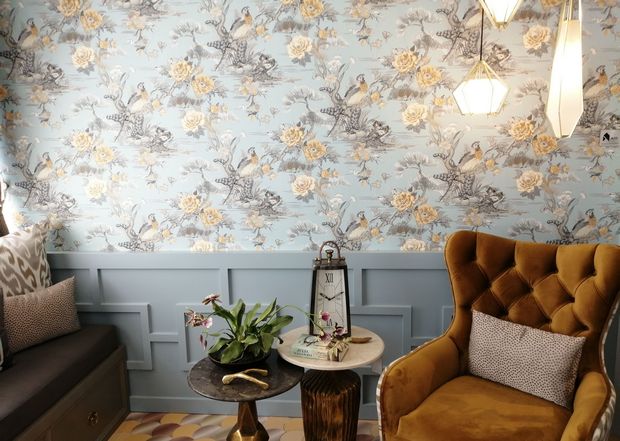
- Vinyl coated wallpaper is a decorative wallpaper sprayed or coated with acrylic vinyl or polyvinyl chloride, which helps it resist moisture and grease better than plain wallpaper. It is suitable for kitchens and bathrooms because it is scrubbable and strippable.
- Paper backed or solid sheet vinyl is a decorative solid vinyl surface laminated to a paper substrate backing. It is scrubbable and peelable. Solid sheet vinyl resists moisture, grease, and stains, so it can be used in kitchens, baths, and other areas of the home.
- Solid vinyl is made of two layers, a heavy gauge poured vinyl film laminated to a fabric or paper substrate. It is more durable than paper backed vinyl and is scrubbable, which matters in high traffic areas, offices, and busy parts of the home.
- Expanded vinyl has a raised effect and is especially useful for covering damaged walls.
- Vinyl wallcoverings are also categorized as Types I, II, and III.
Common Wallcovering Terms
Several terms are used across the manufactured wallcovering industry.
Appliqué refers to cut out designs applied to plain, textured, or figured backgrounds.
Grass cloth is a wallcovering made of dried grasses or plant materials, either left in their natural color or dyed, and woven into a textile. When woven with fine cotton threads, the product looks very refined, and when twisted and made in neutral or natural colors, it can have a more natural appearance.
Bamboo wallcovering is made with cotton warp and welts of split bamboo adhered to paper.
Cork wallcovering is made from natural flexible bark cut into thin layers and adhered to a paper backing. Without the paper backing, it is called corkboard and is used as a bulletin board.
Fiberglass wallcovering is made of woven glass strands applied to a backing. It was originally meant for fragile or deteriorating wall surfaces and can be applied over cracks and small holes. Fiberglass is flame resistant. It is also permeable and therefore naturally mold and mildew resistant, which makes it suitable for humid or hot climates and any location where moisture control is a concern. Fiberglass provides texture only and requires painting after installation, usually with latex paint to preserve breathability.
Linen, wool, and polyester wallcoverings meet most flammability requirements for installed wallcoverings. Linen has high stiffness and low elasticity, which makes it dimensionally stable and resistant to sagging.
Flocked wallpaper is created by gluing tiny fibers to the surface of a paper in a pattern. It can be highly decorative and may imitate a cut velvet look.
Foil or Mylar wallcoverings have a reflective quality because of their shiny surface. They can be brushed or polished and can enhance many interior schemes.
Anaglypta wallcoverings are paper compounds embossed to produce a raised pattern that resembles sculptured plaster, tooled tin, hand tooled leather, or hammered copper. All of these can be painted.
Leather and suede wallcoverings are luxurious natural materials that can quiet an interior. Leather can be embossed with special tools to create a pattern, while suede can be printed to resemble animal skins such as snake, ostrich, and crocodile.
Natural fiber wallcoverings include bamboo, rice paper, and raffia. They are usually installed in a way similar to traditional vinyl papers using an adhesive backing.
Customized wallcoverings may be machine printed or hand printed, also known as silk screen art. Hand printed papers are expensive but provide a unique and rich appearance. Machine printed wallcoverings can also be customized if the run is large enough, such as for hotel guest rooms.
Wallcovering Packaging
Wallpaper is manufactured in long production lengths and then cut into shorter lengths for packaging. This package is a roll or bolt and is produced in varying widths and lengths by each manufacturer. There are two systems on the market, the American and the European, also called Euro or metric.
American bolts or rolls contain about 25 percent more wallpaper than Euro bolts. The trend, however, is toward Euro rolls. Wallcovering is packaged in single, double, and triple bolts.
An American single roll is 18 to 36 inches wide and 4 to 8 yards long, or 12 to 24 feet, and contains 34 to 36 square feet of wallcovering. Double rolls contain 68 to 72 square feet, and triple rolls contain 102 to 108 square feet. Double bolts are twice the length and triple bolts three times the length of the single. This reduces waste when larger quantities are needed.
Metric, Euro, or European single rolls contain 27.5 to 29 square feet. Double rolls contain 56 to 58 square feet.
A pattern number and dye lot or run number are included in the packaging of each roll. This identifies a particular group of rolls printed on the same run. Different dye lot numbers can signal a tonal change in color, a change in the vinyl coating, or a change in the embossing process. It is therefore important to check each roll carefully for uniformity in color and pattern and to record pattern numbers and dye lot or run numbers in case more rolls are needed later.
Once the dye lot is sold, it may be difficult or impossible to get an exact match. Buying slightly more than the required amount is usually a safe choice.
Understanding Pattern Repeats
Patterns on wallcoverings are motifs repeated in sequence. Murals may be an exception. A pattern repeat is measured from the center point, or top or bottom, to the same point in the next pattern. Vertical pattern repeats range from less than 1 inch to about 23 inches. Horizontally, the pattern may be less than 1 inch to the width of the wallpaper, or more in scenic wallcoverings.
There are three main match types.
- Random match is a pattern, such as a stripe, that matches no matter how adjoining strips are positioned. This creates less waste. When every other strip is reversed, shading or variations in color are minimized.
- Straight or straight across match has motifs that match on adjoining strips. Each strip begins the same at the top.
- Drop match is where the patterns vary. A half drop match takes three cuts or strips to repeat the pattern, with every other strip beginning at the ceiling. Odd numbered strips are identical, and even numbered strips are identical. A multiple drop match requires four or more strips before the vertical design is matched.
Wallcovering Installation Guide
Correct installation begins long before the first strip goes on the wall. Surface preparation, sealers, sizing, tools, adhesives, and hanging technique all affect the result.
Surface Preparation
Preparing the wall surface properly is essential to a successful outcome. Poor surface preparation accounts for a majority of wallcovering problems. The wall must be structurally sound, clean, dry, and free of stains, mildew, and grease.
Irregularities in drywall, such as holes, must be plastered, sanded, and primed before the covering is applied. Previous wallcoverings must be removed completely and the surface cleaned of residual adhesives or other chemicals. Adhesive removal solutions are available to make wallpaper removal easier and less time consuming. Any damage caused during removal must also be repaired.
New drywall should be free of dust, dirt, and other contaminants. All drywall, including the joints, should be sanded smooth. New plaster should be allowed to cure for 60 to 90 days before an acrylic wallcovering primer is applied. This helps minimize moisture on the surface and improves bonding.
Sealers and Sizing
Sealers make paper more strippable without damage to the wall. They may be painted onto new or existing surfaces. If a surface has had water damage, a sealer helps hide the moisture. Sealers are also used to prevent alkali from penetrating the paper.
Sizing is a thin liquid painted onto the wall. It reduces the amount of paste absorbed by the wallcovering and gives the wall a little tooth, or slight roughness, that improves adhesion. It helps the adhesive stick better and also seals the surface. A primer, which assures proper adhesion, is the most commonly used wall preparation, especially for commercial installations. Some products seal, size, and prime all in one, so only one coat is needed. The product must dry properly before wallcovering is installed.
When wall damage cannot be repaired adequately, wall liners made of plain paper can be installed to prevent holes, cracks, and gaps from getting larger.
Tools
In addition to proper lighting and a flat work surface, the required tools include paint rollers or brushes, scissors, measuring tape or ruler, sandpaper, level, bucket, pencil, seam roller, ladder, drop cloth, masking tape, seam sealer or roller, a 6 to 7 foot straightedge used to trim selvage, and a breakaway knife. Tools may vary slightly depending on the wallcovering type. Wallpaper installation kits are also available.
Adhesives
Two general performance characteristics matter in adhesive selection. The first is the strength of the bond between the surface and the wallcovering. The second is how the adhesive is applied.
Adhesives are made for specific applications. Some are meant for heavyweight vinyl, while others are intended for lightweight or delicate fabrics. Adhesives are usually applied to the back of the wallcovering with a brush or a pasting machine. Paper and vinyl wallcoverings often come prepasted with water activated adhesive. Some installers use clay based adhesives, although cleanup is more difficult. Clear adhesives, often made of corn or wheat, are easier to clean and are designed for both residential and commercial applications.
Hanging Wallcoverings
Although design professionals often hire qualified installers, it is still useful to understand the basics. For any installation, it is best to start in a subtle location, such as a corner, an area behind a door, or an area next to a doorframe. It is also important to begin with a straight line. A pencil and level can be used, or installation can begin against a doorframe or other flat edge.
A plumb bob is a weighted line used to produce a vertical line so each strip hangs perfectly straight. Measure the height of the wall and add a few inches. Then unroll a second strip and match the pattern to the first strip. Sometimes it is a good idea to cut more than a few strips at one time.
Align the top of the first strip with the ceiling and let some excess hang over. Smooth it into place, but do not force out wrinkles. Use a sharp blade to trim the excess at the baseboard and ceiling line. After each strip is added, wipe it with a damp cloth to keep the surface clean. Continue until the whole surface is covered. Roll a seam roller over the seams to make sure they are tightly sealed to the surface. Textiles with foam or paper backing can be applied the same way.
Conclusion
Textile wallcoverings continue to earn their place in both contract and residential interiors because they offer more than decoration. They improve sound control, insulation, durability, and visual comfort, while also bringing a wide range of surface effects into a room. From wallpaper and vinyl to grass cloth, cork, fiberglass, and upholstered wall systems, the choices are broad.
The final result depends on careful selection and proper installation. Wall preparation, adhesive choice, pattern matching, and surface treatment all matter. As textile research keeps moving forward, wallcoverings are likely to remain a practical and visually rich solution for modern interiors.