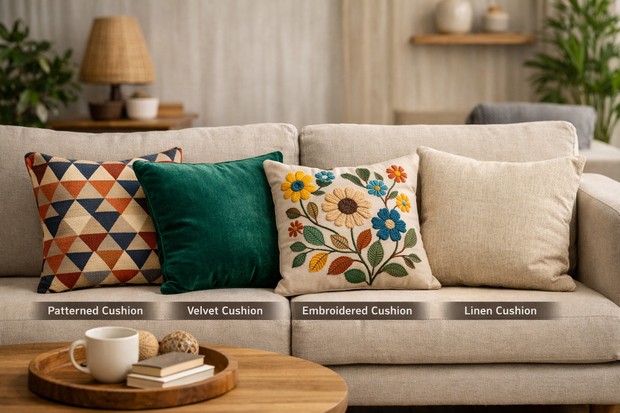
A piece of upholstered furniture often comes with more than just comfort. Labels and grading systems tell you what materials and performance expectations may be built into the cushion, covering, and overall construction. At the same time, the look and feel you create indoors is not limited to furniture, which is why wall coverings like paint and wallpaper also have their own practical categories. This guide brings those details into one place, from upholstery labels to fabric grades and common wall-covering types.
Basics of upholstery labels
All upholstery labels are voluntary, except for the label attached to the cushion that indicates the materials used inside the upholstery item. This label is typically found just under the cushion and is headed with the words “do not remove under penalty of law”.
The label lists the padding materials used inside the upholstered item, which are usually cotton batting, polyurethane or urethane, and polyester batting. Cotton batting is used to cover the upholstery frame. Polyurethane and urethane foam are used for the cushioning, and polyester batting is used to wrap the urethane cushion. The label also includes the kinds of materials used for the back cushion, which can be urethane, polyurethane, or fiber-fill.
Although this mandatory labeling is required, it gives consumers only limited information. The reason is that varying qualities of materials may use the same term.
In addition to the mandatory cushion label, additional labeling is voluntary. When provided, it may include consumer information about fabric testing, flammability, care, and fabric grade.
Fabric testing labeling
This type of labeling was initiated by the National Association of Furniture Manufacturers. Members that meet the association’s construction and warranty guidelines can display a “Seal of Integrity” insignia. The insignia consists of two bronze interlocking circles bearing the manufacturer’s license number.
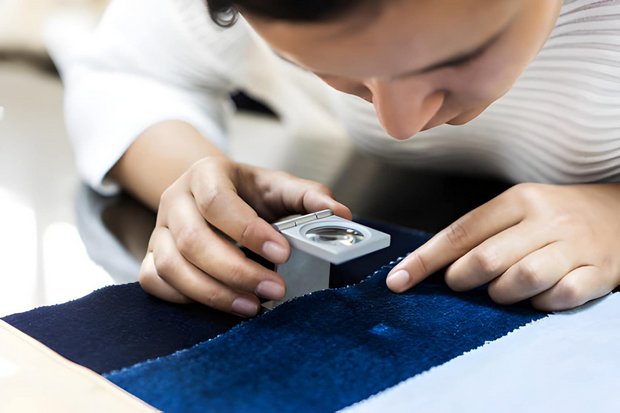
Fabrics displaying this insignia are run through 15 tests for quality, including colorfastness, pilling, yarn slippage, surface abrasion, wear, color transfer, and tear strength. After testing, fabrics are categorized by durability into heavy duty, medium duty, light duty, and delicate.
Participating manufacturers include the durability ratings on fabric swatches and product tags, using the following codes:
- hhh (green color code): heavy duty, suitable for normal use by an active family with children
- mmm (blue color code): medium duty, suitable for use by adults in a household where the furniture is not in constant use
- lll (yellow color code): light duty, suitable for an adult household where furniture is selected for its aesthetic value rather than performance
- IV ddd (red color code): delicate, suitable for an adult household where furniture is decorative and seldom used
Care labeling
The furniture industry uses a voluntary standard care-label coding that indicates the proper cleaning method for a specific fabric. This code may appear on a label under seat cushions, on hand tags, or on fabric samples.
The code meanings are:
- W: cleaned only with water-based cleaning agents or foam
- S: cleaned only with water-free dry-cleaning solvents
- W-S: cleaned with either of the above methods
- X: cleaned by vacuuming or brushing lightly to remove soil
Flammability labeling
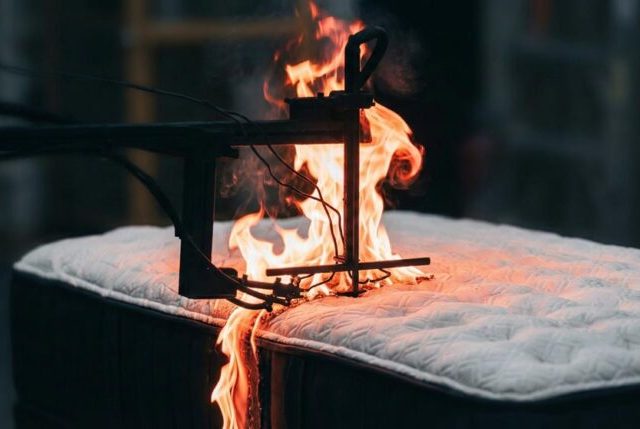
For flammability information, look for the UFAC (Upholstered Furniture Action Council) tag. The hang tag indicates that the furniture and fabric are constructed to resist smoldering cigarettes and are safer than untagged furniture.
To be included in UFAC tested upholstered furniture, various upholstery components must withstand the cigarette ignition test. These components include welt cords, padding materials, decking material, and cushioning materials.
Fabric grade labeling
Many manufacturers offer different fabric choices for upholstered pieces. In this system, fabrics are graded primarily for pricing, not quality.
The grades begin with “A” or “1” as the least expensive and continue up to “H” or “7” as the most expensive. A higher price does not necessarily mean the fabric wears better. Instead, pricing is related to factors such as weave, design, and the type of yarn.
Upholstery structure: loose cushioning vs. firm padding
Modern industrial upholstery manufacturing distinguishes between two upholstery types: loose upholstery cushioning and firm upholstery padding.
1. Loose upholstery cushioning
Loose upholstery cushioning is recognized by its soft and cozy character. With this upholstery type, the covering is not connected tightly to the padding throughout. That difference gives the surface a wavy appearance. As a result, creases on the seat, back, and armrests are often not considered a quality defect.
Among experts, this is treated as deliberate crease development related to the model design. In general, a loose-fit design is present when the covers show crimps or waviness on the back, seats, or the front end of the seat cushion, on the armrests, at the skirt, or at the clamping section.
2. Firm upholstery padding
For firm upholstery padding, the cover is pulled tightly over the padding and connected. This tight connection helps prevent the number of creases created during use. In most cases, creases formed while seated become taut again.
Even with firm upholstery, creases may still fail to fully develop only to a certain extent over long use. However, this should not be attributed to loss of resiliency in the cushioning. The issue is instead related to stretching of the cover material.
Wall coverings guide
Wall coverings help set the tone of a room, and they have their own performance and appearance categories. The same interior space can feel entirely different based on the surface finish you choose, whether you start with paint or move to wallpaper.
Paint
Paint started as a simple way to add color to a room, but it now offers many choices and application methods. With modest expense and relatively quick application, paint can transform a space and create specific visual appeal.
Paint comes in two basic formulas: oil-based and latex. Each has characteristics that make it more suitable for certain purposes.
Appearance and characteristics
Paint is often discussed by the way it reflects light, ranging from shiniest to dullest:
- Flat: the term used for lusterless, shine-free appearances. Low-luster paints are often referred to as those with satin finishes.
- Flat finishes are resistant to marking, making them excellent choices for kitchens and bathrooms.
- Semi-gloss sits between flat and high gloss. It is easy to clean, which makes it practical for doors.
- High gloss creates a shiny surface and is excellent for areas such as doors and windows.
Wall papers
Wallpaper is used by both design professionals and consumers. It is used to bring aesthetic qualities to walls of homes and offices. Unlike paint, which comes in solid colors, wallpaper products are available in many period and color combinations that enhance and augment room furnishings.
With patterns, textures, and designs, wallpaper can introduce light, mood, and personality to an environment. It also has the practical advantage of covering imperfect walls, which is often helpful in older structures.
Classifications of wall paper
Vinyl-coated paper is made from a paper substrate sprayed with vinyl or acrylic. It is easy to care for and can be scrubbed and stripped. Compared with plain uncoated paper, it is grease resistant and somewhat moisture proof. It is considered more breathable than regular wallpaper, and it is also durable, scrub able, and peel able. Because it resists moisture, stains, and grease, it is practical for most rooms in a home.
Fabric-backed vinyl is either a vinyl film laminated to a fabric or paper substrate, or a combination of a paper substrate and ground.
Stringed wallpaper has fine threads laminated to a paper substrate. The strings are usually cotton, linen, or silk, and extreme care should be exercised when cleaning the surface.
Flocked wallpaper creates a three-dimensional effect. The process involves imparting cotton, rayon, silk, or nylon fibers from a “hopper” onto a pattern printed with an adhesive material such as varnish. When dried, the varnish “catches” the fibers and results in a velvet-like surface.
Conclusion
Upholstery labeling combines a mandatory cushion label with voluntary systems that can cover fabric testing, flammability, and care. Fabric testing and grading give consumers a way to interpret durability and use suitability, while the care code helps prevent cleaning errors. For wall surfaces, paint types and finishes shape how light and marking behave on common areas like doors and kitchens, and wallpaper classifications offer texture and coverage for imperfect walls. As interior choices expand, the best results come from matching the right material and finish to how the space will actually be used.