What Is a Comforter?
A comforter can change both the look and the feel of a bedroom, which is why the buying choice often matters more than people expect. Some buyers want extra warmth, while others care more about fiber, thread count, or how the bedding set will match the room. Because comforters come in different sizes, fillings, and constructions, it helps to compare the main features before making a purchase. This comforter buying guide organizes those points in a simple, practical order so the selection process feels more manageable.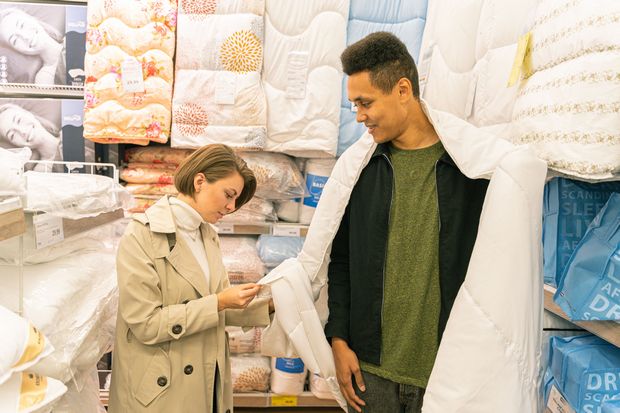
Comforters are used both as decorative enhancements and to provide everyday warmth. They are not fitted pieces, but loose-fitting covers that extend several inches over the edges of the bed. They are available as matching elements in a bedding ensemble or as individual coverings that coordinate or contrast with the sheets, pillowcases, and shams. They are often covered in basic white cloth and are meant to be used with duvets.
Comforter Sizes
Standard sizes include Twin 68 × 86 inches, Double 80 × 90 inches, Full/Queen 88 × 88 inches, Queen 86 × 94 inches, and King 110 × 96 inches. A comforter should match the exact bed size, because standard names do not always give the proper measurements and a piece can end up too large or too small. This simple step saves trouble later.
What to Look for When Buying a Comforter
A comforter is a needed and popular piece of bed linen. It gives you a layer of insulating warmth and helps keep you warm and cozy on chilly nights. As the name suggests, it gives comfort and protects you from the cold. This does not mean that it can be used only during the winter. Different varieties can be used at different times of the year, and there is one for use all through the year. Besides supplying heat and warmth, it can also add color, pattern, and style to your room. In general, it can build interest and character for the entire room.
Before you purchase one for your bed, there are several areas to consider: size, inside filling, thread count, cleanliness, type of down, weight, and construction. Comforters can also be purchased separately or as part of bed in a bag sets, comforter sets, or complete bedding ensembles. Comforter sets come with a comforter, pillow shams, and a bed skirt, while bed in a bag sets include a comforter, fitted sheet, flat sheet, and pillowcases. The online selection of bed comforters is still staggering.
Size
This is a very important factor in the buying of a comforter. You have to measure the exact size of your bed and then buy a comforter according to those measurements. Standard measures such as King size, Full size, Queen size, and the like do not provide the proper measurements, and you could end up buying a comforter that is too large or too small for your bed.
Inside Filling
Comforters are generally filled with certain materials, which give a comforter its physical shape and size as well as its heating capacity. Down is one such material. The soft undercoat of the waterfowl is known as down. It is used as a filling for comforters because it is an excellent insulator. Down traps air in clusters, so you are kept warm but can still breathe. For a comforter to be a down comforter it has to have minimum 70% down filling. If the down is less than 70%, then it is known as a down and feathers comforter. The fill power of the down determines its lightness and heating capacity. A 500 to 575 fill power is suitable for use throughout the year in temperate climates, 575 to 650 for cooler climes, and above 650 for really cold weather. Prima loft is another filling material. It is synthetic and is useful for people who are allergic to down. Prima loft is as good as real down in terms of heating ability.
Bed comforters are ideal bed covers for superior warmth and comfort in temperate climates. Discount duvet covers offer affordable protection to help preserve bed comforters so they can last a good long while. Bed comforters are usually made with a cotton shell and filled with synthetic material or a combination of down and feathers.
Thread Count and Barrier Weave Fabric
Bed comforters are manufactured in a variety of fabric fibers. In general, more expensive fabrics have a thread count over 250 while cheaper muslins have a thread count that is under 200. Higher thread counts mean that the fabric will be softer, more luxurious to the touch, and will often last longer. The thread count is the number of threads that are contained in one square inch of fabric. The tightness of the weave also prevents leakage of the fill inside the comforter to the outside air. The lightness also helps the fill to loft, or puff up, in layman’s terms. Down proofness is measured in millimeters. Lower numbers mean better down proofing. The industry standard is 10. An air porosity test, which shows how much air can pass through a fabric, is a measure of down proofness. Higher thread counts are obviously better for comforter covers. In other words, they help keep little feathers from poking through the fabric.
Cleanliness
There are acceptable government standards for the cleanliness of feathers and down. This cleanliness is a primary variable in determining the hypo-allergenic nature of some down comforters. Some comforter fills are washed as many as fifteen times to get rid of dust, dirt, and organic matter. There are two cleanliness tests in the industry. An oxygen test determines the amount of organic matter left in the material being tested. The industry acceptable standard is 10. Better products have lower numbers than that. Turbidity tests measure suspended solids, dust, dirt, and other matter in the material. The scale goes from about 60 for unwashed feathers to 550 for the best.
Type of Down
These are in order of quality. Please note that some comforters labeled pure down or 100% down are not pure, as some feathers remain in the fill. As long as the comforter is 75% down it can be labeled 100% in many states. The order is duck feather, duck feather and down, goose feather and down, goose down, Hungarian down, and Siberian down.
Weight
A comforter can be made warmer in two ways: fill power and weight. Clearly the aim is to get the maximum warmth at the lightest weight. To get this you would choose a higher fill power number. Feathers are a great deal less warm than high grade down. Once you have selected the fill power, then add weight for extra warmth.
Construction
Sewing quality means better durability and less tendency for sewing to break. Comforters are generally sewn through or baffled. The baffling is an internal fabric wall which allows the fill to loft more. It also adds strength to the comforter. Comforters which are sewn through are generally better for lighter weight comforters only.
Types of Comforters
Below is a brief description of the most common types of fibers used to make bed comforters and what you can expect from each.
Polyester Comforter
Polyester is one of the more common fillers. You’ll find this filling in less expensive bed comforters. Also, it may be your only choice if you suffer from severe allergies. The downside to polyester comforters is that they are non-biodegradable. While the fibers are not harmful, they cannot be recycled. In addition, these comforters will not allow the body to breathe as readily as many of those made from natural fibers.
Wool Comforter
Wool is a generic term that refers to protein fibers spun from the fleece of over two hundred different breeds of sheep, and from the hair of the angora rabbit, the cashmere goat, the camel, the alpaca, the llama, and the wild vicuña. Wool is cool in summer and warm in winter. Euphoria wool comforters are 100% organic wool with a 100% organic cotton fabric cover, ideal for Multiple Chemical Sensitivity sufferers. Wool is dust mite repellent, naturally hypo-allergenic, and flame-retardant.
Cotton Comforter
Cotton comes from the fibers that develop around the seed pod of the cotton plant. Sanforized cotton has been pre-compressed by a mechanical process to the size to which it would shrink after washing. Mercerized cotton has been immersed under tension in a strong solution of lye to improve the strength, absorbency, and appearance of the fabric and make it colorfast. These comforters will be soft and supple and will allow the body to breathe. Make sure that the thread count is high and that way you won’t have to worry about potential wrinkling.
Silk Comforter
Silk is fiber taken from the cocoon of the silkworm caterpillar. Each cocoon is spun from one continuous silk filament extruded from the caterpillar’s body. Silk breathes even better than down and is just as soft. However, you won’t be able to wash it and you should consider protecting it with a duvet cover. It would also be a luxurious alternative for those with allergies.
Down Comforter
Down is widely considered to be the lightest and warmest filling available, offering superior warmth and comfort. This is why it is one of the most sought after bed linen products on the market today. When searching for a down bed comforter, remember that the most expensive types are filled with pure white goose down. Less expensive models may use less down, cheaper grades of down, or down mixed with feathers. Down bed comforters make use of the insulating power of down, soft fine feathers that grow on the breasts of ducks and geese.
How to Choose the Best Down Comforter
Natural down consists of clusters of filaments from the underbelly of a waterfowl bird such as a duck or goose. Because of its three dimensional structure and ability to loft, each down cluster traps more air for its weight than any synthetic. The filaments interlock and overlap naturally to form a protective layer of still air that keeps warmth in and cold out. Natural down comforters consist of a mix of down material and feathers. As long as the comforter contains 75% down, it can be labeled in America as being ‘All Down’ by manufacturers. Europe has higher standards. Because of this, it’s important to be aware of the down to feather content ratio before buying.
The best downs come from mature birds. Down from an immature bird tends to have poor filling power and collapses in a relatively short time. However, when age and maturity are equal, goose down is considered better than duck down. Eider down is considered the finest quality down material and thus the most expensive.
Conclusion
A comforter buying guide works best when the main choices are kept clear and practical. Size, filling, thread count, cleanliness, type of down, weight, and construction all shape how a comforter feels and performs. The fiber choice also matters, whether the bedding is polyester, wool, cotton, silk, or down. When those details are matched with the bed and the climate, the final choice becomes easier to live with over time in daily use.