Carpet Waste and Why It Matters
Carpets are among the most dominant forms of floor covering in homes and commercial settings around the world. This is particularly so in the UK, where carpets have traditionally made up a major share of all floor coverings. The waste associated with production, processing, and fitting, including cuttings and trimmings of carpets, is very large. Even greater, however, are the quantities of used carpets that are regularly disposed of, amounting historically to no less than 400,000 tonnes sent to landfill each year in the UK alone. There clearly exists a problem, and a threat, associated with the breakdown and degradation of these products, which ultimately affects the air, water, and land on which we all depend. However, there also exists an opportunity to rethink and redesign our consumption habits, technological capabilities, and political frameworks in order to challenge conventional practice and develop solutions that would minimise, if not completely remove, these threats without hampering our living standards. In this context, carpet waste recycling has become an increasingly important area of environmental and industrial interest.
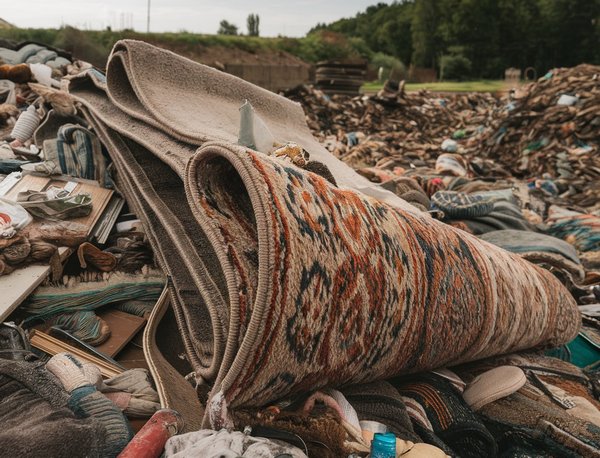
In this article, I will explain the growing issue of carpet waste, how it is generated, and why it has become a serious environmental concern. I will also explore current recycling trends, key challenges, and practical solutions to improve sustainability in the carpet industry.
How Much Carpet Waste Is Generated?
The challenge of dealing with waste and minimising its footprint on our planet has become a pressing issue in the 21st century, and carpet waste, with its large volume-to-weight ratio within the textile sector, is at the forefront of this challenge. Given the continuing growth in carpet production and sales worldwide, the problem of carpet waste is not likely to disappear, or even reduce, unless serious commitments are made at political, technical, and social levels. This is why carpet waste recycling is now widely discussed as a necessary part of sustainable materials management.
To better understand carpet waste and how it is generated, a systematic approach is needed, tracing it from the early stages of production and processing through to the points of partial or complete disposal. Carpet waste may therefore be considered within two distinct categories:
- Pre-consumer or industrial waste; and
- Post-consumer or used carpet waste.
This distinction is important both in terms of the quantity of waste generated and the solutions that might lead to its reduction, if not the total elimination, of such waste.
Industrial Carpet Waste
To determine the amount of waste generated in carpet manufacturing, the production techniques must first be identified and the various preparatory processes through which waste is generated must be carefully scrutinised.
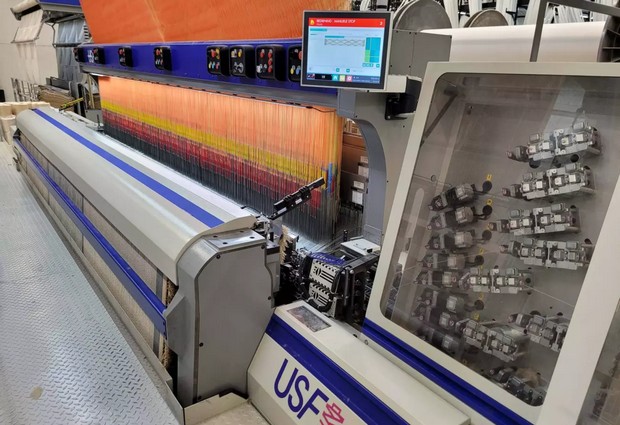
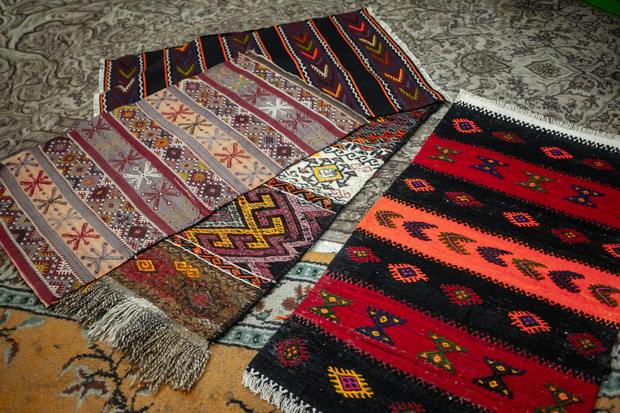
There are generally four major methods by which carpets are produced: woven carpets; tufted carpets; needle-punched carpets; and other methods, including hand-knotted carpets. Woven carpets were the dominant form of industrial production up to the late 1950s and were produced at relatively low speeds. Tufted carpets, developed in the United States and introduced into Europe in the 1950s, made much higher production speeds possible and now account for the largest share of the market. Needle-punching is a method by which hooked needles create internal entanglements within the structure and may also be consolidated with adhesives. Hand-knotted carpets and related methods remain comparatively slow.
The largest quantity of waste during cutting and trimming of the final product is often incurred during fitting, where waste could be as much as 12%, if not more. This waste is potentially the most valuable, given the various production processes it has already undergone. When natural fibres such as wool are used, part of the fibre is lost during the removal of grease and vegetable matter. This loss is lower when synthetic fibres are used. However, in synthetic production there is greater potential for waste generation due to polymerisation, conversion losses, end-of-run waste, and breakages. Further losses occur when fibres are wound to correct lengths and packaged whilst under tension and undergoing adjustment. The tufting method of manufacture also generates waste due to drag, yarn loss caused by breakages, and leftover yarns on creels. Comparatively, woven and nonwoven methods of manufacture lead to less fibrous loss than tufted carpets and hence generate less waste.
Based on such estimates, the total overall pre-consumer waste is significant. This effectively means that, for every large volume of carpet produced, a substantial proportion of material and income goes to waste. Given the scale of the global carpet market, the lost value in the form of waste is therefore considerable. For this reason, pre-consumer carpet waste recycling offers clear economic as well as environmental benefits.
Used Carpet Waste
Post-consumer carpet waste is by far the biggest quantity of waste in comparison with pre-consumer or industrial waste. It arises as a result of the straightforward changeover of carpets used in offices, hotels, apartments, and households. It can therefore vary greatly in terms of quality, cleanliness, types of materials used, age, and quantity.
In the UK alone, over 400,000 tonnes of used carpets were historically reported as being dumped into landfill each year. This is clearly a huge burden on available landfill capacity, given the large volume-to-weight ratio of carpets and their subsequent degradation, or lack of it, with lasting impacts on the environment, including air, soil, and water.
This is clearly an undesirable practice, particularly as the number of landfill sites in the UK has fallen sharply over time and landfill taxation has risen substantially since the 1990s. More importantly, UK waste policy has increasingly sought to reduce the volume of material sent to landfill and to encourage recovery and recycling. Exit from the European Union has not altered the wider environmental direction of travel. As a result, post-consumer carpet waste recycling has become more relevant than ever.
How Carpet Waste Is Managed
Although the amount of carpet that ends up in landfill is not very large compared with all other wastes, carpets still need to be addressed as part of the challenge facing the textile industry because of the volume and space they occupy. Pre-consumer waste has the advantage of being clean, unused, and, in most cases, of known history in terms of raw materials and production processes. It is therefore much simpler to utilise such waste in creative and pioneering ways. However, post-consumer carpet waste is a much more complex problem and a far bigger task to tackle. Issues of concern are not limited to the different materials in any one carpet, but also include differences between carpets, as well as separation, cleaning, and decontamination. There is also the added burden of collection costs, sorting, and dismantling.
It is for these very reasons that most research on carpet waste has focused primarily on pre-consumer rather than post-consumer waste. Keeping the variables to a bare minimum helps to establish viable solutions for clean waste and may, in time, help in finding ways to tackle post-consumer waste. Much of the current progress in carpet waste recycling follows this same pattern.
Carpet Recycling Methods
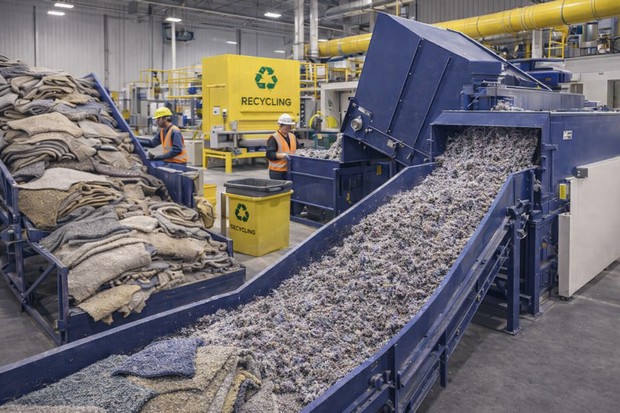
Tackling carpet waste is not a simple exercise and creates its own environmental, technical, and public concerns, which need to be handled carefully if they are to mature into viable and sustainable solutions. Current methods of dealing with carpet waste include landfill, incineration, and reuse in alternative forms.
Carpet Waste in Landfill
This is by far the easiest form of disposal for carpet waste, the kind of “out of sight, out of mind” attitude. However, the scarcity of landfill sites and high taxes, particularly in the UK, have made this option increasingly untenable. Besides, the associated hazards to air, land, and water have made such practices environmentally unacceptable.
When materials are dumped into landfill, some components begin, over time, to decompose and degrade, generating low-molecular compounds and gases that may pollute the air, soil, and underground waters, while many synthetic carpet materials remain for a very long time. Although landfill technology has improved, long-term containment and harmful effects on soil, air, and groundwater remain real concerns with lasting consequences. If waste is to be regarded as a raw material with its own potential value and merits, disposal into a hole in the ground is clearly an outdated practice. This is one of the main reasons why carpet waste recycling is preferred over landfill disposal.
Burning Carpet Waste for Energy
Carpets are predominantly made from synthetic materials that have high calorific value, otherwise described as locked-in potential. Hence, burning to generate energy is one way of making use of post-consumer carpet waste, where issues of dirt and cleanliness become less relevant. However, burning generates ash and flue-gas residues that may contain dioxins, heavy metals, organic carbon, and other toxic materials if not properly controlled. Although safety regulations are in place to reduce such hazards, public concerns are often strong.
If the toxins can be managed effectively, the energy generated through incineration can be converted into heat or electrical energy, for example by heating water to generate steam and thus producing electricity and heat for homes and public places. Sweden has been among the leading countries in this technology.
Pyrolysis, or thermal decomposition in the absence of oxygen, is another way of making use of post-consumer carpet waste. This process converts the waste into char, oil, and gas fractions with useful calorific value. However, the process is energy intensive, and the economics do not always justify production at scale.
Reusing Carpet Waste
This is an area in which traditional textiles have long been reused through resale or donation, thereby extending the life cycle of such goods. Short and unusable fibres resulting from different manufacturing stages have also traditionally found their way into furniture making as fillers in settees, mattresses, and pillows. This is now a well-established outlet and is likely to continue. Rejects from quality control and substandard carpets have also been shredded or granulated and used as fillers in moulded or compressed sheets and panels for sound and thermal insulation within the building industry. Cuttings from edges and carpet trimmings have also been used to produce needle-felt structures for a number of applications, including carpet backings.
Post-consumer carpet waste may also be used in limited but important areas such as construction and geotechnical applications. Ongoing research in this area continues to generate novel applications. These reuse options remain an important part of broader carpet waste recycling practice.
Current Carpet Recycling Rates
In the early 2010s, textile-based waste in the UK accounted for only a small proportion of total waste, yet a major portion of this material was landfilled, while some was incinerated or exported and only a modest proportion was recycled. Since then, recycling in the UK has improved gradually, but it still remains behind several major European countries, including Austria, Germany, and the Netherlands, where recycling systems are more established. In the United States, industry-led efforts have diverted a significant share of carpet waste from landfill into recycling plants for the production of commercial and consumer goods, as well as some new carpets in closed-loop systems. Even so, large-scale carpet-to-carpet recycling remains limited. This indicates both the progress made and the remaining barriers in carpet waste recycling.
New Technologies in Carpet Recycling
Machine-manufactured carpets, particularly tufted carpets, are essentially composite structures made up of different components, including surface fibres or pile yarns, primary and secondary backings, and adhesives or resins used to secure and maintain the integrity of the finished carpet. To recycle such structures, the whole assembly needs to be dismantled into its constituent components. Generally, the surface fibres in tufted carpets account for about 40% of the carpet weight and the remaining 60% includes the other components.
Removal of surface fibres is relatively simple and can be achieved mechanically; however, separating the rest is far more challenging and not always cost-effective. Physical separation is extremely difficult with any high degree of precision, and using solvents to dissolve away parts of the structure is not only costly but also creates its own pollution. Depending on the type of synthetic material used, the surface fibres can be depolymerised to their monomer units and re-polymerised to achieve virgin-quality polymers. Nylon 6 recovery is one such technique; however, the cost of depolymerisation and subsequent polymerisation does not always justify the production costs. Alternatively, recovered polymers may be melted down and used as engineering resins with modest to good properties.
Post-consumer carpet recycling is even harder, as dirt, contaminants, and separation issues are additional matters of concern. Clearly, if carpet recycling is to be addressed in any serious way, much needs to change in the technology of carpet production, government engagement in the form of investment and legislation, and consumer awareness. In other words, the future of carpet waste recycling depends on better product design as well as better recovery systems.
The issue of carpet waste first came to wider public notice in 1996, when one of the first international conferences on the subject took place at Georgia Tech in the United States, with related activity also developing in the UK. Since then, international symposia have continued to address the recycling of fibrous waste, including carpets, and have reported a range of innovative solutions.
Why Carpet Waste Matters to the Environment
Textiles in general, and carpets in particular, consume huge amounts of water in processing and production before they are passed on to consumers. The intensity of water use is often greater when natural rather than synthetic raw materials are used. Global water supply is increasingly threatened by population growth and groundwater depletion, while industrial pollution remains a major concern.
Although synthetic fibres do not use as much water as many natural fibres during production, water still plays a large part in dyeing and coloration. However, synthetic materials such as nylon, polyester, polypropylene, and polyethylene leave an additional and lasting footprint on the planet because of their physical and chemical resilience and their lack of biodegradability. These materials do not break down, or do so very slowly, lingering for long periods and damaging land, sea, and air, even harming wildlife when mistakenly consumed as a food source.
The most practical approach to resolving the issue of waste is to prevent its generation in the first instance, or at least minimise its creation, by developing new techniques of production linked to life-cycle and “cradle-to-grave” strategies that take proper account of land, water, and air pollution. The task, however, cannot be left to manufacturers alone, but must grow out of partnership between all stakeholders, including government and the public at large. Within this broader framework, carpet waste recycling should be treated as a key element of sustainable production and consumption.
What Industry Can Do
Machine-manufactured carpets are composite structures, and future technologists and engineers may be able to develop single-material systems that display different functional characteristics based on physical rather than chemical form, such that they can be more easily recycled and regenerated without compromising strength, comfort, and durability. Better use of computer software to generate bespoke measurements at manufacturing or retail sites could also drastically reduce fitting waste and improve efficiency. Such developments would directly strengthen carpet waste recycling outcomes.
What Government Can Do
Government’s role in this collective effort must not only rely on legislation and the imposition of fines on polluters, but must also include active engagement in investment and the promotion of zero-waste technologies that offer practical solutions. Governments must also educate the public about the dangers of waste to the environment and about what each person can do to help the situation. Stronger policy support can greatly accelerate carpet waste recycling.
What Consumers Can Do
Consumers are largely influenced by affordability and quality. Unfortunately, social and moral issues often play a secondary role in purchasing decisions. Traditionally, items made through recycling or refurbishment have not enjoyed a good reputation because of their perceived inferior properties and underperformance. To alter this perception, technologists and researchers need to develop recycling technologies that substantially enhance the quality of recycled materials, with no apparent deficiency in performance compared with products made from virgin materials. Greater public confidence would also support wider adoption of carpet waste recycling.
Future of Carpet Waste Recycling
Carpets are essential parts of most dwellings and public places; they provide warmth, elegance, and comfort to living and working environments. Their use is therefore unlikely to decline. However, to ensure sustainable production, the next generation of carpets must evolve in design, materials, construction, and deployment, with inherent simplicity in dismantling and recycling at affordable cost. The long-term success of carpet waste recycling will depend on this transition.
Conclusion
If today’s standards of living are to be maintained and improved, delay tactics and half-hearted measures to tackle waste in general, and carpet waste in particular, will only postpone rather than solve the problem. What is needed is collective long-term planning, supported by serious investment in research and development, as well as coordinated partnership between government and the relevant industries. This approach would help ensure that waste is treated as a valuable raw material and that its utilisation in manufacturing becomes part and parcel of sustainable development and the preservation of balance in nature. In this respect, carpet waste recycling is not merely a technical option, but an essential component of responsible environmental management.
References
[1] Goswami, K. K. (2017). Advances in Carpet Manufacture (2nd ed.). Woodhead Publishing, Elsevier.
[2] Russell, S. J. (Ed.). (2007). Textile Recycling: Current State of the Art and Future Prospects. Woodhead Publishing.
[3] Blackburn, R. S. (Ed.). (2009). Sustainable Textiles: Life Cycle and Environmental Impact. Woodhead Publishing.
[4] Worrell, E., & Reuter, M. A. (Eds.). (2014). Handbook of Recycling: State-of-the-Art for Practitioners, Analysts, and Scientists. Elsevier.
[5] Rogoff, M. J., & Screve, F. (2019). Waste-to-Energy: Technologies and Project Implementation (2nd ed.). William Andrew (Elsevier).
[6] Hoekstra, A. Y., Chapagain, A. K., Aldaya, M. M., & Mekonnen, M. M. (2011). The Water Footprint Assessment Manual: Setting the Global Standard. Earthscan.
[7] Wang, Y. (Ed.). (2006). Recycling in Textiles. Woodhead Publishing.