Introduction
The Indian home textile industry is one of the most important segments of the textile sector. Home textiles include products used for household purposes such as bed sheets, pillow covers, curtains, towels, table linen, upholstery fabrics, rugs and carpets. These products are not worn like garments but are used to decorate and furnish homes.
India has a strong tradition in textile manufacturing, supported by centuries of craftsmanship, availability of raw materials, and skilled labor. Today, India is recognized as one of the leading exporters of home textiles in the world. This article explains the future outlook and export trends of Indian home textiles.
Indian Home Textiles: Exports, Retail & Growth
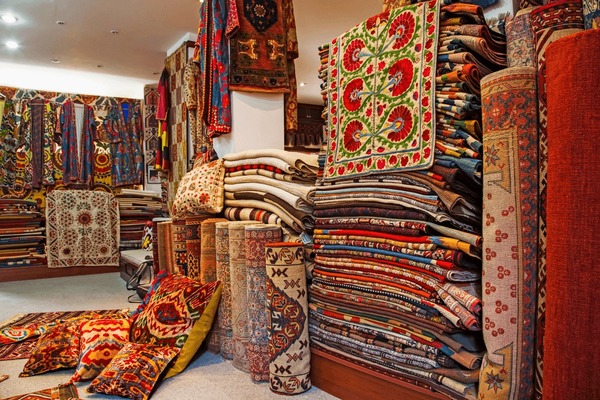
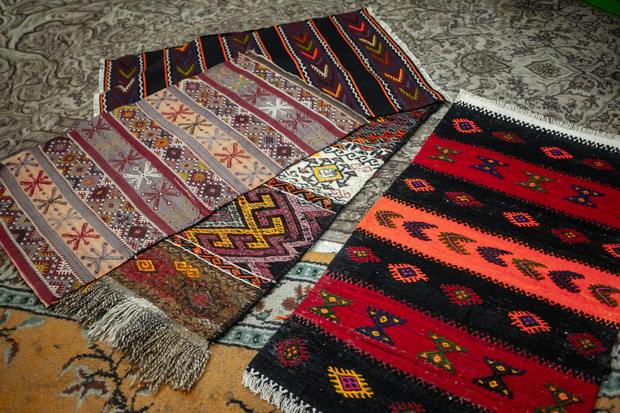
The home textile manufacturers with an eye for innovation have successfully explored the traditional textiles and shaped them into sophisticated end-products for both domestic and global markets. These products not only suit the trendy market and attract the trendy generation but also have helped in reviving the dying traditional crafts such as handloom weaving, block printing and regional embroideries. This artistry has opened a novel pipeline for all the consumers to decorate their home by contemporary designs thereby enriching the interiors with sustainable and design-driven collections.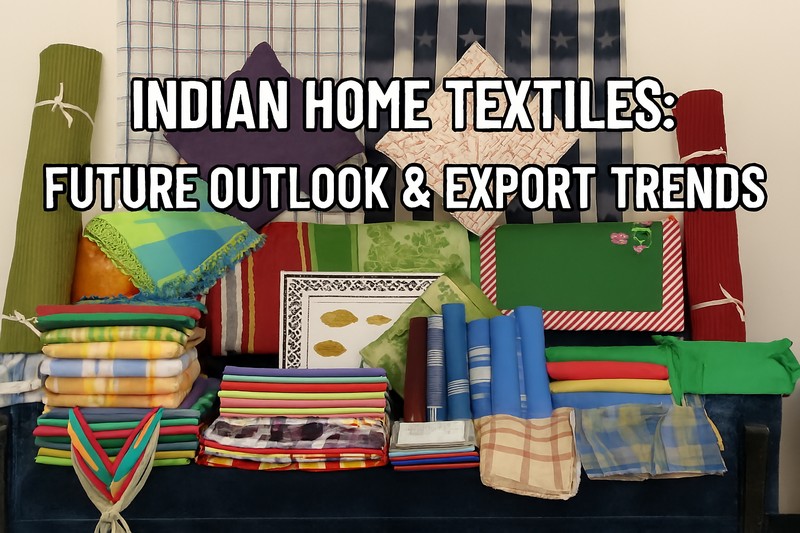
1. Leveraging traditional strengths
Indian textile history is famed for its heritage, designs and traditional making up skills built over centuries of craftsmanship. The diversity in Indian textile merchandise has contributed remarkably to garnering worldwide acceptance and local adaptation of the “Made-in-India” label across more than 100 countries.
Traditional craftsmanship along with its distinctive appeal is being effectively used for producing value-added home textile items leading to India’s growing recognition as a preferred sourcing destination for these products under the global “China Plus One” sourcing strategy.
As of 2024–25, India is one of the world’s leading exporters of home textiles, with exports valued at approximately USD 8–9 billion annually supported by a strong integrated textile value chain from fiber to finished goods. The United States remains the largest market, followed by the European Union, while new markets in the Middle East, Latin America and Africa are steadily expanding driven by trade partnerships and improved logistics infrastructure.
The demand for these items from large format retail stores and chain stores is seen as rising with the introduction of exclusive home sections occupying growing floor-space in markets the world over along with the rapid growth of organized retail in India’s metro and Tier II cities. In addition, global e-commerce platforms and direct-to-consumer (D2C) brands have significantly enhanced international market access for Indian manufacturers through digital marketplaces and cross-border trade models. To benefit from the long-held legacy of tradition and styles, the Indian entrepreneurs are successfully braving the challenge to contemporize the traditional made ups and adapt to the global customer needs including minimalist aesthetics, functional designs and eco-friendly materials.
2. India’s current position
This has become possible as the Indian home textile sector has elegantly combined the textile tradition with utilitarian needs of the consumers while maintaining cost competitiveness and scalability. Cushions, bed sheets, covers, table mats, napkins, curtains, rugs and allied products are produced throughout the country with clusters in states such as Tamil Nadu, Gujarat, Rajasthan, Uttar Pradesh and Maharashtra. Each state has its unique contribution in making these utilitarian items reflecting regional identities and craft specializations. Embroideries flourish across the regions and are being diligently used to give an extra edge to the home products line thereby enhancing product differentiation in global markets.
It is very essential for the manufacturers to realize the export potential of these items while keeping an eye on the marketability in both domestic and foreign markets through branding, certifications and design innovation. The products require not just variability but also specificity in terms of its utilitarian value to the end-user, which in turn will lead to the increased export potential of the particular range especially in premium bedding, bath linen and sustainable home décor segments.
India is poised to strengthen its position with ambitious government targets to achieve USD 100 billion in textile exports by 2030 covering apparel, home textiles and technical textiles. India’s strength is further reinforced by acquisitions of international brands, manufacturing and retail businesses by leading Indian companies enabling deeper penetration into the US and EU markets.
3. Strategies to reform
Considering the advantages of raw material base, design content, skilled manpower, the home textile industry can achieve much higher levels of growth than the present with modernization and technology integration. The Indian companies are already showing their world class status seen in the Heimtextil Fair held in Frankfurt, Germany where India is consistently among the largest participating nations with hundreds of exhibitors annually. It was heartening to see hundreds of leading Indian companies competing with the best producers of branded home products in the world on an equal footing supported by sustainable manufacturing practices and compliance standards. Towards achieving these goals there is also a need to focus on the following core aspects:
- Improve production methods through automation and Industry 4.0 technologies
- Linkup with private labels and global retail chains
- Seek standardization of products with international certifications such as GOTS and OEKO-TEX
- Favorable demographics for home textiles
India is now the most populous country in the world, with a population exceeding 1.42 billion as of 2023 providing a vast domestic consumer base. The population profile of India is shifting towards a larger composition of people in the working-age group strengthening purchasing power and lifestyle spending. India has one of the youngest populations globally, with a median age of 28.4 years compared to aging Western economies. Approximately 65% of the population is under the age of 35, ensuring a robust domestic consumer base for decades to come particularly in urban housing and décor segments.
The low median age of population means a higher current consumption spending vs. savings boosting demand for lifestyle and home improvement products. The growth in population is taking place in the urban area. According to recent projections, over 40% of India’s population is expected to reside in urban areas by 2035, driving the housing and home decor market through increased residential construction and rental housing demand. Favorable demographics increasing young population and that too in the urban area, coupled with rising income levels will act as a key growth factor for the Indian textile and fashion industry including organized home furnishing retail.
The use of digital payments and plastic money has increased significantly in the last few years transforming consumer purchasing behavior. The Unified Payments Interface (UPI) has revolutionized commerce, while credit card issuance in India surpassed 100 million in 2024 facilitating seamless retail transactions. Increase in the number of e-commerce platforms and seamless payment gateways will provide fillip to impulse apparel purchases as well as online home décor sales.
4. Growth of retail space
India’s organized retail mall space has expanded to over 120 million sq. ft. by 2025, with strong growth in Tier II and Tier III cities reflecting deeper market penetration beyond metros. The expansion of organized retail has significantly boosted demand for branded home textile products and private label collections. Major players such as Reliance Retail, Aditya Birla Group, Tata Trent, IKEA and Walmart-backed ventures continue to expand aggressively in the home furnishing segment supported by data-driven merchandising and supply chain efficiencies. Omnichannel retailing, integrating online and offline platforms, is becoming a dominant distribution model enhancing consumer convenience and brand visibility.
5. Drivers of export growth
The adoption of the “China Plus One” strategy by global brands seeking to diversify their supply chains has positioned India as a reliable alternative sourcing hub. Progressive dismantling of the textile and mass apparel industry from the Western world has created opportunities, and India is a major player to fill this gap with competitive labor and manufacturing capabilities. Recent Free Trade Agreements (FTAs) with Australia and the UAE are helping India by reducing tariff barriers and improving market access. Buying of several Western brands by the Indian industry, thus, facilitating entry in EU and US through established distribution networks.
Increasing modernization of Indian textile and apparel manufacturing sector in response to the increased global demand and facilitated by the Production Linked Incentive (PLI) scheme and the PM MITRA Parks initiative to create world-class integrated textile regions with plug-and-play infrastructure and scale efficiencies. Sustainability certifications such as GOTS, OEKO-TEX and other eco-labels are increasingly important in securing export orders, particularly from the US and EU markets where compliance and traceability are mandatory expectations.
6. Adding value to home textiles
Modern lifestyles and changing needs do demand a practical approach to home furnishings and textiles with emphasis on sustainability, comfort and aesthetics. The sense of awareness among the consumers is certainly remarkable and the producer’s ability to translate, innovate and create has created opportunities for profiting from the growing consumer demand through premiumization and brand building.
The new vistas opened for the home textiles, make-ups and accessories markets have paved their way to urban consumers enabling them to enjoy the avant-garde version of cherished traditional craftsmanship blended with contemporary global trends.
Finally it’s the ultimate ability of our entrepreneurial skills to identify and translate these opportunities in creating avenues for a high-value global business supported by policy reforms and digital transformation. Indian home textile industry is on the threshold of tidal wave of growth driven by exports, organized retail expansion and rising domestic consumption. India has all the ingredients to emerge as a powerhouse of home textiles in the global marketplace.
Conclusion
Indian home textiles represent a strong combination of tradition and modern technology. The industry benefits from an integrated value chain, competitive production costs, skilled labor, and growing global demand.
Export trends such as sustainability requirements, supply chain diversification, and digital retail expansion are shaping the future of this sector. With continuous improvement in technology, compliance, and design innovation, the Indian home textile industry has a promising and sustainable future.
References
[1] Babu, V. R., & Sundaresan, S. (2018). Home furnishing. CRC Press.
[2] CBRE South Asia. (2024, February 15). India Market Monitor Q4 2023: Retail. CBRE. https://www.cbre.co.in/insights/reports/india-market-monitor-q4-2023
[3] Invest India. (2023). PM MITRA Parks: Transforming India’s Textile Sector. National Investment Promotion & Facilitation Agency. https://www.investindia.gov.in/sector/textiles-apparel
[4] Ministry of Textiles. (2023). Year End Review 2023: Initiatives and Achievements of Ministry of Textiles. Press Information Bureau, Government of India. https://pib.gov.in/PressReleaseIframePage.aspx?PRID=1991876
[5] The Cotton Textiles Export Promotion Council (TEXPROCIL). (2023). Export Performance of Indian Cotton Textiles. TEXPROCIL Statistics. https://texprocil.org/e-newsletter/1716982395-ENews_(7.01_and_7.02).pdf
[6] United Nations Population Fund. (2023). State of World Population 2023: 8 Billion Lives, Infinite Possibilities. UNFPA. https://www.unfpa.org/publications/state-world-population-2023-8-billion-lives-infinite-possibilities
[7] World Trade Organization. (2023). World Trade Statistical Review 2023: Statistical Tables. WTO. https://www.wto.org/english/res_e/publications_e/wtsr_2023_e.htm
[8] India Brand Equity Foundation. (2024, February). Textiles and Apparel Industry in India: Industry Scenario, Market Size & Investment. Ministry of Commerce & Industry. https://www.ibef.org/industry/textiles.aspx
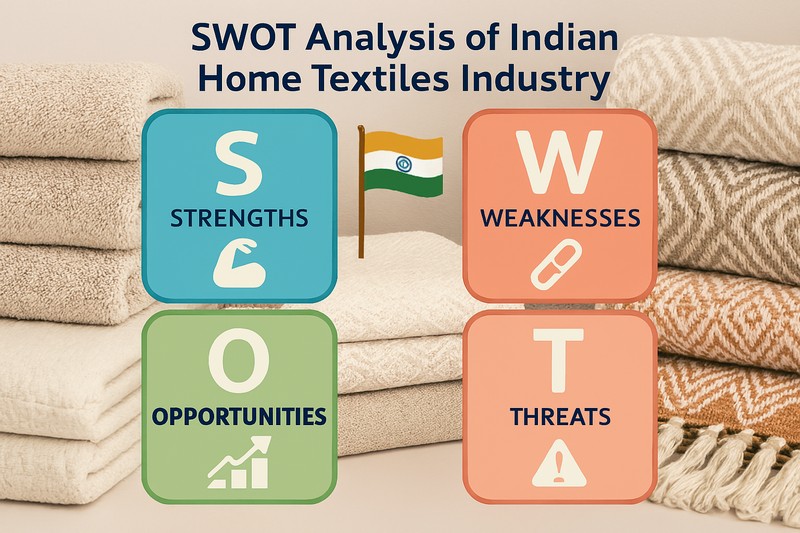
You may also like: SWOT Analysis of the Indian Home Textiles Industry