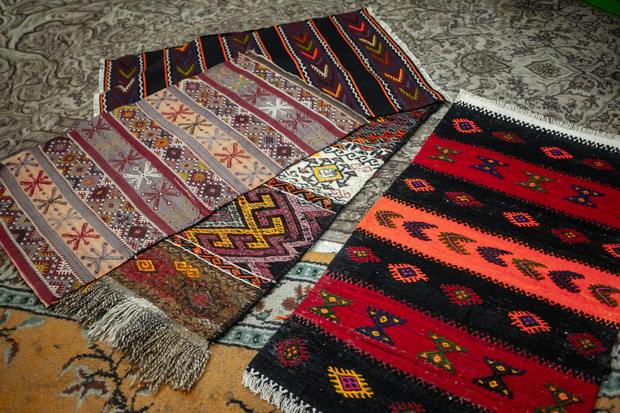
Today, wool remains one of the most respected carpet fibres because it combines comfort, resilience, appearance retention, and fire safety in a way that few materials can match. Modern processing has helped wool stay relevant in both traditional woven carpets and high-performance tufted products, so it continues to hold a strong place at the premium end of the flooring market.
Why Wool Remains a Premium Carpet Fibre
Wool’s performance begins with its structure. It is a protein fibre made of keratin, built from long-chain molecules linked by strong cross-bonds, especially disulphide bonds. That structure gives wool its excellent elasticity, flexibility, and recovery after compression.
The fibre surface is covered with overlapping cuticle scales. These affect friction, help fibres interlock, and make it harder for dirt to penetrate deeply. Wool’s matt, opaque appearance also means that flattening in use is less obvious than with many synthetic pile fibres.
Wool also absorbs and releases water vapour according to changes in indoor humidity and temperature. In practice, this helps buffer the indoor environment, supports comfort, and reduces static build-up. Under normal conditions, wool carpets rarely create troublesome static electricity.
Its natural crimp is another major advantage. The wave-like shape of the fibre adds bulk, improves pile cover, and helps the carpet recover after pressure. This is one reason wool carpets often keep a full, resilient look for longer than many alternatives.
Wool is also highly receptive to dyes, which allows rich, deep colouration. Its chemical structure makes it possible to set twist or shape using heat, steam, or suitable chemical treatment, which is important in many carpet yarns.
Other important benefits include wool’s strong resistance to burning, low smoke generation, and ability to absorb odours and certain indoor pollutants. These qualities make wool especially suitable for hotels, airports, public buildings, and other demanding environments. Wool is also vulnerable to moth and beetle attack, so durable insect-resistant treatment is usually applied during manufacture.
From Raw Wool to Carpet Yarn
The route from fleece to carpet yarn is unique among carpet fibres. It begins with wool production, continues through scouring and blending, and ends with spinning systems tailored to the type of carpet being made.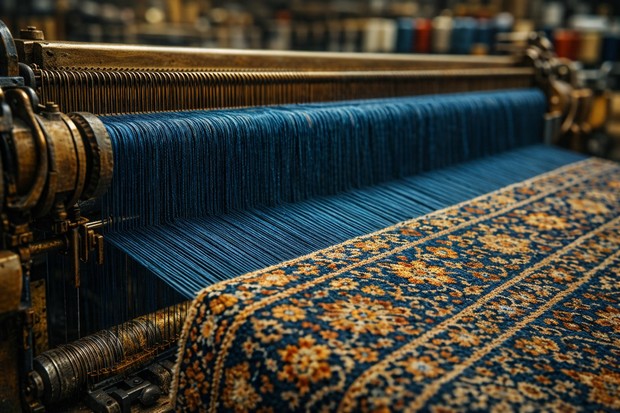
Wool supply and grading
Carpet wool is produced in many countries, but New Zealand remains one of the leading sources of high-quality carpet wool and a strong example of modern wool production and early-stage processing. Sheep used for carpet wool are generally dual-purpose breeds, producing both meat and fibre. They are raised outdoors, and their fleeces are shorn regularly, classed, baled, and sold through auctions, private treaty, or forward contracts.
Buyers assess wool using both visual inspection and objective testing. The most important factors are fibre diameter, colour, yield, length, and general suitability for the intended yarn or carpet construction.
A carpet wool blend may include several types of fibre:
- Mainstream wools, selected for colour, length, and ease of spinning
- Specialty carpet wools, chosen for bulk, texture, or distinctive handle
- Filler wools, used mainly because of their lower cost
Blends may also include dyed fibres for berber or tweed effects, melt-bonding fibres to improve texture retention, or polyamide fibres to improve abrasion resistance.
Wool scouring
The first processing step is scouring, a gentle but high-throughput washing process that removes grease, suint, dirt, and other contaminants from raw wool. The aim is to produce a clean, uniform fibre ready for spinning.
A typical scouring line for coarse carpet wool includes:
- opening, blending, and mechanical cleaning
- washing in several bowls with warm water and detergent
- rinsing in cold and hot water
- hot-air drying to the correct moisture level
- mechanical dust removal
- baling into high-density packages
Modern scouring plants are usually computer controlled to improve consistency, reduce water and energy use, and manage effluent responsibly. Near-infrared monitoring is widely used to track moisture, grease content, and colour so that the plant can correct any deviation quickly.
Wool Carpet Yarn Types
Wool carpet yarns can be made by woollen, semiworsted, or worsted systems. The woollen route remains the most common because it handles a wide range of fibre types, uses fewer processing stages, and produces a bulky, irregular yarn that suits many carpet styles.
Woollen spinning
A typical woollen sequence includes:
- Opening and blending the wool
- Applying lubricant for carding
- Carding to form slubbing
- Spinning into singles yarn
- Twisting two or three singles together
Thorough blending before carding is essential because the woollen system offers limited opportunities to correct variation later. If the blend is uneven, the problem may appear as striping or visible shade variation in the finished carpet.
Dyeing may take place before carding, on yarn packages, or in hank form. Loose-stock dyeing is often used for plain shades, where large volumes of dyed fibre can later be blended to minimise batch variation. Hank dyeing is common for patterned carpets because it allows smaller quantities of many colours to be produced economically.
Most woollen yarns are scoured after spinning to remove lubricant, unless they are dry spun. For cut-pile carpets, the yarn usually also needs twist setting so that the tufts do not untwist after cutting.
Semiworsted and worsted yarns
Semiworsted yarns are used where a smoother, firmer, and finer yarn is required, especially in dense level-loop tufted carpets and some woven constructions. Compared with woollen spinning, the key differences are lower lubricant levels, more drafting, and multiple gillings that straighten and align the fibres.
Worsted carpet yarns are produced in smaller volumes and are reserved for fine-count applications that cannot be made efficiently by woollen or semiworsted methods. The combing and drafting stages remove short fibres and create a highly organised yarn structure suitable for delicate woven textures.
Modern Technologies for Wool Carpet Yarns
Twist setting and continuous processing
One of the most important wool-specific developments is continuous package-to-package scouring and twist setting. This kind of process cleans the yarn and stabilises twist in a controlled, uninterrupted sequence, reducing handling and improving uniformity.
The yarn is wound in a constrained form, passed through wet processing bowls, and treated with a setting agent such as sodium metabisulphite. This stabilises the twist and reduces the risk of untwisting, bursting, or distortion during later carpet manufacture and use.
A related texturising attachment can also be used to produce friezé yarns. Steam is applied to the confined yarn to introduce controlled kinks and crimps, giving carpets a more lively and textured appearance.
Melt-bonding fibres
Melt-bonding fibres were introduced to improve the twist setting and cohesion of wool and wool-rich yarns. A typical blend contains wool plus a small proportion of melt-bonding fibre. When heated, the bonding fibres fuse and form a network within the yarn.
This improves tuft definition, resistance to shedding and wear, yarn bulk, and strength. The trade-off is that dyeing becomes more complex than with 100% wool blends.
Twisting and felting
Wool carpet yarns have traditionally been twisted on ring frames, although two-for-one twisting is now widely used, especially for finer yarns. It is efficient and well suited to modern production.
Felting is another useful wool process. Because wool fibres interlock when wet and mechanically agitated, they can be made into stable, bulky yarns. Felted yarns are often used in heavier carpet counts and rugs. They usually improve abrasion resistance, reduce fibre shedding, and help retain pile texture, though their dense structure can limit recovery from compression.
Insect resistance
Wool is vulnerable to moths and beetles, so durable insect-resistant treatment is necessary for carpet yarns. Historically, permethrin has been widely used, but environmental concerns and insect resistance have encouraged newer active ingredients and lower-impact application systems.
More recently, the emphasis has shifted toward formulations that reduce aquatic toxicity, improve application efficiency, and minimise effluent. Powder-based finishing systems and alternative active ingredients are part of that transition.
High-bulk nylon blends
High-bulk nylon 6.6 fibres have also been developed for blending with wool in carpets. Their specialised crimp and setting behaviour makes them compatible with wool processing. When used in small proportions, they improve cover, resilience, and early wear performance while also helping to reduce fibre shedding.
How Wool Carpets Are Made
Wool carpets are made by almost all traditional and modern carpet methods:
- Hand knotting and hand tufting
- Weaving, including Axminster, Wilton, and face-to-face constructions
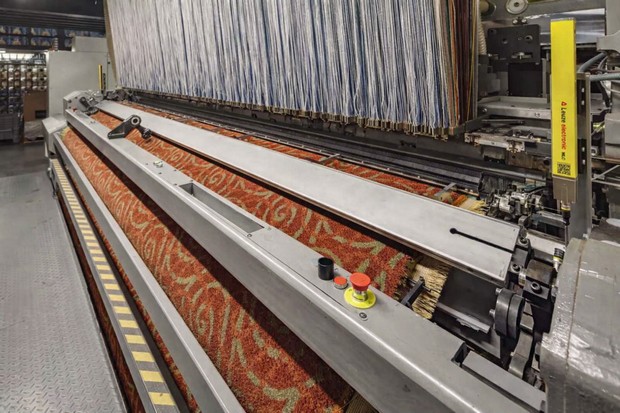
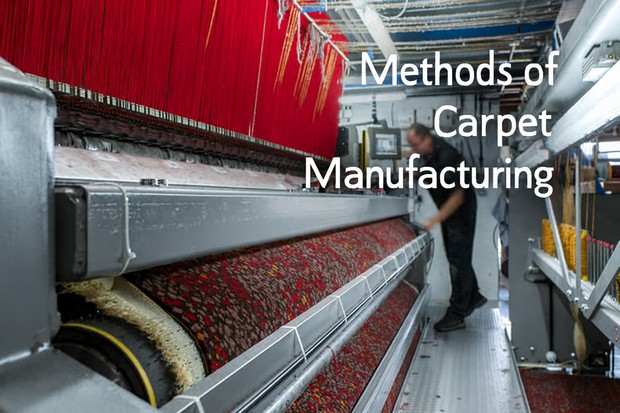
- Machine tufting
- Fusion bonding
- Less commonly, needling and flocking
Tufting accounts for the largest share of wool carpet production, followed by weaving and handcraft methods. Through sustained research and development, wool yarns can now be engineered for the regularity, strength, twist stability, and colour performance required by modern carpet manufacture.
Making Wool Tufted Carpets
Tufting places the greatest stress on carpet yarn. Because wool has lower tensile strength than many synthetic fibres, breakages are more common during tufting, and thick places or yarn joins can cause stoppages if they catch in the needle eye.
To address this, redesigned tufting needles were developed with a straighter yarn path and a larger eye. Later needle designs added a second eye and a yarn-protection groove, reducing yarn stress, improving carpet quality, and lowering insertion forces. These refinements have made wool much more practical in high-speed tufting.
Yarn supply to tufting
For plain carpets, beams are increasingly used instead of creels because they save floor space and give more consistent yarn tension. Creels are still necessary for patterned carpets, where yarn consumption varies between needles. Beam changeovers, however, stop production, so the choice between systems depends on carpet type and factory layout.
Finishing and Performance Enhancements
Wool has some inherent limitations because it is a natural biological fibre, but it also offers many opportunities for enhancement through finishing and surface treatment. That is why modern wool carpet production relies heavily on controlled post-spinning and finishing technologies.
Controlling photobleaching
Wool carpets can change colour when exposed to sunlight, especially in pale shades. This is known as photobleaching and can be noticeable soon after installation. The effect depends on the fibre’s original colour, any processing-related yellowing, and the shade to which the carpet has been dyed.
Anti-photobleaching treatments are designed to counteract this by yellowing at a similar rate to the wool’s natural colour change, so the visual effect remains stable over time. These treatments can be applied in the dye bath or in the scour and are most effective on wool with a good starting colour.
Stain blocking
Wool has a natural degree of stain resistance, but once wet it can still be affected by food and drink spills. Stain-blocking finishes create a barrier near the fibre surface that slows the penetration of common acidic stains.
Modern wool stain blockers are far less prone to yellowing than earlier products. They are especially useful in carpets exposed to frequent domestic use or heavy traffic.
Better scouring and faster dyeing
Improved scouring methods can produce exceptionally bright, clean wool suitable for pastel shades and clear whites. Better removal of dirt and grease also improves shade consistency and colour stability later in processing.
Dyehouse speed is another issue in modern production. Rapid dyeing aids can shorten processing time significantly, especially in loose-stock and hank dyeing, and can increase throughput without requiring major new equipment.
Fibre surface modification
The cuticle scales on wool largely determine its frictional behaviour, which affects yarn strength, pile stability, abrasion resistance, and soiling. Surface-modification treatments using very fine particles or other coatings can increase inter-fibre friction, improve yarn cohesion, and reduce shedding.
These finishes can also improve soil resistance by occupying sites on the fibre surface where dirt would otherwise attach.
Preventing shading and pile reversal
Pile reversal, also called shading, pooling, water marking, or pile bias, occurs when areas of a cut-pile carpet appear lighter or darker depending on the direction from which they are viewed. It is caused by changes in pile lay across the surface, which alter the way light reflects from the tufts.
A practical solution is to impart a consistent pile direction during finishing so that the carpet responds more uniformly in use. This reduces the visual impact of shading and helps the carpet maintain a more even appearance.
Wool Carpet Performance and Testing
The performance of a wool carpet depends on the fibre, yarn structure, pile density, and construction. Its main properties can be grouped into three broad categories:
- Initial comfort properties — acoustic comfort, walking comfort, thermal comfort, and walking safety
- Wear properties — durability, tuft bind, appearance retention, dimensional stability, and resistance to soiling
- Location-specific properties — flammability, electrostatic behaviour, and hygiene
Wool performs especially well in comfort-related areas because of its resilience, bulk, and insulating character. It also offers strong fire performance and remains a preferred choice in buildings where safety, atmosphere, and long-term appearance all matter.
Durability testing
Durability is influenced mainly by pile fibre type and pile density. Surface pile mass and pile thickness can be combined into an empirical density index that helps predict long-term wear life. In general, a higher pile mass relative to pile height indicates better durability.
Abrasion tests are also widely used, although machine testing does not always mirror real floor wear perfectly. Even so, these tests remain valuable for setting standards and comparing products.
Appearance retention
For many consumers, the most important question is whether a carpet will keep its showroom appearance. Appearance-retention testing measures how well pile texture survives controlled wear and compares worn and unworn specimens under standard viewing conditions.
Wool carpets often perform strongly in this area when the construction is matched correctly to the intended use. Dense pile, good yarn quality, and suitable finishing all help preserve appearance.
Tuft bind
Tuft bind measures the force needed to withdraw individual tufts from the backing. It confirms that the latex and backing structure have formed a secure bond. Adequate tuft bind is essential for cut-pile carpets, especially in traffic areas and on stairs.
How to Choose the Right Wool Carpet
Choosing the right wool carpet depends on location, traffic level, appearance goals, and maintenance expectations. A carpet for a quiet domestic room does not need the same construction as one intended for a hotel corridor, office, or stairway.
The main considerations are:
- Expected foot traffic
- Whether the carpet will be used on stairs
- Required durability and appearance retention
- Colour and design requirements
- The balance between comfort and cleanability
Well-maintained wool carpets can also help trap dust and particles until they are removed by vacuuming, which supports a cleaner indoor environment. Regular cleaning is therefore an important part of getting the best performance from the fibre.
The Future of Wool Carpets
Wool remains the premium fibre for carpets and rugs, especially at the high end of the residential and contract markets. Its strongest advantages today are not only tradition and appearance, but also sustainability, safety, and indoor comfort.
Several factors support its future:
- Wool is renewable and biodegradable
- Consumers are increasingly interested in lower-impact materials
- Wool offers excellent fire performance and low smoke generation
- It helps buffer humidity and improve indoor comfort
- It remains widely used for woven carpets and prestige installations
- Digital design tools now make it easier to develop attractive colourways, textures, and patterns for premium ranges
At the same time, wool needs clearer marketing. Many consumers now choose carpets mainly on colour, design, and price, with little awareness of fibre differences. That means wool cannot rely on old commodity-style promotion. It needs focused, evidence-based communication that highlights performance, sustainability, and long-term value.
Supply is also an issue. Sheep numbers in some producing countries have declined as farming systems shift toward more profitable land uses. If that trend continues, suitable carpet wool could become scarcer and more expensive. On the other hand, stronger prices would encourage growers to maintain or expand production. The long-term future of wool carpets will therefore depend on both market conditions and the industry’s ability to keep wool profitable at farm level.
Wool has remained relevant through every major change in carpet technology because it still offers a rare combination of beauty, comfort, durability, and environmental credibility. For premium carpets, that remains a compelling advantage.
Conclusion
Wool carpets continue to stand out because they bring together natural performance and modern processing. From scouring and spinning to tufting, finishing, and testing, the industry has continually adapted wool to meet changing manufacturing needs and consumer expectations. As a result, wool still deserves its place as a premium carpet fibre with lasting technical, aesthetic, and environmental value.
References
[1] Goswami, K. K. (Ed.). (2017). Advances in carpet manufacture (2nd ed.). Woodhead Publishing. ISBN: 9780081018480
[2] Crawshaw, G. (2002). Carpet Manufacture. Woodhead Publishing, Elsevier.
[3] Crawshaw, G. H. (2011). Wool. In Specialist Yarn and Fabric Structures: Developments and Applications. Woodhead Publishing.
[4] Das, S. (2010). Performance of Home Textiles. Woodhead Publishing, Elsevier.
[5] Simpson, W. S., & Crawshaw, G. H. (Eds.). (2002). Wool: Science and technology. Woodhead Publishing. ISBN: 9781855735743