You check into a room after a long journey, drop your bag, and go straight to the bed. Not the artwork. Not the minibar. The bed.
You pull back the covers and make a judgment in seconds. Does the sheet feel cool or sticky? Does the pillow look tailored or tired? Does the blanket add comfort, or just bulk? That first touch tells you more than the welcome speech ever will.
That is why hotel linens matter so much. They are not just soft furnishings. They shape comfort, hygiene, branding, and operating cost all at once. And if you’ve ever stayed in a room where the bedding felt off, you know the difference immediately.
Why Hotel Linens Matter
Being an important component of the hospitality industry, hotels have to be very specific about their linen. Linen ranging from very luxurious to normal types is used by various hotels depending upon their requirements. Usually the linen is marked by embroidering of logos, emblems, coats of arms, etc., for a more personalized touch. Both simple and complicated multi-colored motifs can be sewn in.
That is the commercial reality behind the softness. Good linen has to perform. It must look fresh on arrival, survive repeated washing, and still feel inviting after constant use. Most people focus on the bedspread they can see. Industry buyers focus on what survives the laundry room.
A boutique hotel in Edinburgh may use embroidered pillow covers to create a heritage feel. A beach resort in Australia may prioritize breathable sheets, lighter blankets, and quick-drying towels. Same category. Very different buying logic.
Hotel Linen Types at a Glance
The core hotel linen types most buyers think about are:
- Pillow covers
- Duvets and duvet covers
- Blankets
- Mattress
- Sheets
- Towels
- Bath mats
In practice, a complete guest room also needs sheets, towels, and bath mats. Those pieces may seem less glamorous, but they shape the guest experience just as strongly.
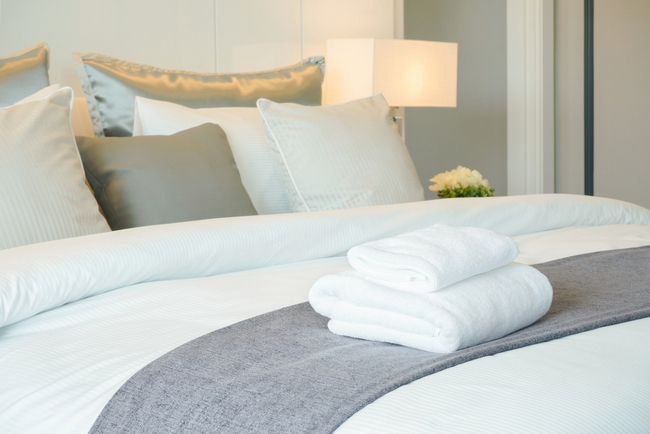
Pillow Covers
One of the quickest ways to change the feel of a room is to change the pillow covers to create a fresh new color scheme. Fashionably understated yet available with stunning effect, the contemporary range of pillow covers provide a clean modern look with no fancy frills. These are widely used to decorate the pillow kept in the living room, porch or the entrance of the home.
Color, texture, pattern and fabric weight are the factors kept in mind while making pillow covers. The cloth generally selected to make pillow covers must be a nice thick material that does not fray, snag or rip easy. The color or theme of the pillow cover is selected as per the decor of the house and cotton, polyester, chenille, acrylic wool and chenille are the primary material used to make pillow covers.
The four corners of the pillow covers are the perfect place to add some pizazz and decorative stitching. The terrific ideas to embellish the look of the pillow covers are embroidery, applique, and hemstitched lace. After the pillow cover is decorated and assembled it is buttoned in place on the pillow, a great way to soften the look or color of any pillow.
In hospitality, pillow covers do more than dress a cushion. They set the tone at eye level, which is often the first part of the room a guest notices after the bed itself. I prefer pillow covers that feel tailored rather than fussy. They should look crisp, hold their shape, and survive constant laundering without losing their finish.
Duvets and Duvet Covers
A cover that closely fits over a plain comforter, usually one that is down-filled, is called a duvet. It is slightly larger than the comforter it is to cover, and is generally fastened with Velcro, buttons, zippers, or snaps. The benefit of a duvet is that it can be easily changed to bring different looks to the bed. During the warmer weather months, the cover might be lightweight, while the winter months might call for a heavier cover to provide extra warmth.
That flexibility is exactly why duvets dominate in many hotels. You can refresh the look without replacing the insert. You can adjust for season without changing the whole bed system. And you can give a room a more polished, finished appearance with less visual clutter.
In Europe and Australia, duvets are often the default. In the US, hotels still frequently use a top sheet in addition to the duvet, which changes both the guest experience and the housekeeping routine. If you’re buying for a property, think about climate, turnover speed, and the kind of sleep feel you want to create. Why buy bedding that works against your operations?
Blankets
Being both decorative and functional, blankets provide color and comfort for the user. They are available in sizes that are the same as flat sheets and in a wide range of fibers and fabrics. Blankets are generally knitted and come in a variety of weights, with lighter ones for summer use and heavier ones for winter. Wool is the primary fiber used in blanket construction, although blends are available for those who want to be able to wash them without having to worry about shrinkage. For greater dramatic effects and more warmth, especially fibers such as cashmere are available.
Electric blankets were the rage during the 1970s and are still sold today. However, many people are fearful of the long-term adverse effects that have been known to be associated with electric blankets, making them less desirable in many households.
Most blankets are woven, with some using a napped finish to provide extra warmth. Some are knitted by machine or hand, with intricate patterns adorning their surfaces.
That is still the right way to think about blankets in hotel design. They are not only there to warm the bed. They add texture, color, and seasonal flexibility. A lighter blanket suits summer rooms and warmer climates. A wool blend works well for colder destinations. Cashmere brings genuine luxury, but it belongs in premium suites where the brief justifies the cost.
Among these options, wool blends tend to work best for colder destinations, while lighter knitted versions suit warmer markets and faster turnover. A coastal hotel in Lisbon and a mountain lodge in Scotland need very different blanket strategies.
Mattress
The mattress is the foundation of the sleep experience. Everything else sits on top of it, but nothing compensates for a bad one. Guests may not know coil counts or foam density, but they know when they have slept badly.
For hotels, the mattress should always be considered with protection in mind. A waterproof, breathable mattress protector helps guard against spills, sweat, and wear. A quilted mattress pad can add a touch of softness and make an older mattress feel more forgiving without replacing the whole unit.
This matters more than most buyers admit. A family rental in Sydney may face heavy use and humid conditions. A boutique hotel in Edinburgh may want to extend the life of a premium mattress for years. In both cases, the mattress system affects comfort, hygiene, and replacement cost. Do not treat it as a background item.
Sheets
Sheets are the workhorse of hotel linens. Guests feel them first, even if they never consciously comment on them. If you have ever woken up sweating through your sheets, you already understand why this matters.
For most hotels, long-staple cotton is the strongest all-round choice. Percale gives a crisp, cool finish that feels fresh and breathable. Sateen feels smoother and a little warmer, with a softer sheen.
Thread count gets too much attention. A well-made 300 to 400 thread count sheet can feel better and last longer than a cheaper, higher-count option. Fiber quality and weave matter more than marketing numbers. For hot sleepers, hot climates, and rooms with strong heating, percale usually wins. For cooler rooms or a more indulgent feel, sateen can be a good fit.
Regional preference matters here too. In the UK, buyers often lean toward a neat, practical bed presentation. In the US, layered bedding and a polished white look remain popular. Europe tends to favor cleaner tailoring and understated elegance. Australia usually leans breathable and practical because warmth and drying time matter more.
Towels
Bath towels may live in the bathroom, but they are part of the same linen story. Guests judge them fast. Too thin, and they feel cheap. Too heavy, and they may stay damp for too long.
GSM, or grams per square meter, helps buyers compare towel weight. Mid to heavy weights usually work best in hotels because they balance plushness with drying speed. Ring-spun cotton is a reliable choice because it feels soft and absorbs well. Terry construction matters too because the looped surface increases absorbency.
The country you buy for changes the brief. In the USA, guests often expect fuller, plusher towels. In the UK and parts of Europe, a slightly lighter towel often makes more sense because it dries faster and uses less energy. In humid Australia, quick drying becomes a real priority.
A good towel should feel generous without becoming difficult to manage. That balance is harder to get right than it looks.
Bath Mats
A bath mat is a small piece with a big job. It absorbs moisture, reduces slipping, and makes the bathroom feel complete. It should dry quickly, hold its shape, and stay in place underfoot.
Cotton bath mats usually perform well in hotels because they tolerate hot laundering and still feel comfortable. Thicker woven versions suit spa-style rooms, while simpler quick-drying versions work better in high-turnover properties. This is one of those details guests rarely praise when it works, but they notice immediately when it fails.
How to Choose Hotel Linens
Start with the laundry room. That is the insider rule most first-time buyers miss. If a textile cannot survive the wash program, it is the wrong buy, no matter how beautiful it looks in a showroom.
If you are choosing hotel linens for a property, think in layers. Build the bed around sheets, pillow covers, duvet covers, blankets, and mattress protection first. Then add decorative touches. That order saves money and headaches later.
My recommendation is simple. Spend first on the pieces that touch the body most often. Sheets and pillowcases matter more than people think. Then make sure the mattress system is protected. After that, use blankets, covers, and stitched details to shape the look.
If you are buying for home, the same logic applies. A beautiful embroidered pillow cover is useless if the fabric pills. A blanket that looks luxurious but takes forever to dry is a poor choice for everyday use. Good textiles should solve problems quietly.
The Future of Hotel Linens
The next challenge in hospitality textiles is not just softness. It is durability with lower energy use, better traceability, and fabrics that still look fresh after repeated washing.
That tension will define the category. Guests still want that crisp, five-star first impression. Hotels still need linen that can survive heavy turnover, constant laundering, and tighter operating budgets. The winners will be the products that balance comfort, performance, and longevity without wasting resources.
That is where hotel linens are heading, and it is not a small shift. It is the new standard.