A restaurant booth, a law firm conference room, and a healthcare waiting area all call for different upholstery decisions. Contract upholstery projects span offices, hospitality venues, healthcare institutions, and commercial settings, so the project type quickly narrows the available options. The products being upholstered, the budget, the color scheme, the fabric content, and the expected lead time all shape the final selection. Once the fabric is ordered, the client still needs clear guidance on care and maintenance so the installation performs well over time.
Project Type Matters
The first step in specifying contract upholstery is to analyze the project. In contract applications, upholstery is used in offices, hospitality venues such as hotels and restaurants, healthcare institutions, and commercial settings such as stores and businesses. The project type and the client’s needs shape the direction of the specification. That may sound obvious, yet identifying the type of project immediately narrows the upholstery options to consider.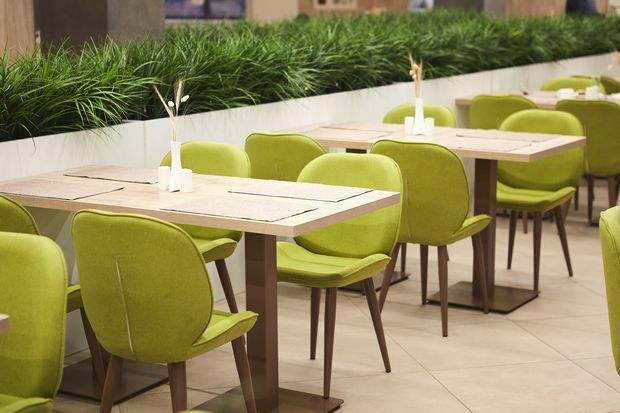
In a restaurant, for example, seating fabrics must be easy to clean and durable. By contrast, seating in a law firm executive conference room involves other concerns, including professionalism, status, comfort, and long-term appeal, so more aesthetically pleasing fabrics may be appropriate. These examples show that the same upholstery decision can look very different from one project to the next.
What Will Be Upholstered?
After the scope of the project is defined, the products to be upholstered are analyzed. That step narrows the wide range of fabrics even further. In the restaurant example, the main products to be upholstered are seating options such as dining chairs, booths, benches, or lounge chairs, depending on the design parameters. Each type of seating can be upholstered in several ways. A dining chair may have an upholstered seat with a wood back, and a booth may have the seat upholstered in one fabric and the back in another.
The law firm conference room has different needs, so the products specified there will not be the same as those for the restaurant. These may include guest chairs in a lobby, task seating at desks, and executive seating in individual attorneys’ offices. Beyond seating, other products in this project may contain upholstered elements, including systems furniture. Systems furniture is composed of panels, or movable walls 3 to 5 inches thick, and fixed furniture such as work surfaces, pedestals, tackboards, overhead bins, or lateral files supported by panels. These are used often in commercial projects for individual work areas.
Systems furniture creates flexible but private work areas within a larger space. Traditionally, the panels supporting the fixed furniture are upholstered, although panels made of Plexiglas and other plastics allow for acoustical privacy and a more open feel that encourages a collaborative and cooperative work environment. While the panels may not be upholstered as often now, most workstations still include a tackboard, which requires fabric to be specified. Overhead storage bins may also be upholstered. One furnishing trend in commercial design is mobile pedestals on casters. These can roll under the work surface for easy storage and roll out for easier access. The tops of the pedestals can be cushioned and upholstered, creating seating alternatives in tight office spaces to support employee collaboration or an occasional guest.
Analyzing the products specified for a project may not seem, at first, to narrow the fabric options, because there are so many points to consider. Even so, keeping the specific products in mind and understanding how the fabrics will be used gives the specification process clear direction. Familiarity with the products and the available choices helps move the upholstery decision forward.
Budget and Fabric Cost
The budget allotted to a project immediately limits the upholstery options. Contract fabrics can range in price from about $15 per yard to over $100 per yard. Determining how many pieces of furniture must be upholstered and the yardage requirements for each piece helps narrow the price range. For example, assume that eight executive chairs are being specified for a conference room. Each chair requires 2 yards of fabric, and the budget is $1,000 for the fabric for these chairs. Fabrics with a net price of around $60 per yard should be considered for selection, since 8 chairs times 2 yards per chair equals 16 yards of fabric needed, and $1,000 divided by 16 yards equals $62.50 per yard. This assumes tax is included in the cost of the fabric, but it does not account for upholstering, transportation, or installation.
If a selected fabric is a standard option with the manufacturer, the price of the fabric is already included in the price of the piece of furniture. If the fabric is not a standard option but is ordered from another source, it is considered COM, or customer’s own material. This fabric costs more than a standard option because additional shipping charges are applied from the mill or manufacturer of the COM fabric to the furniture manufacturer that will be upholstered. Price lists may be printed in either list, or retail, prices or net, or wholesale, prices, so if the customer is quoted a net price, the design professional receives neither markup nor profit. Although there may not be a markup for upholstery labor, there should always be a profit on the fabric, unless the professional is charging for design service in another way, per square foot or hourly, for example.
Color and Design Match
Another step in specifying upholstery is to consider the color scheme of a project. Often, a space already contains materials that must be accommodated, such as paint or wall finishes, flooring, and wood furniture. Upholstery should be chosen to coordinate with the planned color scheme. Some projects may be for a completely new space in which all finishes are still being selected. In that case, the design professional may want to refer to the business identity and logo for color inspiration. Other important factors in selecting a color scheme are the room size, sources of lighting, and the desired ambience of the space. These considerations narrow the upholstery options, since some colors will work better and feel more appropriate than others.
Fabric Content and Durability
The composition of a fabric affects its feel and durability, which are two important factors in specifying upholstery. In contract settings, synthetic fibers such as nylon are often specified because they meet flammability and other testing criteria. Depending on the application, however, the feel, or hand, of the fabric may be especially important, and many nylon fabrics are less pleasant to the touch. For example, lounge chairs in a lobby may hold clients for some time while they wait for an appointment, so a pleasing touch matters. Polyester microfibers are meeting this need. The fiber content of a fabric has a direct effect on its durability and is crucial to consider when specifying upholstery for high use products. Task chairs that clients use every day for hours will receive heavy wear and must be upholstered in durable fabrics.
Durability and Wear
Fabrics tested on a Wyzenbeek or Martindale machine indicate resistance to abrasion. For example, one fabric may have 15,000 double rubs and another 30,000 double rubs. The second fabric is more durable and will wear better over time. The fiber content and the weave or construction also affect the fabric’s susceptibility to pilling, puckering, or snagging, which can arise once the upholstered product is in use. Pilling is the loosening of threads that form small balls, or pills, creating an unattractive visual problem and suggesting that the fabric is wearing out. Puckering is the bunching of fabric so that it does not lie flat, which is also unattractive in upholstery. Snagging is when yarns catch on objects and begin to pull loose. This is perhaps the most troublesome upholstery issue, because once the threads break, holes can result and little can be done to repair them.
Lead Times and Scheduling
Manufacturers have lead times, or estimated lengths of time needed to produce the ordered products. Often, lead times are measured not from the time the order is placed by the design professional, but from the time the order is entered into the manufacturer’s computer system, and they continue until the product is boxed and ready to be shipped. Shipping time must be factored in as well. Choosing a standard fabric reduces lead time because the fabric is kept in stock at the factory.
If a COM fabric is specified, lead time will be longer to allow for shipping from the textile warehouse and receiving at the furniture manufacturer. Also, if it is the first time a manufacturer will use the COM fabric, it usually must first be tested on the product and approved for production. A sample of the fabric must be sent to the manufacturer or testing laboratory, the tests performed, the evaluation delivered, and confirmation received that the fabric meets the design specification criteria, all of which takes time. If the schedule is tight, choosing a standard fabric may be wise. Communication about lead time with the manufacturer’s customer service department before placing the order is essential, since lead times can influence upholstery selection.
Ordering and Installation
After all of these factors are considered, an appropriate fabric is selected, approved by the client, and then ordered. Design firms vary in their operating procedures, but the usual basic steps are straightforward. First, the fabric order is assigned a purchase order number, which allows it to be tracked from the time it is placed to the time of delivery. Next, the order is issued a side mark, a name, number, or code that cross references the project, the specific location, and perhaps the delivery location. For example, a side mark may read “Tanner Co. 5-A,” indicating the client name, the floor, and the suite where the furniture is to be installed.
Third, copies of all fabric and upholstery paperwork are filed, along with a record of any conversations by phone or email regarding the order. These records matter in case of problems such as backorders, when fabric is out of stock and waiting for new stock delivery, or delays. The lead times must be considered to estimate a delivery date.
Once the order is placed, the manufacturer sends the designer an acknowledgment number, another way to track the order, and this usually includes an estimated ship date. Good communication skills are essential to keep both installers and clients informed about delivery and the installation schedule once the upholstered product is in production.
Care and Maintenance
The final step in specifying contract upholstery is to educate the client about maintaining and caring for installed products. Some fabrics are easy to clean, while others require specific cleaning products. Clients are more satisfied over the long run when they know what to expect from their products and understand how to maintain and care for them. Design professionals also benefit because there will be fewer, if any, maintenance problems to resolve.
Final Thoughts
Specifying contract upholstery starts with the project and the product, then moves through budget, color, fabric composition, and lead time. The right fabric depends on how the piece will be used, how it will look in the space, and how it will perform over time. Careful ordering and clear communication keep the process organized from purchase to installation. When maintenance guidance is given at the end, the client is better prepared, and the upholstery choice is more likely to serve the project well into the future.