Handmade quilts still have a strong place in homes, even though most bedding is mass-produced. Many people have once again become involved in the art of hand and machine quilting, which keeps quilting both traditional and contemporary. It remains a pleasurable pastime, a meaningful form of fabric artistry, and a way of producing income for fabric artisans in America and abroad. This article explores the major quilting techniques, including hand quilting, machine quilting, applique, trapunto, automated quilting, and fuse bonding, along with their common uses in home and interior textiles.
What Is Quilting?
Quilting is the process of stitching together two or more layers of fabric with thread or by a fusion process. Here we discuss hand quilting and applique, then move on to the main forms of machine quilting. In each form, the basic idea is the same: layers are joined to create one fabric unit that is both useful and decorative.
Hand Quilting
Hand quilting is the method of layering fabrics and then stitching them together to form one unit. Quilting is a folk art and handicraft form as well as a fabric construction method used in many countries, including the United States. Even though the vast majority of blankets and bedding are mass-produced today, quilt-making as a hobby is alive and well, and handmade quilts and pillows are available through specialty sources, catalogs, or directly from quiltmakers.
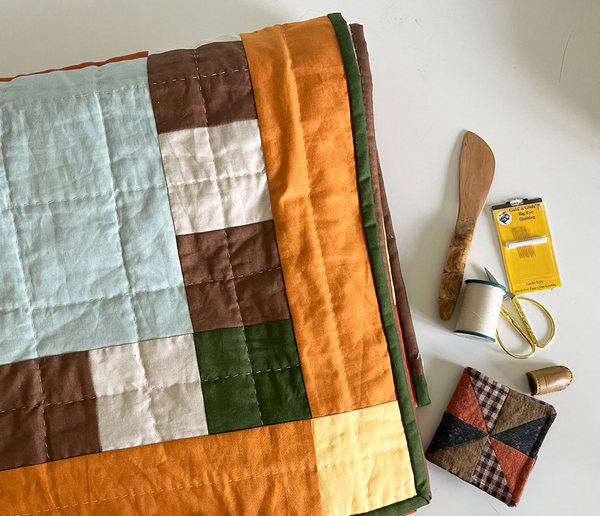
The quilt pattern is marked with a marking pencil on fabric, usually cotton or cotton-polyester broadcloth, nylon tricot, or another lightweight opaque textile. The markings wash out after the quilt is completed. Fabrics are deliberately shrunk before marking, although they usually pucker a little after washing. That soft puckering adds to the charm of a handmade piece.
A layer of polyester quilt batting is sandwiched between the marked quilt top and the plain or printed backing, and the layers are pinned together. This fabric sandwich is secured to a quilting frame. Traditional quilt frames allowed several quilters to sit on the four sides and sew at the same time. This created a social activity known as a quilting bee, where quilters visited as they worked, laughed, and exchanged stories.
Quilting Frames
Contemporary quilt frames may be compact and roll the fabric like a scroll from each end so the quilt can be managed by one or two quilters. Wood is the traditional frame material, although frames made of other materials, such as lightweight PVC pipe, can be disassembled when not in use and are easy to handle and store. Quilt frames come in various sizes, and some can accommodate any size quilt, from baby blankets to king-size bedspreads. Parallel sides are wound or rolled to make the exposed quilt smaller so the center can be reached.
When the quilting is completed, the quilt is taken off the frame. Then a binding is sewn onto the edge, typically one side by machine, then folded around to the other side and hand-stitched in place. Quilts are sometimes self-bound with the face or backing fabric.
Hand Quilting Stitches
An expert quilter usually takes four or five stitches each time she pulls the needle through the fabric sandwich. Tiny stitches are considered the highest quality. Quilts may also be tied with yarn, fine or coarse, in a matching or contrasting color. Large needles are used to make a tied double knot in a selected style, and knots are spaced 4 to 6 inches apart in a random or planned pattern. The yarn is cut midway between stitches to form fringe. Uncut stitches, such as the turkey track, are a tied-quilt alternative.
Patchwork Quilts
Another quilt-top form is the pieced or patchwork quilt, made of small squares or triangles of contrasting, often patterned calico fabrics. The pieces may be stitched together by hand, or, more commonly today, sewn on a sewing machine to form the patterned top. Quilting may contrast with or follow next to the seams. Extra-wide broadloom fabrics printed to look like patchwork quilts come in twin, full, queen-, or king-size widths and lengths. This saves time, although it is not authentic piecework. In this case, quilt stitches or tying can be done right on the “seam” lines, because the design is printed.
Applique Quilts
In many cultures, applique is integral to the history of quiltmaking. Applique is an art form where the quilt top is made by stitching small pieces of fabric directly onto the quilt top in a pattern. The pattern may be geometric or floral, or may consist of blocks that are hand-painted, signed, or embroidered. Representations of geography, architecture, people, or commemorative events can be accomplished with appliqué.
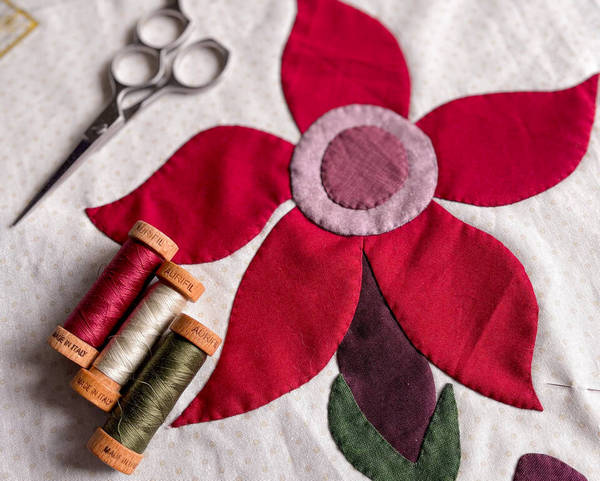
The size of the applique, along with the texture and pattern of carefully selected and coordinated design fabrics, allows for complexity and charm in this type of quilt. Fancywork embroidery may also embellish the patterns, including embroidered writing to document people, places, events, or dates. These works may become wall hangings in homes and public places.
Many people today seek handmade applique quilts, either new or antique, as interior textile treasures to be hung on a mounting board for display on a large wall, used as a coverlet for a bed, or displayed as a throw quilt for snuggling under on a chair, sofa, chaise, or window seat. Applique quilts may be used as an artistic textile accessory laid across beds or seating pieces, or displayed on quilt stands. Small piecework makes charming country-style pillows and accessory items.
Although the complete story of quilt-making is beyond the scope of this article, it is worth giving respect to those, primarily women, who throughout history worked diligently to keep their families warm. At the same time, they lovingly created, with the passion of their hearts and the labor of their own hands, beautiful and durable textiles that have become an integral and artistic part of domestic heritage.
Patterns such as the wedding ring, the lover’s knot, the chimney sweep, and the friendship quilt are well known. Historically, applique quilts were often made of clothing that was worn out, outgrown, or no longer fashionable. This was a practical as well as sentimental way to preserve family memories. During the Victorian era, the seemingly nonsensical crazy quilts, made of uncoordinated fabrics in random shapes and sizes and joined together and quilted with decorative stitches, added humor and nostalgia. They were often made of recycled apparel textiles.
Amish quilts today, particularly antiques, command dear prices due to the excitement of their design and their superb craftsmanship. Applique is also seen as a key ingredient in smaller handcrafted items generated for country-style interiors, including handmade applique dolls, doll crib quilts, and stuffed animals.
In many countries where folk crafts still thrive, one can find examples of applique, each with its own native terminology. From the islands of the Caribbean to the islands of the South Pacific, from South America to Asia to Africa to the Nordic countries, applique textiles for domestic and decorative use are an important art and craft form. These items can also make a fine addition to contemporary, modern, or eclectic interiors.
Trapunto Quilting
Trapunto or trapunta is a quilting form where one area is quilted, and then only that area is stuffed with batting. This makes the quilted area stand in relief from the flatter fabric. One example is the puff quilt, in which individual squares are stuffed and then sewn together to form a bed quilt or craft item. Technically, trapunta is created by hand, whereas trapunto is machine-quilted.
In machine trapunto, the area is first layered with batting and backing, then quilted; next, the excess batting around the quilting is trimmed away. This method is somewhat uncommon today.
Quilting and applique examples include bed quilts, pillows, wall hangings, craft items, table covers, throw covers, art or craft display items, and accent work on any of these applications, especially trapunto or trapunta.
Machine Quilting
There are three forms of machine quilting: hand-guided, automated, and fuse-bonded.
Hand-Guided Machine Quilting
The free-arm quilting machine allows the quilter to quilt any pattern by tracing an outline, following a patterned fabric, or creating a pattern, including standard allover designs and isolated quilting. As with hand quilting, the layers, the top decorative fabric, the batting, and the lining, are pinned together. The quilt is then rolled so a narrow strip is exposed. The quilter typically works in these long strip areas, moving lengthwise or crosswise along the piece.
Hand-guided quilted goods examples include custom bedspreads and pillow shams, pillow tops, upholstery such as cushion seats and backs, window treatment valances, and long insulating drapery panels.
Automated Quilting
Automated quilting machines can quilt wide widths of fabric with multiple quilting needles very quickly. Such machines are usually computerized and include a variety of patterns from which to choose. The advantage is a lower cost and a quicker turnaround because automated quilting requires less human labor. Quantities of bedspreads for hospitality interiors, such as hotels and resorts, are either automated-quilted or fuse-bond quilted because this method is efficient for mass production.
Automated quilted goods examples include mass-produced or ready-made bedspreads, comforters, and economical custom bedspread ensembles.
Fuse Bonding
Fuse bonding is sometimes called pinsonic quilting because tiny sonic waves heat up a spot in order to melt and fuse the layers together. This technique is efficient and leaves no holes in the fabric or threads that can fray or come loose. It is also a rapid method of mass-producing goods, so it is used in mattress pads and commercially produced, ready-made bedspreads and window treatment products that are energy efficient, since sewn holes decrease the R-value. Commonly used patterns include the straight lattice pattern and the ogive or ogee shape, which is bulbous with a pointed top and bottom. Fuse-bonding or pinsonic quilting is moderate in aesthetic appeal.
Fuse-bonded or pinsonic quilted goods examples include ready-made bedspreads and comforters or ensembles, mattress pads, and energy-efficient window shade textiles.
Conclusion
Quilting brings together structure, skill, and surface design in a way that has stayed relevant across generations. Hand quilting, pieced quilts, applique, and trapunto each offer their own look and level of craftsmanship, while machine quilting and fuse bonding serve faster production needs. Together, these methods show how quilting can remain practical, decorative, and commercially useful at the same time. As home interiors continue to balance tradition with convenience, these textile forms are likely to stay valued in both domestic and decorative settings.