Introduction
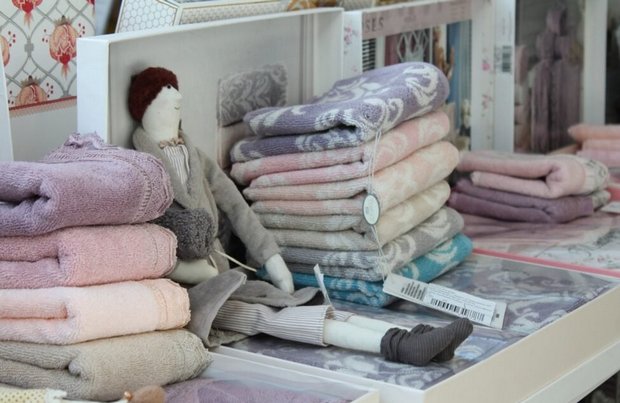
Bath linens play an everyday role in many homes around the world. Used in bathrooms for cleaning, drying, and providing comfort, they serve a practical purpose from the moment a bath or shower is finished. They also contribute to the overall look and feel of the bathroom space. From simple towels to robes and mats, these items are chosen for their ability to absorb moisture and offer comfort. Understanding the different types and qualities of bath linens can go a long way in making informed choices for everyday use.
What Are Bath Linens?
Bath linens are linens used in the bathroom for cleaning and wiping away wet water after a bath or refreshment. They can also be used in relation to bathroom walls and floors. Common bath linens include items such as bath towels and hand towels, which are known for their soft texture and high absorbent capacity.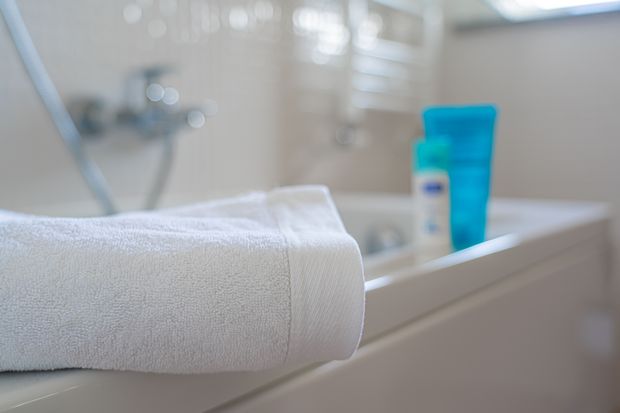
Types of Bath Linens
Bath Towels
Bath towels are pieces of absorbent fabric used for drying one’s body after bathing or showering. More generally, a towel is a piece of absorbent fabric or paper used for drying or wiping. It draws moisture through direct contact, often using a blotting or rubbing motion.
Common household textile towels are made from cotton, rayon, bamboo, nonwoven fibers, or a few other materials. Many bath towels feel cozy because they are made of 100% cotton. Cotton fibers naturally absorb water and can hold almost 25 times their weight in liquid. For extra comfort, 100% combed ring spun cotton is often used, as the shorter threads have been removed. This helps keep the towel strong and helps prevent pilling.
While most towels are made of cotton, their look and feel largely depend on the type of cotton used. Most towel designs are made using standard cotton. More expensive combed ring spun cotton towels, such as those made from Egyptian cotton, have much longer threads. This allows each towel to have more moisture absorbing loops per inch.
The number and length of loops are also important factors when choosing a towel. The denser the loops, the more absorbent the towel will be. It is therefore worth checking the stitch for thick, tightly packed loops.
The key to the longevity of a towel lies in its hems. Towels with hems that are double stitched all the way around the edges are likely to last longer. This extra reinforcement reduces fraying and gives bath towels a longer life.
The best way to judge the quality of a towel is simply to hold it. A high quality towel feels much heavier than it looks, and that added weight usually translates into greater absorbency.
Towel weight is measured by GSM (grams per square meter). Low GSM towels, ranging from 300 to 400, are light and thin. High GSM towels, ranging from 440 to 650, are thicker and heavier. A towel weighing less than 440 GSM is likely to be thin and is typically suitable for a gym bag or trips to the beach. A hand towel or guest towel should have at least 440 GSM. For bath towels, a higher GSM of 450 to 650 will provide a soft and absorbent towel. Typically, the higher the GSM, the better the performance of the towel.
Most manufacturers add softeners to towels so they appear nice and soft. However, after a few washes, these towels may start to feel coarse and rough.
Terry Towels
Terry is a cloth with loops all over on both sides of the fabric, or with patterned loops on both sides. It is formed through a weaving process using an extra warp yarn to create those loops.
Terry cloth has several characteristic features. It is long wearing, easy to launder, and requires little or no ironing. It can also be bleached, dyed, or printed using a process similar to screen printing.
Better quality terry cloth has a close, firm underweave along with very close loops. As a general rule of thumb, the closer the loops, the better the quality of the terry. Terry is also very absorbent, and the longer the loops, the greater the absorbency.
When the pile is present only on one side, the fabric is known as “Turkish toweling.”
Waffle Bath Towels
Waffle bath towels are made from a large gauge waffle weave fabric. Many home sewers like to make towels and robes from this fabric because of its quality, despite the fact that it is usually quite expensive.
Waffle weave towels can be finished with trims and embellishments to add interest. They also work well in neutral color schemes, especially when kept in neutral tones and paired with other interesting textures, such as ribbed or waffled surfaces. Monogrammed bath towels made from waffle or similar fabrics can also add style to a bathroom and make perfect wedding gifts.
Bathrobes
Bathrobes are long, single piece robes that are very similar in shape to an overcoat. They are extremely smooth and are often available with beautiful motifs embroidered into the material.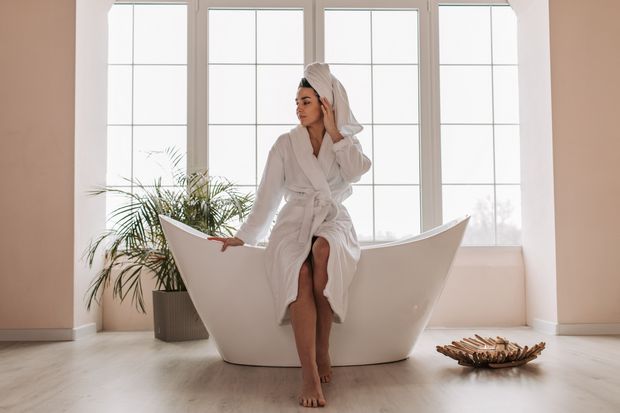
Bathrobes are a popular bathroom accessory, generally worn around the body and fastened with a wrap style tie belt. They are loose fitting robes designed for wearing before and after bathing, as well as for lounging.
Bathrobes are often made from fine quality yarns. They are highly absorbent and easy to maintain. A terrycloth bathrobe, in particular, is useful for modesty, as standard bath towels are rarely large enough for complete body coverage.
Face Towels
The smallest form of bath towel is the washcloth. These small squares of terrycloth are meant to assist bathers with lathering and gentle scrubbing.
Face towels, closely related to washcloths, are a smaller version of the bath towel used for wiping the face after washing. They are also sometimes used as handkerchiefs. Because the use of washcloths can be so intimate, many hosts keep a generous supply on hand to ensure individual usage.
Hand Towels
Hand towels are used primarily near the bathroom sink. They share many of the design elements found in larger bath towels, so they are usually coordinated with them.
A small hanger or loop is often used to position hand towels near the sink for easy access. They are intended primarily for drying clean hands and faces, rather than serving as a larger substitute for a washcloth.
Hand towels are significantly smaller than bath towels, generally measuring about 30 × 60 cm. They are simply used for drying one’s hands after washing them. Hosts often readjust hand towels on the hanger between uses to maintain a balanced look.
Bath Mats
Bath mats are widely used in bathrooms. They are generally thicker than standard bath towels, providing better absorption as well as better traction.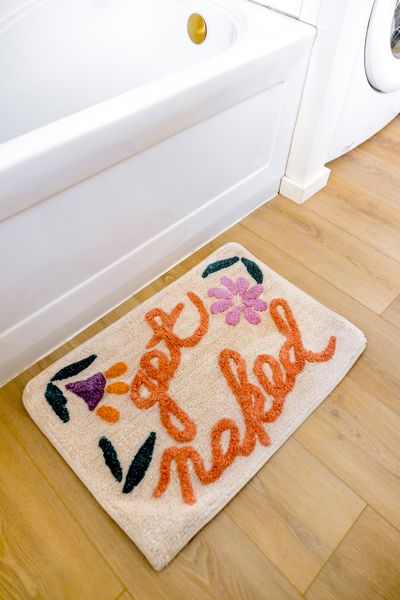
Bath mats are used to absorb excess water following a bath or shower. They are similar to bath rugs but smaller, and are meant to be placed directly in front of a tub, shower, or vanity. In doing so, they serve as an insulator and provide a slip resistant surface.
Bath Sheets
Bath sheets are the largest of all bath towels. These oversized towels can be as long as 6 ft or more.
Many bathers prefer bath sheets over standard bath towels offered in hotels or guest rooms. Standard towels can become saturated with water fairly quickly, while bath sheets offer much more surface area for absorption. Bath sheets can also be used as emergency wraps for modesty when needed.
Bath Rugs
Bath rugs are an inexpensive and effective way to give new life to any bathroom. They allow for a good degree of creative freedom without requiring more extensive changes, such as applying a fresh coat of paint to the walls.
Bath rugs are usually made using tufted or pile knit constructions. The pile yarns in tufted bath rugs are much less dense than those found in carpeting. Bath rugs are often made from uncut warp pile weaves and are woven in widths ranging from 16 to 28 inches. Many also feature decorative designs, including jacquard patterns, florals, and other motifs.
Other Related Soft Furnishings: Cushion Covers
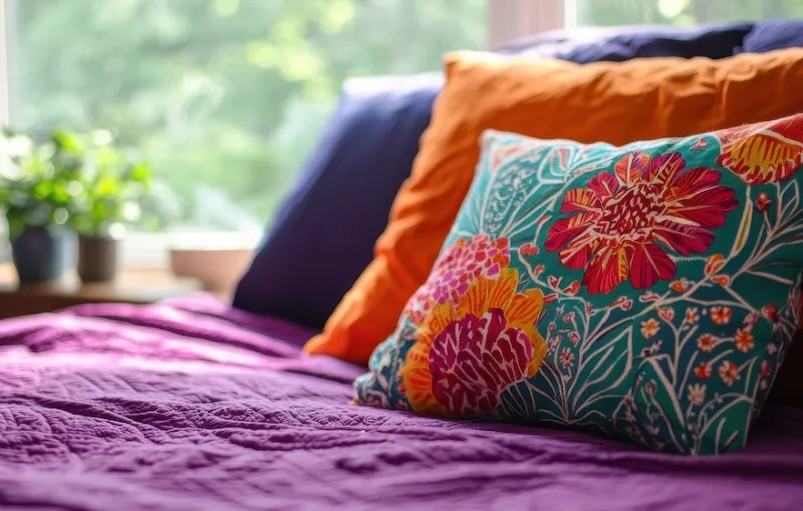
Cushion covers are slips used as protective and decorative coverings. They are one of the most common soft furnishings found in almost every household.
In India, cushion covers are often seen as a key part of home furnishings that reflect both comfort and elegance. They are available in a wide range of aesthetically designed styles. Many are skillfully created with uncommon designs and a variety of hues. These features make cushion covers a simple yet effective way to enhance the look of a room.
Conclusion
Bath linens encompass a wide range of items, each serving a specific purpose in the bathroom. From bath towels and terry cloth to mats, sheets, robes, and smaller pieces like face and hand towels, each has its own features suited to everyday needs. Qualities such as loop density, GSM, fiber type, and construction all play a role in how well these items perform over time. Even related items like bath rugs and cushion covers contribute to comfort and the overall feel of a home. With a clear understanding of these types and features, it becomes easier to choose bath linens that meet both practical and lasting needs for everyday use.