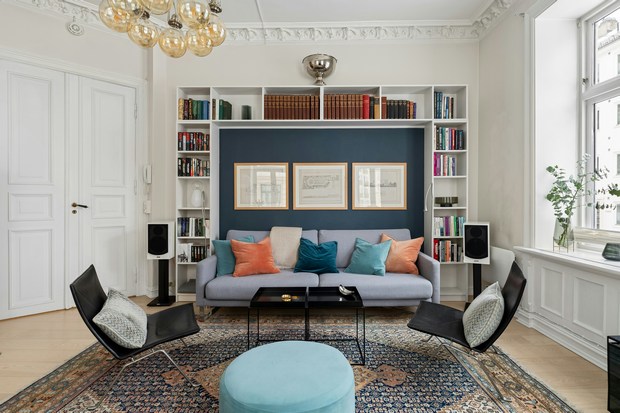
A sofa for a family room where food and beverages will be served, where children will drag toys across the surface, and where cats and dogs will jump up and down must meet far different demands than a period reproduction chair in a formal living room that is rarely used. Appearance is often the single most influential factor in the selection of upholstery fabric. In selecting the appropriate fabric, the purchaser must assess the uses to which the furniture will be put.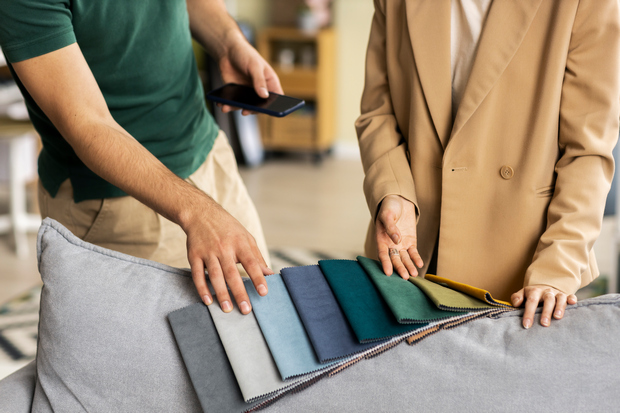
Careful evaluation of the expected functions and how fiber, yarn, and fabric construction fulfill those functions can result in selecting upholstery fabrics that will satisfy the buyer’s needs and expectations. Reflecting on the range of uses for upholstered furniture, the most important considerations in evaluating the durability of upholstery fabrics are their resistance to abrasion, resistance to soil and stains, and colorfastness to light.
Abrasion Resistance
Upholstered furniture is constantly subjected to abrasion as people sit on it. Some fibers have better abrasion resistance than others. In fabric structures where one set of yarns is predominant on the surface, the abrasion resistance of the fibers in that yarn would be a very important factor in durability. Cotton and rayon are not abrasion resistant, whereas polyester and nylon are. In many upholstery fabrics, however, yarn and fabric construction may compensate for lower fiber strength.
Yarns with high twist and even diameter resist abrasion better than those with low twist and/or uneven diameter. Yarns with loops, knots, or slubs, often used because of their attractive texture, are especially subject to abrasive wear. Heavier yarns result in thicker fabrics that are more abrasion resistant. In closely woven fabrics with balanced weaves, wear is evenly distributed across the surface of the fabric. If fibers are strong and yarns have high twist and uniform diameter, these fabrics can be very durable.
In plain-weave fabrics with large ribs or cords, the raised rib or cord area has the potential for uneven wear. Twill-woven fabric structures are generally strong and durable and resist abrasion. In satin-weave fabrics, the long floats may catch or snag. To capitalize on the attractive appearance of satin-weave fabrics, manufacturers often use acetate, silk, or nylon fibers in low-twist yarns that are not very durable.
In pile fabrics such as velvet or velveteen, abrasion resistance depends on fiber choice and density of pile. Nylon velvet, for example, can be quite durable thanks to its excellent abrasion resistance and good resilience, whereas silk or rayon pile fabrics are more likely not only to abrade, but also to remain flat and worn-looking after the pile has been flattened by sitting on it. Uncut pile fabrics tend to wear better, especially if yarns are tightly twisted and made from abrasion-resistant fibers.
Dobby and jacquard woven fabrics are frequently used in upholstery. Their resistance to abrasion is variable. Factors to assess include fiber content, tightness of twist of the yarns, presence of long floats or raised areas that may catch or wear unevenly, and denseness of the weave.
Soil and Stain Resistance
Most stains on upholstered furniture are water-borne or liquid-borne. Hydrophobic fibers such as polypropylene, which is almost completely nonabsorbent, resist staining best. Even though the upholstery fabric may not absorb moisture, the padding materials underneath may. A moisture-proof barrier between the upholstery fabric and the padding materials can minimize the transport of liquids through to the padding. When present, this barrier is often a non-woven layer of nonabsorbent material such as polypropylene. Upholstery fabrics made from fibers that do absorb moisture can have stain-resistant finishes applied to them.
Colorfastness to Light
Upholstery on furnishings that are placed close to windows may undergo color loss or color change after long exposure to sunlight. A textile fabric that retains its color under such exposure is said to be colorfast. Information about colorfastness is generally not available to consumers at the point of purchase. Those designing and developing upholstery fabrics, however, are able to specify levels of colorfastness in the materials being considered. Colorfastness is assessed, and the resulting information is used in product development.
Conclusion
A suitable upholstery fabric should match the furniture’s intended use and the buyer’s needs and expectations. The key durability checks are abrasion resistance, soil and stain resistance, and colorfastness to light, considered alongside fiber, yarn, and fabric construction. Keeping these factors in view can help guide future choices toward fabrics that suit the way each piece will be used.
References
[1] Tortora, P. G., & Collier, B. J. (1997). Understanding Textiles (6th ed.). Prentice Hall.
[2] Elsasser, V. H. (2010). Textiles: Concepts and Principles (3rd ed.). Fairchild Books.
[3] Kadolph, S. J. (2017). Textiles (12th ed.). Pearson.
[4] The Spruce. (n.d.). How to Choose Upholstery Fabric. The Spruce, https://www.thespruce.com/types-of-couch-materials-6944753