Introduction
Every day each of us makes decisions about textiles. These choices shape comfort, appearance, durability, and cost in daily life. From the simplest choice of what clothes to wear to the commitment of a major portion of the family budget to buy a new carpet, judgments about the performance, durability, attractiveness, and care of textiles are consciously or unconsciously made. Even small textile purchases often involve practical trade-offs. The economic implications of decisions about fibers, yarns, and fabrics obviously increase if someone is involved professionally with textiles. In professional settings, those decisions can affect quality, efficiency, and profit. But whether or not understanding textiles is required for personal or for professional purposes, the key to informed decision making is knowledge about fibers, yarns, fabrics, and finishes and the ways in which these are interrelated. That knowledge also makes it easier to compare products, evaluate quality, and choose textiles that suit specific needs.
Textiles fulfill so many purposes in our lives that their study can be approached in a number of ways. A basic understanding of textile materials provides a useful foundation for both daily choices and professional work.
Textiles in Everyday Life
Textiles may be seen as being purely utilitarian, in relationship to the numerous purposes they serve. They are also part of the background of everyday comfort and convenience. On awaking in the morning, for example, we climb out from under sheets and blankets and step into slippers and a robe. We wash our faces with washcloths, dry them with towels, and put on clothing for the day. Even the bristles of our toothbrushes are made from textile fibers. If we get into a car or bus, we sit on upholstered seats; the vehicle moves on tires reinforced with strong textile cords. We stand on carpets, sit on upholstered furniture, and look out of curtained windows. The insulation of our houses may be glass textile fiber. Not only are golf clubs, tennis rackets, and ski poles reinforced with textile fibers, but so are roads, bridges, and buildings. Strong, heat-resistant textile fibers in the nose cones of spaceships travel to distant planets. Physicians implant artificial arteries made of textiles or use surgical fibers that gradually dissolve as wounds heal. Few of our manufactured products could be made without textile conveyor belts. Even our processed foods have been filtered through textile filter paper. There is truly no aspect of modern life that is untouched by some area of textiles. This wide range of uses shows how essential textiles are in both ordinary routines and advanced technology.
How Textiles are Made
Some individual or some group of persons will be the ultimate consumer of each textile product. The ultimate consumer selects the product for a particular end use, whether that use be a fashionable garment or a fabric used to reinforce high-technology building materials. In all cases, consumers want to select products that will perform well in the projected end uses. Most also seek to minimize cost. The ways in which textiles are produced affect their costs. Some steps in manufacturing are more expensive than others. Manufacturers may be able to choose one procedure instead of another. When alternatives are available, manufacturers are likely to select processes that will maximize their profits while making products that will sell at competitive prices and also fulfill the customers’ desire for satisfactory performance. Many products must also meet the demands of current fashion.
Even though we all personally experience textiles at home, at work, and at play, we usually encounter only the complete product; rarely do we deal with the individual components. But each finished product makes a long journey from its beginnings in the laboratory or on the farm to the place where it is acquired by the ultimate consumer. An introductory course in textile study can be a sort of road map or itinerary of that journey; therefore, this text is organized to begin with the first steps in the long progression from fiber to completed fabric and goes on to examine subsequent steps in a generally chronological sequence.
If you were to take the shirt or sweater that you are wearing at this moment and break it down into its components, you would have to work backward, taking apart the fabric structure. Most likely your garment is woven or knitted. Weaving and knitting are the two most common means of creating fabrics for apparel, although other methods do exist. Both weaving and knitting are subject to a great many possible variations, and these differences contribute to the enormous variability in appearance, drapability, texture, wrinkle recovery, durability, feel, and many other qualities of fabrics. To take a woven or knitted structure apart requires that the fabric be unraveled into the yarns from which it was constructed. The yarns, with some few exceptions, are made either from short fibers or from long, continuous fibers that are twisted together. By untwisting the yarns, it is possible to separate the yarn into these small, fine, hairlike fibers that are the basic units that make up the majority of textile products.
Fiber Basics
What Is a Textile Fiber?
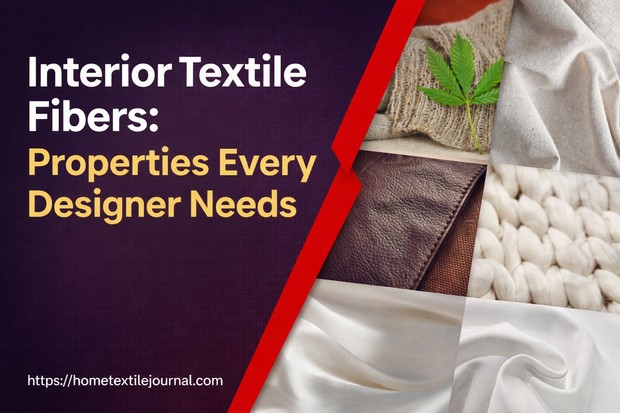
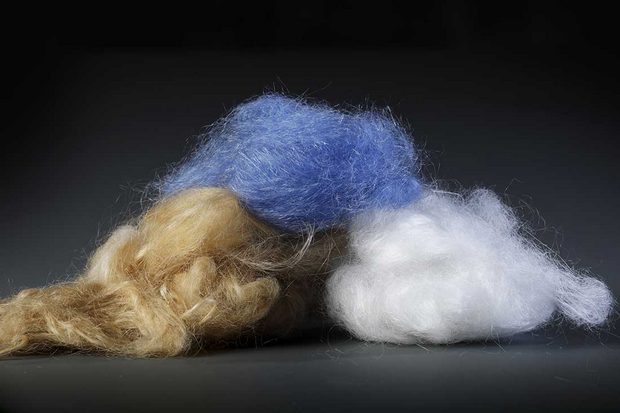
Textile fibers exist in nature or are created through technology. Technical definitions of the term textile fiber such as that of the American Society for Testing and Materials (ASTM) tend to stress their dimensions: “a generic term for any one of the various types of matter that form the basic elements of a textile and that is characterized by having a length at least 100 times its diameter.” Although this explains how a fiber looks, some materials that do fit this definition are not suitable for use in textiles. The fibrous structure of an overcooked pot roast, for example, is obviously not suitable for use in a textile. Fibers appropriate for use in textiles must have not only fineness and flexibility, but also sufficient strength and durability to withstand conditions encountered in processing and use. To understand and evaluate suitability of different fibers for particular products, professionals in the textile field and consumers need to understand the physical and chemical properties of fibers.
Fiber Properties and Uses
Particular fibers may be suitable for use in some textile applications but not in others. Carbon fibers, excellent for use in high-technology products and sports equipment, are not useful for wearing apparel. Even among those fibers used in many apparel and home furnishing items, some are preferred for particular applications. Nylon long ago replaced silk and rayon in women’s dress hosiery. On reflection, then, it is obvious that we tend to prefer some kinds of fibers for certain uses because those particular fibers offer some special advantages. For example, a particular fabric may seem to be more comfortable in warm or cool weather, may soil less easily, may dry more quickly, or may have an appearance that is best suited to a particular kind of occasion. The reasons for these differences among fibers reside in the specific properties of each fiber. If we are to have a clear understanding of the finished products and what qualities are to be expected of them, we need to know the fibers from which the product is made—and the characteristics of those fibers.
Yarns Explained
How Yarns Are Made
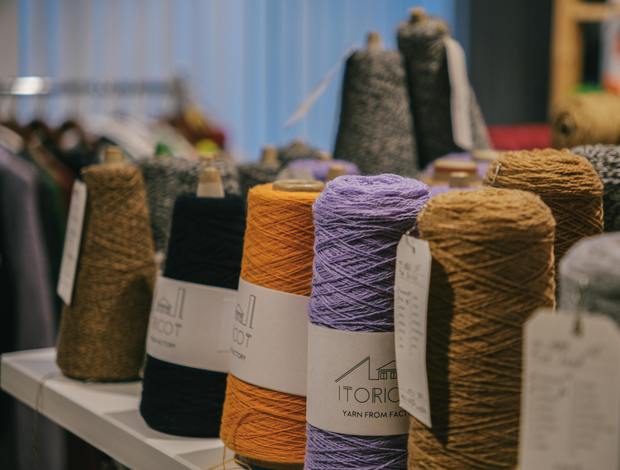
Fibers alone cannot make a textile. Although it is possible to entangle groups of fibers or to bond them together in some way to create a textile (as is done with felt, for example), most of the cloth that is made into apparel and home furnishings is formed from yarns. Yarns are assemblies of fibers twisted or otherwise held together in a continuous strand. An almost endless variety of yarns can be created by using different fibers, by twisting fibers more or less tightly, by combining two or more individual yarns to form a more complex yarn, or by giving yarns a wide range of other special treatments.
Why Yarn Structure Matters
Just as different fibers will vary in their individual properties, different kinds of yarns have varying characteristics. And to complicate matters still further, two yarns of the same structure will have different properties if they are made from markedly different kinds of fibers.
Fabric Structures
Weaving and Knitting
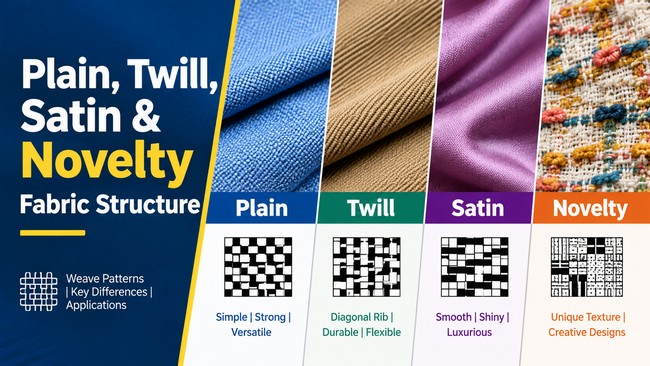
Yarns must be united in some way if they are to form a cohesive structure. The transformation of individual yarns into textile fabrics can be accomplished by an individual with a pair of knitting needles, a crochet hook, or a hand loom or through the use of powerful machines that combine yarns by weaving, knitting, or stitch bonding to produce thousands of yards of completed fabrics. As with fibers and yarns, the potential for variations in the structure is enormous, and a walk through any department store will reveal to even the most casual observer the almost endless variety of textile structures produced and consumed by the public in the form of apparel or household textiles.
How Fabric Construction Affects Performance
And once again, if the construction being used is varied, the resulting properties will differ. Furthermore, even when the same weave or knit construction is used, the end product will be distinctive if the fiber or yarn type is varied.
Coloring and Finishing
Textile Colors and Patterns
Appearance—color, pattern, and texture—is one of the major factors that leads consumers to purchase one product over another. Most textile fabrics intended for personal, household, or architectural use have been decorated in some way, by dyeing the fabric, printing designs on it, or weaving with varicolored yarns. Large segments of the textile industry are devoted to dyeing and/or printing fabrics, yarns, or fibers.
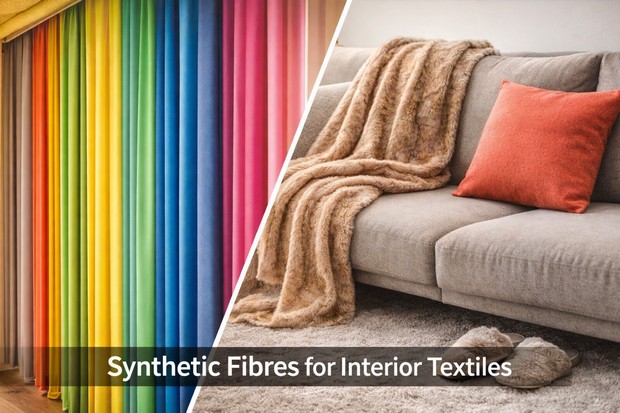
As the reader will learn, certain properties are inherent to each fiber, yarn, or fabric structure. Consumers find some of these properties desirable, while others are not valued. For example, fabrics of synthetic fibers dry quickly after laundering. Most consumers value this quality. But the same fabrics may tend to build up static electric charges, producing small electrical shocks or “static cling.” Consumers do not like this quality.
Why Finishes Are Used
When a fiber, yarn, or fabric has unacceptable properties, special treatments called finishes may be applied to overcome undesirable properties. Finishes may be used to give to the fibers, yarns, or fabrics some properties that they do not normally possess but that will enhance performance or alter appearance. Static cling can thus be decreased or overcome. Most people are familiar with wrinkle-free finishes, for example, or may have purchased upholstered furniture with soil-resistant finishes.
Conclusion
Textiles are part of daily life, and understanding fibers, yarns, fabric structures, coloring, and finishing helps explain how textile products are made, selected, and used. Besides, It also helps consumers and professionals choose textiles with confidence.