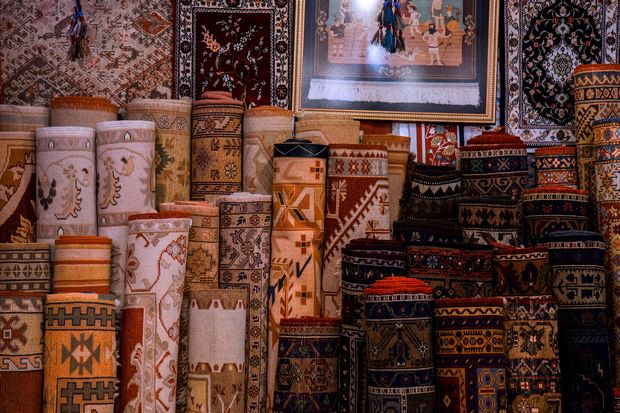
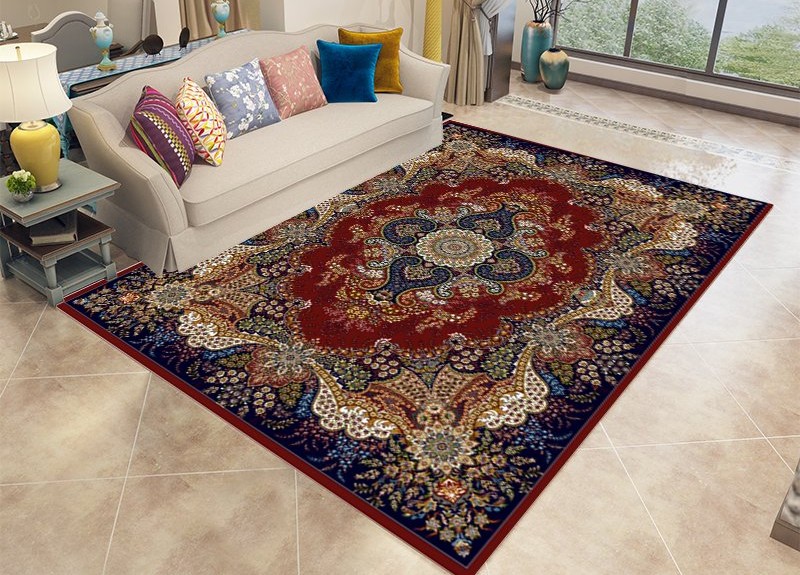
Carpets have always had a practical place in interiors, but handmade carpets stand apart because they combine comfort, craftsmanship, and cultural history. Walk into any traditional home from Morocco to Mongolia, and one thing connects them all: a handmade carpet on the floor. These are not merely floor coverings. They carry centuries of craft, culture, and human skill woven into every knot. Today, handmade carpets remain among the most valued textile products in the world, appreciated both for their beauty and their lasting quality.
What Is a Carpet?
Carpets are made from woven, knotted, tufted, knitted, braided, or nonwoven materials, used primarily as floor coverings but also for tables and walls in many cultures. The words carpet and rug are often used interchangeably. Some experts define a carpet as a heavy fabric fixed to a floor or stairs, while a rug is loose-laid, most often for decorative purposes. Others distinguish the two by size, with carpets being the larger of the two, or by use, with rugs placed on beds or by the hearth.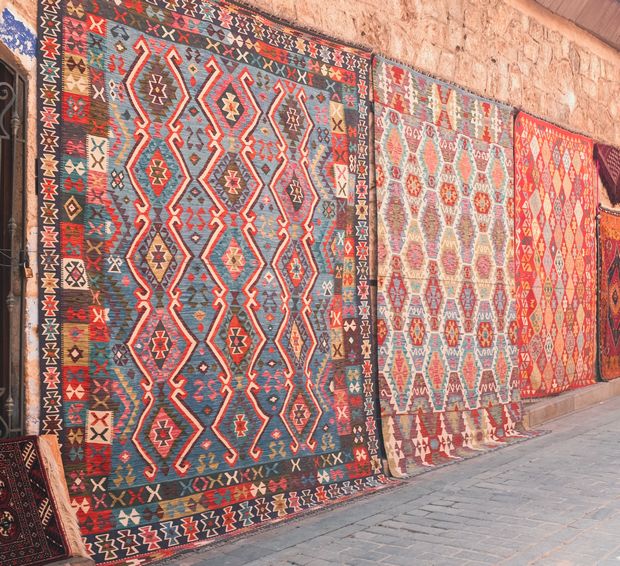
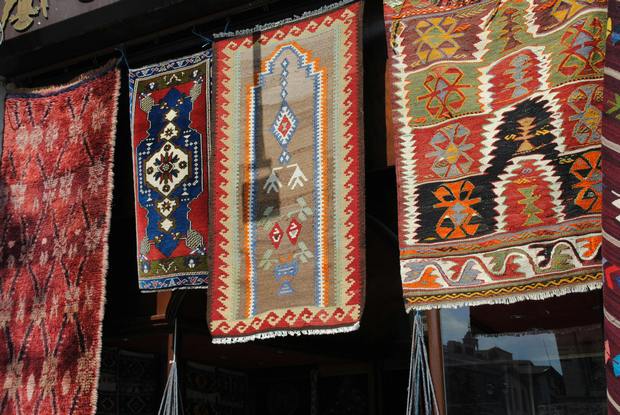
Carpeting refers specifically to wall-to-wall floor covering, usually woven or tufted, supplied in rolls of 12 to 15 feet in width. Common synonyms for carpet include mat, runner, fitted carpet, carpet tiles, and floor covering. Regional terms include kilim, durry, galeecha, kaleen, and kambal. In European languages, carpet translates as tapitj in Dutch, moquette in French, Teppich in German, and alfombra or moqueta in Spanish.
When produced by hand, these floor coverings are known as handmade carpets. Among them, the hand-knotted woollen carpet holds particular importance for its artistic heritage and the local skills it represents across many countries.
A Brief History of Handmade Carpets
Pinpointing exactly where and when the first carpet was made is not easy. The most likely regions of origin include Persia, now modern-day Iran, Turkmenistan, Central Asia, Mongolia, and China, a region collectively known as the carpet belt.
Historical accounts suggest that the tomb of Persian King Cyrus, buried at Pasargadae, was covered with precious carpets. Even before his time, Persian nomads were likely skilled carpet makers, using Turkish knots with wool from their herds of sheep and goats. This technique remains in use today in the provinces of Azerbaijan and Hamadan, where Seljuk cultural influence was strongest and longest lasting.
Carpet weaving became deeply embedded in Islamic culture, flourishing in Baghdad, Damascus, Cordova, Delhi, and the cities of Central Asia. References to carpets in both Arabic and Persian literature are plentiful. Wherever Muslim culture spread, carpet weaving followed, especially across the Arab Middle East and Central Asia.
Most classical oriental handmade carpets come from a wide geographic arc: Morocco in the west, through the Balkans, Turkey, Persia, the Caucasus, Afghanistan, Turkmenistan, Pakistan, India, Tibet, Nepal, and into western China.
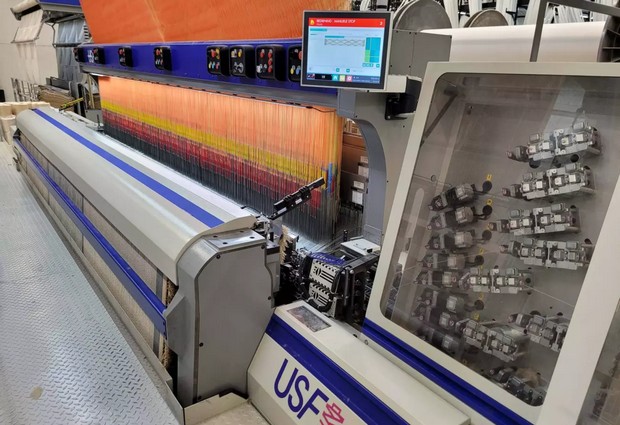
By the late 19th century, demand for handmade carpets grew significantly in the West, and more countries began producing them for export. This led to greater variety in designs, materials, and quality. It also gave rise to machine-made carpets such as Wilton- and Axminster-tufted types. Though widely available, their quality does not compare to that of handmade carpets.
How Handmade Carpets Are Made
Despite centuries of progress, the fundamentals of handmade carpet production have changed very little. The craft is still passed down through generations and remains a genuine handicraft carried out step by step. Hand-knotted carpets are mostly made at home, where women in many carpet-producing regions weave as a source of additional income while managing the household. This domestic, human dimension is a large part of what makes handmade carpets so highly regarded.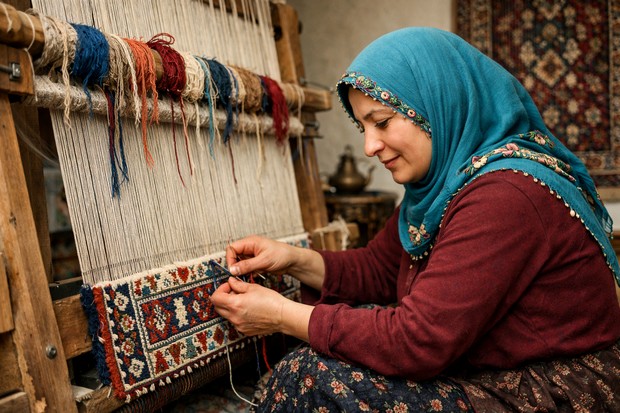
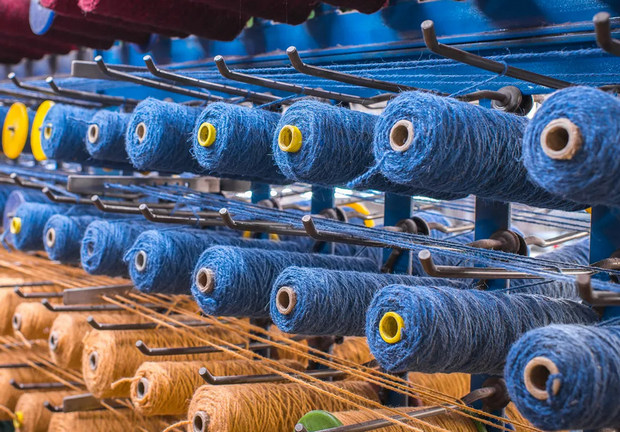
The material used directly determines a carpet’s quality and how it ages. Sheep wool is the most widely used fibre for the pile, warp, and weft. Cotton is commonly used in the warp and weft threads. Goat hair, once used for the pile, is now mostly used in the warp, weft, and sides of certain regional carpets such as Beluch carpets. Silk appears in more exclusive carpets across the warp, weft, and pile.
Today, machine-spun yarns are used in some handmade carpet production, but traditional techniques are still followed and remain highly appreciated by customers. The six leading handmade carpet producers in the world market are India, Iran, China, Pakistan, Nepal, and Turkey.
Natural Dyes: Where the Colour Comes From
Colour in handmade carpets has historically come from nature. Trees, flowers, plants, and even iron-rich soils supply a remarkable range of shades. Archaeological evidence confirms that plant-based dyes have been used for thousands of years, with dye trade routes running from Anatolia into Europe.
In 1868, the composition of Turkish red dye was identified through the analytical work of C. Liebermann, which led to its chemical production in Europe. Chemical dyes were introduced in Turkey in 1882, and natural root dye production in Anatolia began a steady decline as aniline dyes from Europe took over.
Today, most handmade carpets use a combination of chemical and natural dyes. Pine husk and rubia plants produce red tones, while oleander and develik plants yield greens. Other plant sources include madder root, indigo, St. John’s wort, onion, saffron, sumach, chamomile, rhubarb, turmeric, sage, poppy, buckthorn, quince, almond, walnut, chestnut, and henna. One remarkable quality of natural dyes is that no two batches ever produce exactly the same shade, which makes every carpet genuinely one of a kind.
The Hidden Language of Carpet Patterns
A handmade carpet is far more than a decorative object. Every pattern woven into the surface represents a feeling, a belief, a desire, or a wish. Carpets have functioned as a kind of silent language across cultures, allowing artisans to communicate what words sometimes could not.
In some ancient artisan communities, a young woman who wished to marry but could not openly say so would weave a chain motif into a carpet as a signal of her intentions. Such motifs are still found in kilims today. There is also a long-standing tradition of intentional imperfection: many weavers deliberately include a small flaw in the design as an acknowledgment that only God is perfect. Spotting this intentional difference from the main pattern is considered part of truly appreciating the carpet.
Handmade vs. Machine-Made: What Really Differs
It is usually straightforward to tell a handmade carpet apart from a machine-made one. Looking at the back of any rug reveals the structure of its knots. Handmade rugs have irregular knots and an uneven backing, which is a mark of human work, not a defect. Machine-made carpets show a perfectly regular knot sequence due to controlled mechanical tension. Selvedges and ends tell the same story: the sides of a machine-made rug are perfectly even, while those of a hand-knotted rug will show slight, natural irregularity.
Pinching the two types is another quick test. A machine-made carpet compresses easily, almost as if the fingers pass straight through. A hand-knotted carpet feels denser, with more body and substance.
Production time for handmade carpets varies widely based on size, technique, materials, knot count, design complexity, and weaver skill. Large carpets with high knot counts, particularly in silk, can take years to complete. Weaving just one square metre of kilim takes almost a week.
How They Age and Perform
Machine-made carpets predominantly use synthetic fibres, while hand-knotted carpets use natural fibres such as wool. Wool is a sound and heat insulator, breathable, and naturally resistant to dirt. Wool fibres soften with age rather than deteriorating. With regular use, wool carpets develop a natural sheen, a patina formed by oils from human hands and feet gradually coating each fibre over time. Natural dyes deepen similarly, shifting in shade while retaining their colour, adding character year after year. Every time a hand-knotted carpet is used and washed, its natural aesthetics are enhanced, making it more valuable and desirable.
Synthetic fibres behave in the opposite direction. They look their best when new and tend to deteriorate with use. Machine-made carpets are loomed in one continuous reel, making them harder to repair when damaged. Their latex backing, used instead of knots, can harden and become brittle over time and may emit harmful fumes. Cleaning is also a genuine challenge: water passes freely through the mesh-like backing of a hand-knotted carpet, allowing thorough washing, while latex backings block water and trap dirt near the pile roots. Acrylic colours do not soften like natural dyes but simply fade with time.
The Question of Value
Handmade carpets are sometimes assumed to be more expensive, but the comparison is not always straightforward. Better-quality machine-made rugs can match or even exceed the cost of comparable hand-knotted carpets. The real difference lies in the long term. Handmade carpets age well, retain their aesthetic appeal, and in many cases increase in value. Machine-made carpets typically need replacing as they wear out.
Demand for quality handmade carpets is rising globally, while the number of skilled artisans learning the craft is falling. Increased demand combined with declining supply is pushing prices upward, making well-maintained handmade carpets a sound long-term investment.
On a practical level, handmade carpets also offer strong functional benefits. Their sound absorption coefficient can reach as high as 90, depending on frequency and structure. They provide excellent thermal insulation due to the low conductivity of natural fibres and the air trapped between their irregular, densely packed fibres. This same structure reduces heat radiation from the fibre surface, and handmade carpets are often better at reflecting light as well.
Child Labour and Social Responsibility
The use of child labour in carpet making has been a serious concern in many developing countries, where economic pressures have historically pushed children into workshops instead of schools. Today, all major carpet-producing countries are committed to eliminating child labour. Most have legislation that explicitly prohibits workers under the age of 18. Workshop communities increasingly support welfare and health programmes for workers and their families.
Several nonprofit organisations work in this area, including the Himalayan Health Initiative, Care and Fair, and the Kaleen Label Initiative, all offering free education and health services to carpet workers and their families. The handmade carpet industry is also moving towards greater social accountability through internationally recognised standards such as SA 8000 certification.
In the early 1990s, international campaigns against child labour threatened a full import boycott of handmade carpets. A complete boycott would have caused serious economic harm to the very families it aimed to protect. In response, RUGMARK was launched in India in 1994 by carpet manufacturers, exporters, UNICEF, and leading NGOs under the guidance of IGEP. The initiative works to eliminate illegal child labour while improving social and economic conditions across carpet-producing communities.
Poverty is considered the root cause of child labour, which in turn leads to illiteracy, low productivity, poor health, and low life expectancy. RUGMARK works to break this cycle by spreading awareness and supporting structural change. Building on this experience, IGEP introduced the ES Mark, where “E” stands for ecological and “S” for social responsibility, covering sectors including carpet making, jewellery, handicrafts, sports goods, and toys.
How to Choose the Right Carpet
Buying a handmade carpet is an investment, and choosing wisely makes a real difference to how long it lasts. The first decision is fibre type, which should match how each room is actually used.
Nylon is the most durable and stain-resistant option, well suited to high-traffic areas, homes with children or pets, hallways, and stairs. Polyester offers a luxurious feel and a wide range of colours and styles, making it a good choice for rooms with moderate traffic, though it is less durable than nylon. Olefin provides reasonable stain and moisture resistance but wears less well than the other synthetic options. Wool, the traditional choice, has natural soil resistance and ages beautifully, though it is not inherently stain-proof.
Carpet Styles Worth Knowing
Cut pile consists of yarns cut at the ends, giving a soft feel suited for bedrooms, living rooms, and family rooms. There are five basic cut pile styles: Velvet, Saxony, Frieze, Shag, and Cable, each offering a different look and texture. The key difference between them is yarn twist, which directly influences durability.
Loop pile has yarns looped and uncut on the surface. It offers excellent durability, strength, and soil-hiding qualities, making it ideal for high-traffic areas. Berber is a popular loop pile style, available in level-loop or multi-loop construction. Cut and loop pile combines both to create textured surface patterns, offering good performance though slightly less durability than a full loop carpet.
Checking Quality Before You Buy
Carpet quality depends on three key factors: fibre performance, yarn twist, and pile density. Twist refers to how tightly the carpet yarn has been spun. A tighter twist helps cut pile carpets resist crushing and matting. Frieze carpet carries the highest twist at 7 to 9 twists per inch, while most cut pile styles fall between 3 and 6.
Density refers to how tightly packed the fibres are. Press your fingers into the pile and try to reach the backing. The harder it is to do so, the denser and more durable the carpet. Alternatively, bend the carpet into a U-shape with the tufts facing outward and observe how much backing is visible. The less that shows, the better.
Caring for Your Carpet
Good maintenance significantly extends a carpet’s life. Place walk-off mats at busy entrances to reduce soil tracked onto the carpet, and clean those mats regularly. Rotate the carpet at least once a year to prevent sunlight from fading the dyes unevenly. A good quality underlay placed beneath the carpet improves comfort, extends its life, and reduces the risk of slipping.
Vacuum at least once a week, more often in high-traffic areas, always moving in the direction of the pile. For storage, clean the carpet first, then roll it in brown paper. Never store it in a plastic bag or a damp space, as mildew will damage the foundation.
For cleaning frequency, light-traffic areas need washing roughly once a year; normal traffic areas every six months; heavy-traffic areas approximately once a month. Professional cleaning every two to three years is recommended, particularly for silk carpets. When cleaning at home, the most common mistakes are using too much water and too much detergent. After washing, the carpet must dry within 12 hours to prevent mould growth. Good ventilation, central heating, or air conditioning all help speed up the drying process. Using more detergent than recommended does not improve results and leaves residues that cause faster re-soiling.
Final Thoughts
Handmade carpets occupy a rare position in the modern world. They are luxury objects and practical everyday goods at the same time. As machine production dominates most textile sectors, the handmade carpet industry holds its ground through quality, cultural depth, and a craft tradition spanning thousands of years. With rising global demand and a shrinking pool of skilled weavers, their value will only grow. For anyone who buys one and looks after it properly, a handmade carpet is not just a floor covering. It is something that genuinely gets better with time.