The use of artificial turf for sports surfaces has increased enormously in recent years. The reasons are clear: artificial turf is independent of climate and weather, performs better under wear than natural grass, requires less maintenance, and offers a more even and uniform playing surface. For that reason, artificial turf has been used for hockey for more than 30 years, and for many years it has also been common in tennis and rugby. More recently, it has been used more often for soccer, especially with the development of so-called third-generation artificial turf, which consists of artificial fibres tufted onto a backing with an infill of sand and rubber granules.
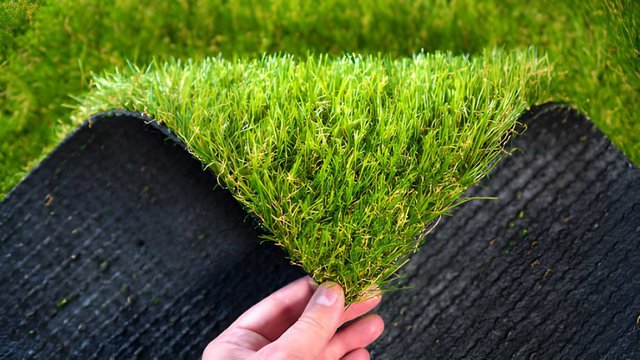
This third-generation turf, also called football turf, receives strong support from official soccer organisations such as FIFA and UEFA, which have worked to standardise the game. Even so, some resistance remains among players and clubs. These concerns are partly based on poor experiences with older types of artificial turf for sports that were not adapted to the specific demands of soccer, but they also reflect some shortcomings of newer turf systems designed specifically for football.
Key Performance Requirements of Artificial Sports Surfaces
One of the most common complaints is that the ball roll behaviour is different from that on natural turf. In general, players tend to perceive the ball speed as higher, and sometimes too high. Some players prefer faster fields, especially for training, because they support a more technical style of play. However, most players want a normal ball speed for official matches.
Experience shows that these ball roll problems often begin within a few months after installation. A newly installed artificial pitch may behave acceptably and can even be comparable to natural turf, but this is often no longer the case after the field has been used for some time. Over time, a clear degradation in playing quality becomes noticeable. This is often described as a lack of resilience in the field.
Another major problem with artificial grass is the possible occurrence of burns during sliding. Existing standardisation is not sufficiently developed in this area, so a more realistic testing method was needed. In current standards, there is no temperature measurement during sliding, even though this is highly relevant when burn injuries are considered.
The current measurement approach is also limited because it is carried out at a constant speed, follows a circular movement instead of a linear one, and uses a load that is too low. A repeated circular test on the same small area also changes the friction properties of the material over time.
A more realistic test set-up was therefore developed. Compared with the existing FIFA test, it offers a linear movement over a realistic sliding distance, a decelerated movement, a realistic load level, and a temperature measurement. This makes it possible to study the sliding phenomenon in a way that is much closer to real play.
The Role of Textiles in Sports Surface Performance
The key requirements of artificial sports surfaces are closely related to the characteristics of natural turf and are described in FIFA and IRB regulations. These standards aim to reproduce the performance of high-quality natural grass football or rugby pitches. Test methods for sports turfs and installed artificial turf fields are described in FIFA test methods, international standards, and European standards.
For artificial football surfaces, the most important textile-related requirements are mechanical stability over time, resistance to weathering, friction behaviour, resilience, and fibrillation resistance. The complete turf structure and its fibres must also withstand a wide temperature range. Another important point is process stability during fibre production, whether the material is made as fibrillated tapes or monofilaments, so that the final properties remain consistent.
The performance of the complete structure also depends on the infill and, where present, the shock pad. These parts of the system play a major role in shock absorption, ball response, and player comfort.
Types of Textiles Used in Artificial Turf
Artificial turf for soccer applications mainly uses third-generation systems. These consist of artificial fibres tufted onto a backing with an infill of sand and rubber granules. The total pile height is generally around the same level used for football pitches, while the free pile height and the depth of the infill are selected to match the desired playing characteristics.
Sand infill is used to stabilise the turf, while rubber granules are normally added for shock absorption. The backing is often made from plastic-based material such as a non-woven fabric impregnated with latex. The complete structure must be designed carefully, because the fibres, infill, and backing all influence how the field behaves under load.
Artificial turf for sports has an important practical advantage: one field can replace several natural grass fields. A natural grass pitch can only withstand a limited number of playing hours per year if it is to remain in good condition, while an artificial turf field can withstand many more hours of play. This is one of the main reasons for its rapid global growth.
Choice of Polymers for Artificial Turf Fibres
The polymers used for fibres or yarns in artificial turf are usually selected from the polyolefin family, mainly for soccer applications, or from polyamides, mainly for hockey applications. Polyolefins include polypropylene, ethylene-propylene copolymers, and several types of polyethylene such as HDPE, MDPE, LLDPE, and LDPE.
These polymers are processed into monofilaments or fibrillated tapes. Monofilaments can be produced in different geometries, such as cylindrical, rectangular, bilobal, or trilobal shapes. Their final properties depend strongly on the polymer structure and the processing conditions.
A key step in production is post-stretching, or cold drawing, in the solid state at controlled elevated temperatures below the melting point. This process usually improves stiffness and strength because the polymer chains become more highly oriented in the stretching direction. At the same time, the coefficient of friction can be reduced, which is an important property for artificial grass.
The relationship between polymer type and friction is especially important because human skin has very different surface characteristics from polyethylene or polypropylene. Skin is more polar, while polyolefins are non-polar. For that reason, the choice of polymer strongly affects the sliding behaviour of the complete turf structure.
Cold stretching of semicrystalline polymers such as polyethylene and polypropylene transforms the internal structure, converting spherulites into microfibrils. This generally increases the elastic modulus and lowers the friction coefficient, but it can also introduce internal stresses. These stresses may reduce resilience over time and may lead to flattening of the artificial grass after repeated use or exposure to higher temperatures.
Another possible problem is fibrillation, or splitting of the filaments or tapes in the longitudinal direction. This occurs because the strongly oriented polymer chains may have limited cohesion in the transverse direction. A good balance must therefore be found between stiffness, strength, resilience, friction behaviour, and resistance to fibrillation.
The microstructure of drawn fibres is also important. During drawing, the lamellar structure of polyolefins changes into a highly oriented fibrous structure composed of microfibrils bundled into fibrils. The lateral boundaries between fibrils may be weaker than the bonds inside the fibrils, which can make them more vulnerable to shear and twisting forces.
For this reason, molecular orientation is a very important issue. The amorphous orientation of the fibre can be measured using birefringence or polarised infrared spectroscopy. Higher orientation generally correlates with different mechanical behaviour, and it also influences fibrillation resistance. As the draw ratio increases, the amorphous orientation changes, and this has a direct impact on the fibre’s performance in artificial turf.
Polyolefins and Polyamides: Different Strengths
Polyolefins such as polyethylene and polypropylene are popular because they combine good processability with low friction. However, they can show lower resilience and weaker resistance to fibrillation than polyamides. Their tear resistance also tends to decrease as the material becomes more oriented during drawing.
Polyamides such as polyamide 6 and polyamide 66 behave differently. They have a relatively high glass transition temperature, and when they are drawn or cold stretched, they form a rigid amorphous phase with higher density than the classical amorphous phase. This gives polyamide fibres better resilience and very good resistance to fibrillation.
However, polyamides are usually more expensive and more rigid, and their friction coefficient is often higher than that of polyolefins. If the fibres are too hard and too frictional, the risk of abrasion or skin burns increases. This is why a proper balance of all fibre properties is essential in artificial turf applications.
Resilience and Ball Roll Behaviour
Ball roll behaviour is currently tested by FIFA and UEFA using a standard ball roll test. A ball is released from a ramp, and the rolling distance is measured. This test is used both in laboratories and on installed fields. It gives a clear indication of ball roll quality and helps identify fields that no longer perform as expected after use.
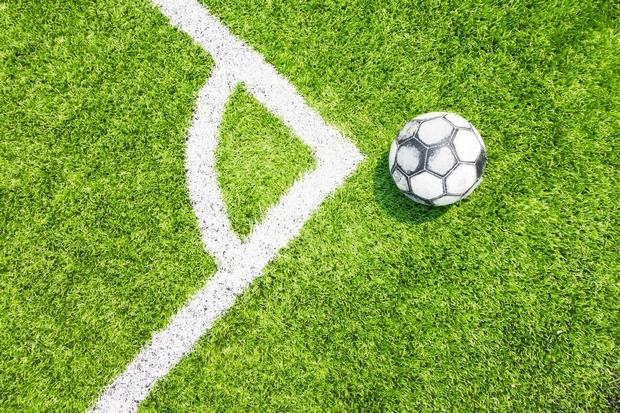
However, this test is influenced by external factors such as wind, slope, and wet or dry conditions. It also depends heavily on the condition of the fibres and on maintenance. Brushing, for example, can significantly affect ball speed and ball roll. As a result, the test is useful, but it does not fully isolate the role of fibre resilience.
To assess degradation in playing quality over time, FIFA and UEFA also use a wear test known as Lisport. This test simulates wear and tear by moving studded rollers over a turf sample. It gives a qualitative idea of durability, fibre breakage, and fibrillation, but it has several drawbacks. It is not fully quantitative, it is time-consuming, and it is difficult to determine whether the observed degradation is caused by the fibre, the infill, or their interaction.
Because yarn producers need faster feedback, a quicker method is needed to evaluate fibre resilience and its influence on ball roll. Two methods are especially useful: a cyclic bending test on single filaments, and an extended Lisport-type wear test.
Cyclic Bending Test
In the cyclic bending test, a single filament or a small group of monofilaments is clamped at one end and bent repeatedly. The force required for bending is measured during each cycle, and the change in force is used as an indicator of resilience.
A fibre is considered fully resilient if the force needed to bend it repeatedly remains stable over time. In practice, more resilient fibres show a smaller decrease in force during repeated bending, while less resilient fibres lose stiffness more quickly. This test is valuable because the variation in bending force is related to the decrease in ball roll on the turf.
Extended Lisport Testing
A larger Lisport-style test can be used on a longer sample to measure how ball roll changes over repeated wear cycles. This makes it possible to follow the degradation of the turf structure more closely and to compare different yarns under more realistic conditions.
The results show a clear link between fibre resilience and playing performance. Fibres with better resilience maintain a more stable ball roll over time, while less resilient fibres allow the ball roll to increase more quickly as the turf becomes flatter and less responsive.
The way the turf is constructed also matters. Woven and tufted structures do not behave in the same way, and tufted structures may show a stronger increase in ball roll distance under wear. This confirms that both the fibre material and the turf architecture influence performance.
Sliding and Temperature in Artificial Turf
The main problem with artificial grass is the possible occurrence of burns during sliding. Since standardisation in this area is still incomplete, a new method was developed to study the sliding phenomenon more realistically.
The new test set-up uses a trolley with a variable load, released from a slope so that it slides over a grass surface at a realistic speed. At the bottom of the trolley, a synthetic material with friction properties similar to human skin is used. Thermocouples placed on this surface allow the temperature change during sliding to be measured.
This setup has several advantages over the older test methods. It simulates a linear slide, uses a decelerated movement, applies a realistic load, and directly measures temperature. This makes it much more relevant for assessing burn risk.
The temperature measurements show that the surface heats up strongly as soon as the trolley reaches the grass and then cools down afterwards. The temperature is usually higher near the front of the trolley than at the rear, because the pressure distribution changes during motion. This information is important because the highest thermal load may correspond to the highest risk of skin burns.
The sliding distance is also measured, because it reflects the friction coefficient between the surface layer and the field. Different surfaces give different sliding distances, which confirms that material composition and surface structure directly affect player comfort and safety.
Influence of Infill Height
The height of the infill layer also has a major effect on sliding behaviour. Tests on natural grass, artificial grass, and different laboratory surfaces show that the infill depth changes both temperature rise and sliding distance.
As the infill height increases, the temperature first rises and then begins to fall when the rubber particles become more mobile. Once the particles can roll during sliding, the total friction force decreases. The same trend is seen in the sliding distance, which changes as the surface structure becomes deeper and more mobile.
The friction coefficient rises with changes in infill height and can be much higher for a bed of rubber particles than for a turf surface with exposed monofilaments. These differences are explained by the mobility of the particles and the way they interact with the sliding surface.
Future Trends in Artificial Turf Fibres
Many good results have already been obtained with fibres, especially monofilaments with suitable geometry. One of the advantages of monofilaments is that their shape can be chosen freely to improve resilience and fibrillation resistance while reducing twisting forces that may cause damage.
In the future, fibre geometry will be designed with a better understanding of the internal structure of the fibre and the forces acting on it during bending and twisting. This should improve long-term durability and playing quality.
Ongoing research will also deepen our understanding of the relationship between fibre structure, resilience, and fibrillation resistance. This may lead to polymers with better properties and much tighter control over processing. The macromolecular structure and processing conditions are both critical, because they determine the final orientation in the amorphous phase.
A major question is whether it is possible to combine the low friction and good impact resistance of some polyolefins with the resilience and fibrillation resistance of polyamides. Another possibility is to use multilayer fibres.
Multilayer fibres are very promising. In such fibres, the outer layer can be designed for low friction, good skin comfort, and resistance to fibrillation, while the inner core can provide resilience and impact resistance. A combination such as polyamide in the core and high-density polyethylene on the outside is one possible solution.
The challenge is to achieve good adhesion between the layers and to optimise processing temperatures so that each polymer develops the right structure. If this can be done successfully, multilayer structures may become an important solution for future artificial sports fields.
An easier solution is still the monolayer fibre, provided that a polymer or polymer blend can be found that combines the necessary properties. Research also continues into artificial sports fields without infill. These systems will likely need two types of fibres, including crimped fibres with a higher friction coefficient to prevent player slippage.
Another future direction is the use of polymers with controlled long-chain branching. This could combine the useful properties of different polyolefins and create fibres with reversible deformation, no irreversible structural change during normal use, and no fibrillation. Such fibres would be highly valuable for artificial sports applications.
Applications, Cost, and Current Limitations
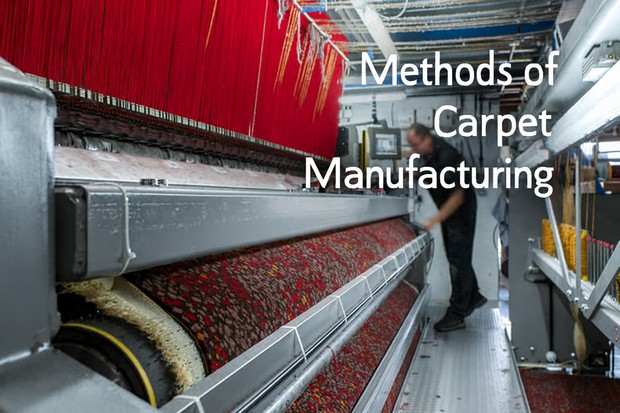
Artificial turf has been manufactured since the early 1960s using processes similar to those in the carpet industry. Since then, the product has been improved through better designs and materials. Modern systems are more wear-resistant, less abrasive, and safer for sliding than the earliest versions.
Artificial turf was first used in professional sports in baseball, and its use expanded rapidly after the Astrodome installation in Houston. Since then, many indoor and domed stadiums around the world have adopted it. Today, artificial turf is widely used in sports arenas, landscape applications, and public spaces.
From an economic perspective, an artificial turf field can replace several natural grass fields. A realistic service life of around a decade is often assumed, and longer lifespans would make the economics even more attractive. Recycling is still a challenge, because fibres and rubber infill usually cost money to remove and process after use.
There are several advantages to artificial turf for sports:
- It performs well where natural grass struggles because of climate or limited daylight
- It is suitable for homes, roof gardens, and swimming pool surrounds
- It requires little maintenance and always looks neat
- It can last for many years and is well suited to multi-use stadia
- Some systems can even integrate different colours or special design features
There are also important weaknesses. Artificial turf for sports can become much hotter than natural grass in outdoor conditions, especially in summer. This is due to the dark infill and the absence of the moisture that natural grass holds. Irrigation helps reduce temperature and improve playing comfort, but water quality must be controlled to avoid algae and slime.
Recycled rubber infill remains widely used because it is economical and provides good shock absorption, but it can release unwanted substances and may contribute to environmental problems. Treatment of the granules, improved coatings, and alternative infill materials are all being studied. The infill layer can also compact during play, which reduces shock absorption and traction.
Ball response is another important issue. On natural grass, the speed, spin, and bounce of the ball are well known under good conditions. Artificial grass behaves differently, although it has become much closer to natural grass in recent years. The key question is not whether it is identical, but whether it delivers a consistent and acceptable playing experience.
Conclusion
Artificial turf has become an essential surface for modern sports, especially in soccer, hockey, tennis, and landscaping. Its success depends on a careful balance between fibre material, fibre geometry, turf construction, infill design, and shock absorption. Polyolefins offer low friction and good processability, while polyamides offer better resilience and fibrillation resistance. The best future solutions will likely come from improved monolayer designs, multilayer fibres, or new material combinations that deliver the right balance of comfort, safety, durability, and playability.
As research continues, the next generation of artificial turf will be shaped by a better understanding of fibre structure, player interaction, and realistic performance testing. The goal is clear: fields that feel more natural, last longer, and support a wider range of sports with greater consistency and safety.
References
[1] Goswami, K. K. (Ed.). (2017). Advances in carpet manufacture (2nd ed.). Woodhead Publishing. ISBN: 9780081018480
[2] Twomey, D. M., & Fleming, P. R. (2010). Artificial Turf Surfaces for Sport: A Review of Mechanical and Biomechanical Properties. Sports Engineering, Springer.
[3] Bloor, M. R. & Marshall, J. (2001). Synthetic Fibres: Properties and Applications. Woodhead Publishing.
[4] Koener, M. (2013). Polymer Materials in Sports Engineering. Wiley-VCH Verlag GmbH.
[5] ASTM International (2020). ASTM F1551 – Standard Test Methods for Synthetic Turf Surfaces. ASTM International Standards.
[6] FIFA (2022). FIFA Quality Programme for Football Turf: Handbook of Test Methods for Football Turf. Fédération Internationale de Football Association (FIFA), Zurich.
[7] Dixon, S. J., G. H. James, I. F. W. Fleming, & M. G. Carré (2015). The Science and Engineering of Sport Surfaces. 2nd Edition. Routledge.